
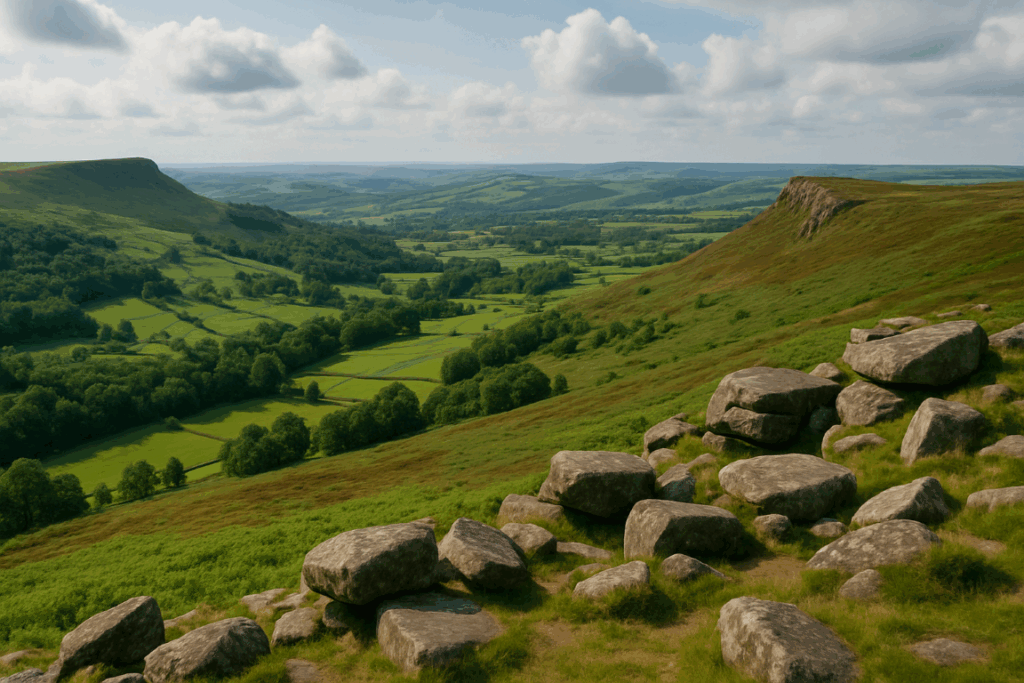
If you already love big hill days and rocky paths, easy scrambling is a natural next step. It is that exciting middle ground between walking and climbing, where you sometimes need your hands but are not tied into ropes or specialist kit.
What is easy scrambling?
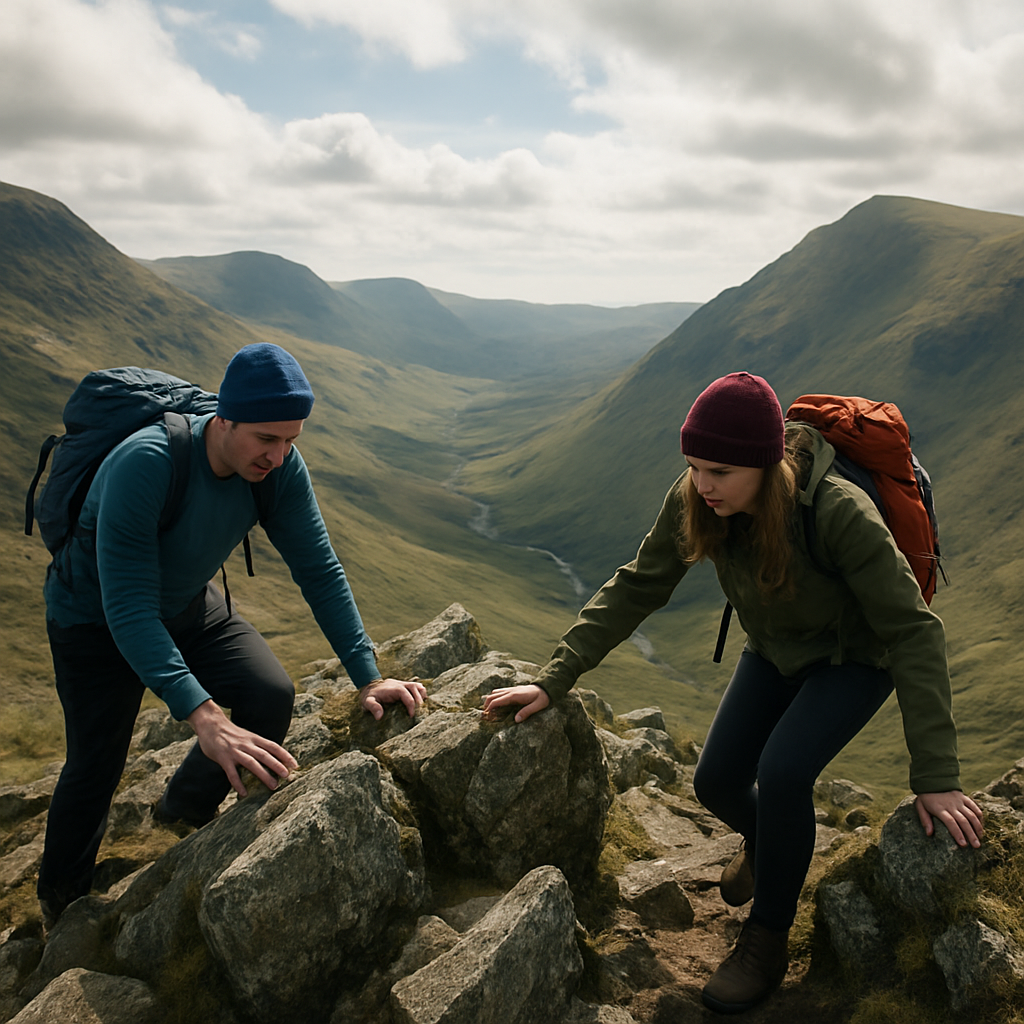
Easy scrambling usually means short rocky steps or ridges where you use your hands for balance and upward movement, but the ground still feels like part of the hill rather than a sheer cliff. In the UK, these are often called Grade 1 scrambles. They are steeper and more exposed than a hiking path, yet far less serious than technical climbing.
You move mostly upright, placing hands on blocks and ledges, following obvious weaknesses in the rock. On popular routes there is often a worn line or polished holds that show where people usually go. You are not dangling from your arms, and you can usually step down or walk off if it feels too much.
How scrambling differs from walking and climbing
On a walk, your boots stay on the ground and your hands are free for snacks and map reading. On a rock climb, you rely on ropes, harnesses and protection. Easy scrambling sits between the two:
- Terrain: Steeper and more broken than a walking path, but not vertical rock.
- Exposure: You may have drops to one side, so the air feels bigger around you.
- Movement: You use three points of contact and think more carefully about each step.
- Equipment: Normal hill gear and good footwear are enough in dry, settled conditions.
The main difference is psychological. The rock might be well within your physical ability, but the sense of height can feel new. That is why starting with genuine easy scrambling is so important.
Basic movement techniques for new scramblers
Good movement on rock is about balance, not strength. A few simple habits make your first scrambles feel calmer and more controlled.
Use three points of contact
Try to keep three points on the rock at all times – two feet and one hand, or two hands and one foot. Only move one limb at a time. This makes you much more stable, especially when you feel a bit nervous.
Trust your feet
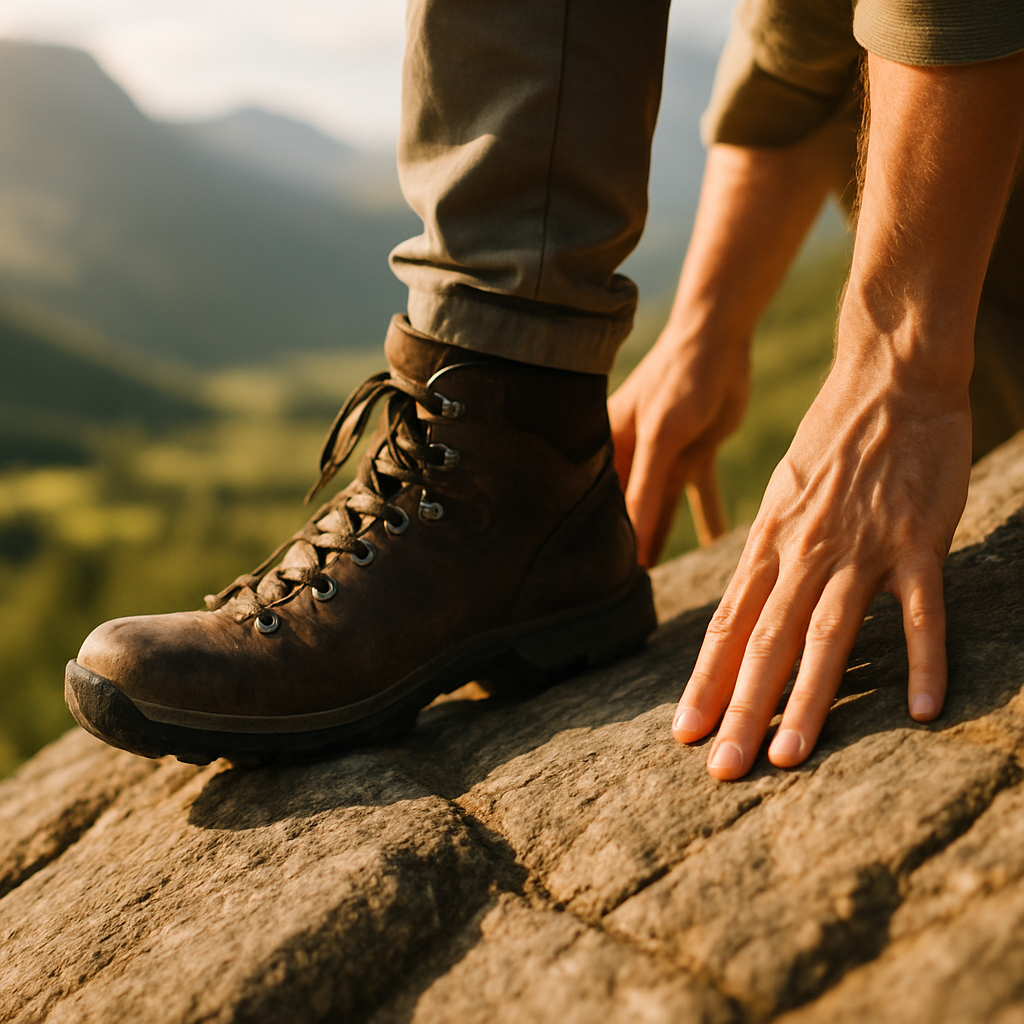
Place the soles of your boots flat on the rock whenever you can. Look at each foothold before you commit, and gently test it. Your legs are stronger than your arms, so push up from your feet rather than pulling with your hands.
Keep your body close to the rock
Leaning in towards the rock lowers your centre of gravity and helps you feel secure. If you find yourself straight-armed and leaning out, shuffle your feet closer in and bend your knees slightly.
Climb in small steps
On easy scrambling terrain, lots of small movements are better than big lunges. Short steps keep you balanced and mean you can change your mind if a hold does not feel right.
Choosing footwear and basic kit
You do not need technical gear to enjoy easy scrambling, but a few choices make a big difference.
- Footwear: Sturdy walking boots or approach-style shoes with a firm sole and good grip work well. Smooth, worn-out soles are risky on rock.
- Clothing: Flexible, breathable layers that let you lift your knees and stretch a little. Avoid very baggy trousers that can snag.
- Bag: A small, close-fitting rucksack so your balance is not pulled backwards on steep steps.
- Weather kit: Waterproofs, warm layers and gloves – rock feels much harder when you are cold and wet.
On popular beginner routes, ropes are not normally used in dry conditions. If you are unsure, going with a qualified instructor or experienced friend is a good way to build confidence.
Where to find beginner-friendly these solutions routes
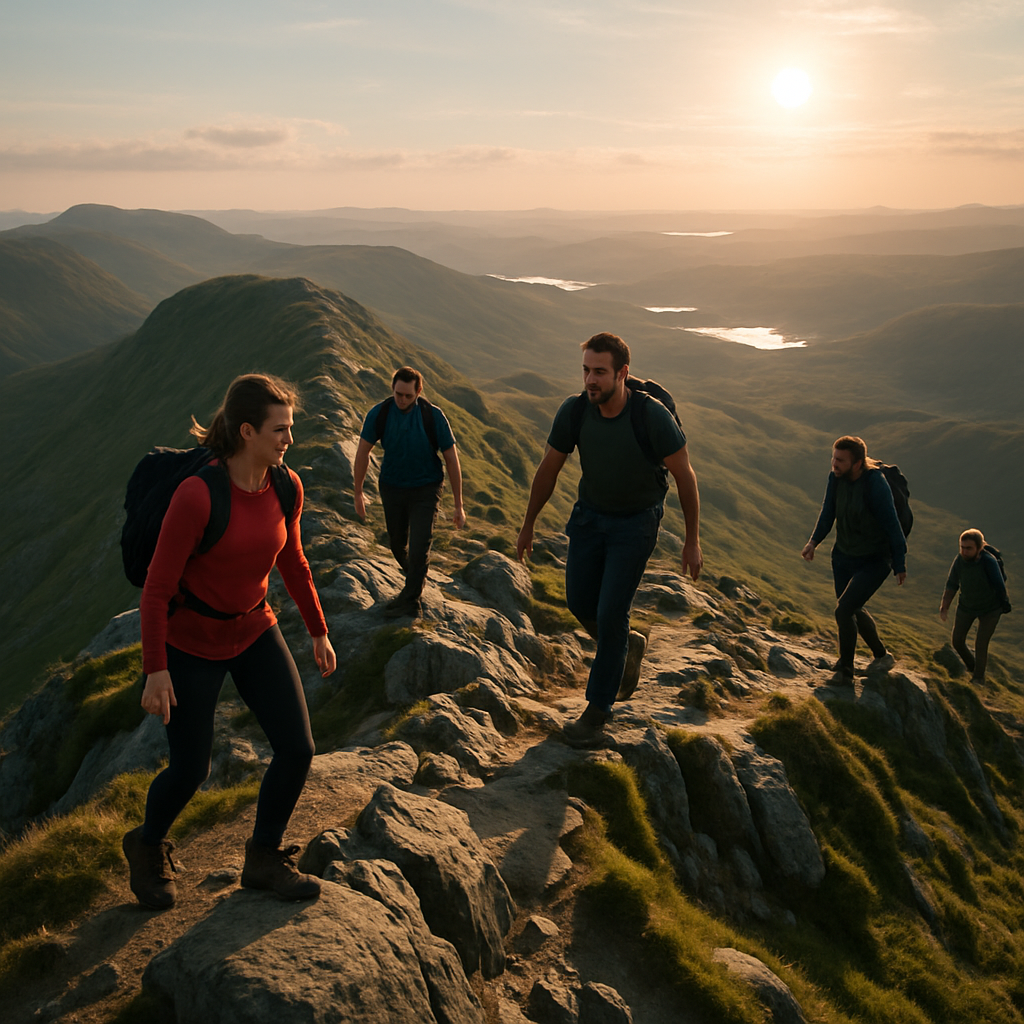
Some mountain areas are famous for gentle, confidence-building scrambles that feel like an adventure without being extreme.
Easy scrambling FAQs
Is easy scrambling suitable for beginners?
Yes, easy scrambling is designed for walkers who are confident on rough ground and want a gentle introduction to using their hands on rock. Start on well-known Grade 1 routes in good weather, ideally with an experienced partner or instructor, and keep your first days short so you can turn back if needed.
Do I need special boots for easy scrambling?
You do not need specialist climbing shoes for easy scrambling, but you should wear sturdy walking boots or approach shoes with a firm sole and reliable grip. Avoid very soft, worn or smooth soles, as they can slip more easily on rock, especially if it becomes damp or dusty.
How can I get over my fear of heights when scrambling?
To manage a fear of heights on easy scrambling routes, choose lines with limited exposure at first and build up gradually. Focus on three points of contact, move in small steps, and keep your eyes on the rock in front of you rather than the drop. Breathing slowly, talking through moves with a partner and practising on short rocky steps near the path can all help your confidence grow.