
There’s a particular frustration known to anyone who walks regularly in the British countryside: the locked gate where there shouldn’t be one, the footpath sign buried under brambles, or the hand-painted “PRIVATE, KEEP OUT” board blocking a route that has existed for centuries. Knowing your public right of way rules as a UK walker doesn’t just help you argue your corner. It helps you walk with confidence, plan better routes, and understand what the countryside is actually open to you.
The rules differ depending on where you are in the country, and the terminology matters more than most people realise. Let’s break it down properly.
What Is a Public Right of Way?
A public right of way is a route over which the public has a legal right to pass. It exists independently of who owns the land beneath it. The landowner retains ownership, but cannot lawfully prevent the public from using a properly recorded right of way. These routes are recorded on something called the Definitive Map, maintained by local highway authorities in England and Wales. If a path is on that map, it’s legal. Simple as that.
In England and Wales, rights of way fall into four main categories. In Scotland, the situation is rather different, and we’ll come to that shortly.
Footpaths, Bridleways, and Byways: What’s the Difference?
Footpaths
These are for walkers only. You have the right to walk on a footpath, but not to cycle, ride a horse, or drive a vehicle along one. Most of the paths you’ll follow across fields, through woodland, and over stiles in England and Wales will be footpaths. They’re the most common type by a considerable margin.
Bridleways
Bridleways permit walkers, horse riders, and cyclists (though cyclists must give way to walkers and horse riders). If you’re planning a route and the map shows a bridleway, it generally means a wider, more robust track than a footpath. They’re often more reliable underfoot in wet conditions, though not always.
Byways Open to All Traffic (BOATs)
These are the broadest category. BOATs can legally be used by walkers, cyclists, horse riders, and motorised vehicles. In practice, they’re often old lanes and green roads, and while they can be used by 4x4s and trail bikes, many are so narrow or rutted that only walkers and horses get much practical use from them. They’re relatively rare compared to footpaths and bridleways.
Restricted Byways
A more recent category, created in 2006. Restricted byways allow walkers, cyclists, horse riders, and horse-drawn vehicles, but not motorised traffic. Think of them as byways with the noisy stuff removed.
How Scotland Handles Things Differently
Scotland operates under a fundamentally different system. The Land Reform (Scotland) Act 2003 gives everyone the right to access most land and inland water for recreational purposes, as long as that access is exercised responsibly. This is known as the Scottish Outdoor Access Code, and it’s a more permissive framework than England and Wales.
In practical terms, this means you can walk across open hillside, farmland, and forest in Scotland without needing a defined footpath. The responsibility falls on you to behave considerately: keeping dogs under control, avoiding damage to crops, not camping near buildings without permission. The code is published by NatureScot and is well worth reading if you’re heading north of the border for any serious walking.
Scotland does have some traditional rights of way too, but the access rights created by the 2003 Act largely supersede them for most walkers.
What Landowners Can and Cannot Do
This is where things get heated. Landowners in England and Wales cannot plough up a footpath without reinstating it within 14 days (or 24 hours if it’s a field-edge path). They cannot erect a locked gate across a footpath unless a local authority has approved a temporary closure. They cannot allow crops to make a path effectively impassable. And they absolutely cannot legally threaten walkers using a recorded right of way.
What they can do is request you stay on the defined path rather than wandering across their fields. A public right of way is exactly that: a defined corridor, not a licence to roam freely across someone’s private land. Sticking to the path is both the legal requirement and the decent thing to do.
Landowners can apply to divert or extinguish paths through the local council, but this is a formal legal process. An informal sign or a padlocked gate doesn’t make a path disappear from the Definitive Map.
How to Challenge a Blocked Path
If you find a public right of way that’s been obstructed, your first step is to check whether the path is genuinely recorded. The most reliable way is to use the official OS map or check your local council’s online mapping. The gov.uk guidance on public rights of way is also clear on what landowners are responsible for maintaining.
If the path is on the map and it’s blocked, you can report it to your local highway authority, which is usually the county council. They have a legal duty to assert and protect the rights of the public to use rights of way. Reports can be made online through most council websites, and the more detail you can provide (grid reference, photographs, date of obstruction) the more likely you are to see action.
Ramblers, the UK’s largest walking charity, also runs a tool called Don’t Lose Your Way and campaigns actively to keep paths open and recorded. If you’re serious about rights of way, they’re worth knowing about.
Practical Tips for Walkers Navigating Rights of Way
Understanding public right of way rules as a UK walker is one thing. Using that knowledge effectively on the ground is another. A few things I’ve found genuinely useful over the years:
- Download your route offline before you go. OS Maps and similar apps let you see the Definitive Map overlaid on the terrain, which makes it much easier to spot where a path should be even when signage has gone missing.
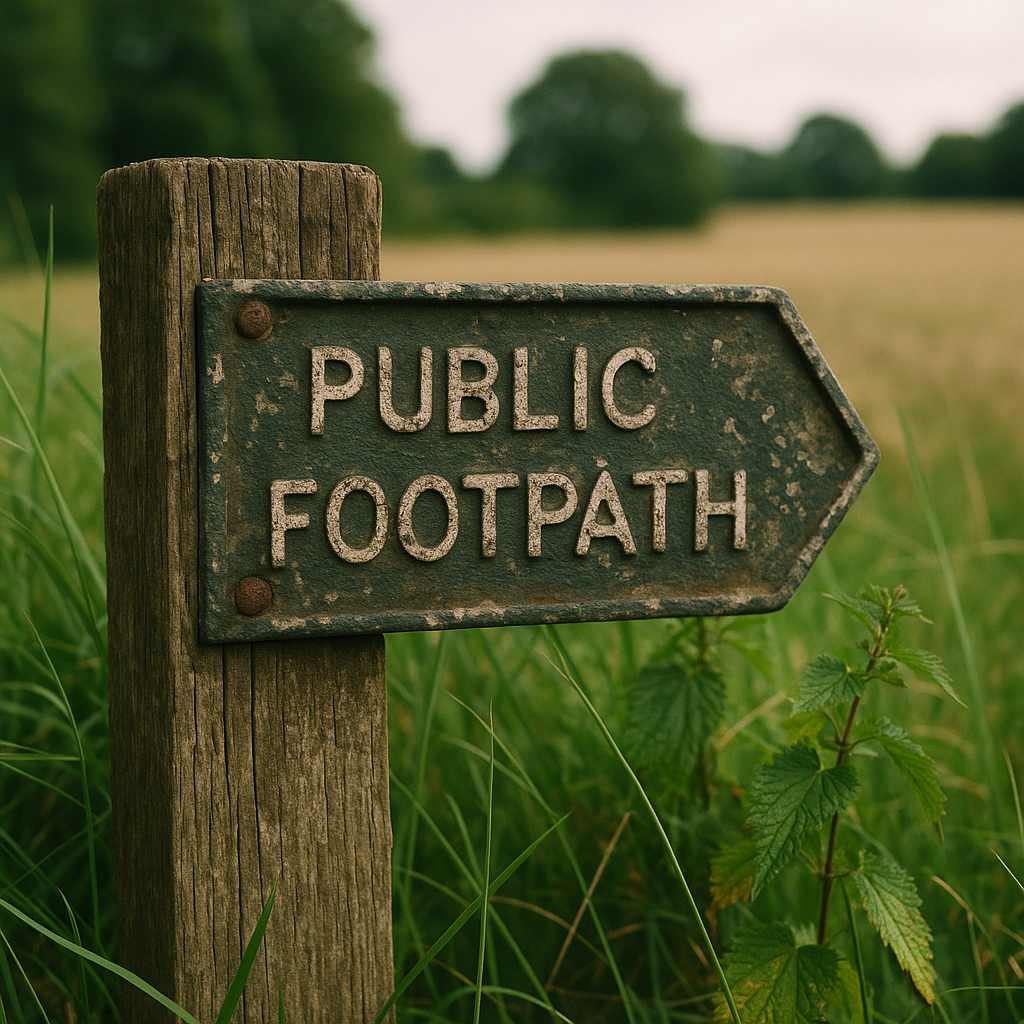
- If a waymarker post is there but the arrow has weathered off, look for the next one rather than guessing. Rights of way tend to follow field edges and obvious natural lines.
- When in doubt about whether a path is on the map, you’re within your rights to turn back rather than trespass. Trespass in England and Wales is a civil matter (not a criminal one, unless you cause damage), but it’s still worth avoiding the aggravation.
- Keep a record if you find a blocked or obstructed path. A photo with a timestamp and grid reference takes 30 seconds and makes your council report far more effective.
The countryside is ours to enjoy, but it’s also shared with the people who work it and live in it. Knowing your rights and exercising them with common sense tends to go a long way.
Why This Matters Beyond the Walk
Rights of way are part of the fabric of rural Britain. Many of these paths are ancient, following routes that predate the enclosure of land by centuries. Some have been walked so long that they’ve worn themselves into the landscape. Losing them, whether through neglect, obstruction, or failure to register them, means losing access to the countryside in a very real and permanent way. That matters to every walker, hill runner, horse rider, and cyclist who relies on that access for their physical and mental wellbeing.
Knowing the rules isn’t just useful when something goes wrong. It’s part of taking the outdoors seriously.
Frequently Asked Questions
What is the difference between a footpath and a bridleway in the UK?
A footpath is reserved for walkers only, whereas a bridleway can also be used by horse riders and cyclists. Cyclists on bridleways must give way to walkers and horse riders. Both are recorded on the Definitive Map maintained by local highway authorities in England and Wales.
Can a landowner block a public right of way in England?
No. A landowner cannot lawfully obstruct a recorded public right of way, whether with a locked gate, overgrown vegetation, or ploughed-up ground without reinstatement. Obstructions can be reported to the local highway authority, usually the county council, which has a legal duty to keep rights of way accessible.
Do public right of way rules apply the same way in Scotland?
No, Scotland is different. The Land Reform (Scotland) Act 2003 gives the public a general right to access most land for recreational purposes under the Scottish Outdoor Access Code. You don’t need a defined footpath in most cases, but you must behave responsibly under the code.
What should I do if a footpath is blocked or obstructed on my walk?
First, confirm the path is recorded on the Definitive Map using OS Maps or your local council’s online mapping. Then report the obstruction to your local highway authority with as much detail as possible: date, grid reference, and photographs. You can also report via the Ramblers’ campaigning tools.
Is trespassing a criminal offence in England and Wales?
In most circumstances, trespass in England and Wales is a civil matter, not a criminal one. However, it can become criminal if you cause damage, refuse to leave when asked, or trespass on railway land or certain protected sites. It’s always better to stay on recorded rights of way to avoid any dispute.