
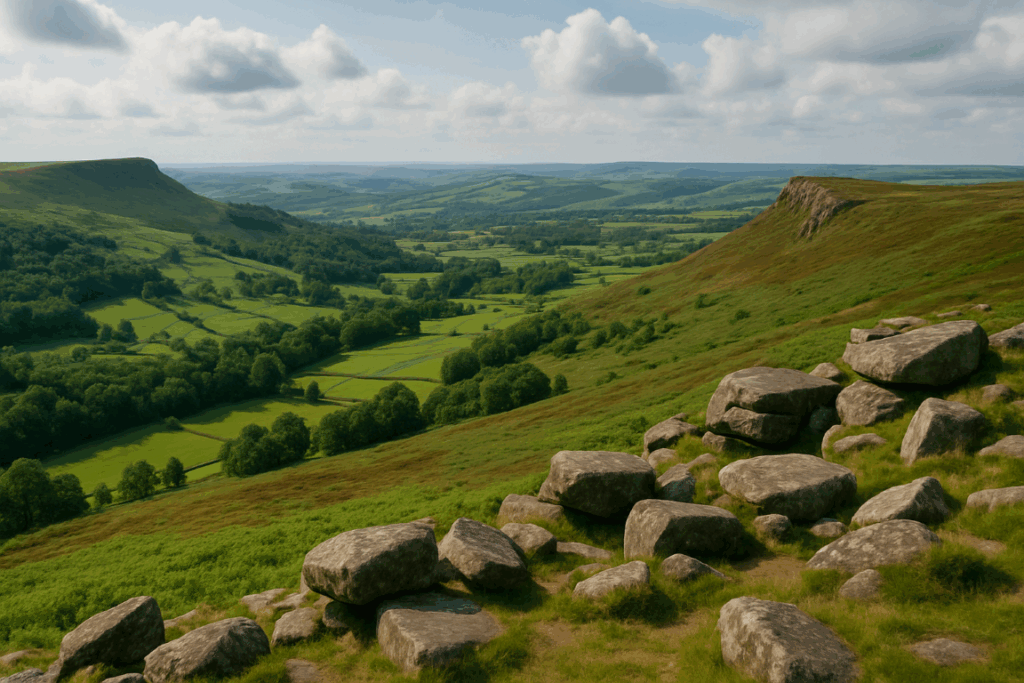
The British mountains are brilliant and brutal in equal measure. One hour you’re on a sun-baked ridge with views stretching to the horizon; the next, a wall of clag rolls in, the wind picks up, and suddenly you’re fighting to stay upright. Mountain storm safety isn’t a niche concern for extreme alpinists. It’s something every walker in the UK needs to think about before they leave the car park. Conditions on Snowdon, the Cairngorms, or the Brecon Beacons can deteriorate faster than most people expect, and being underprepared is genuinely dangerous.
This guide walks through exactly what to do when weather turns against you, step by step. Preparation, early decisions, shelter, lightning, navigation, and getting rescued. Let’s go through it properly.
Know the Warning Signs Before It Gets Bad
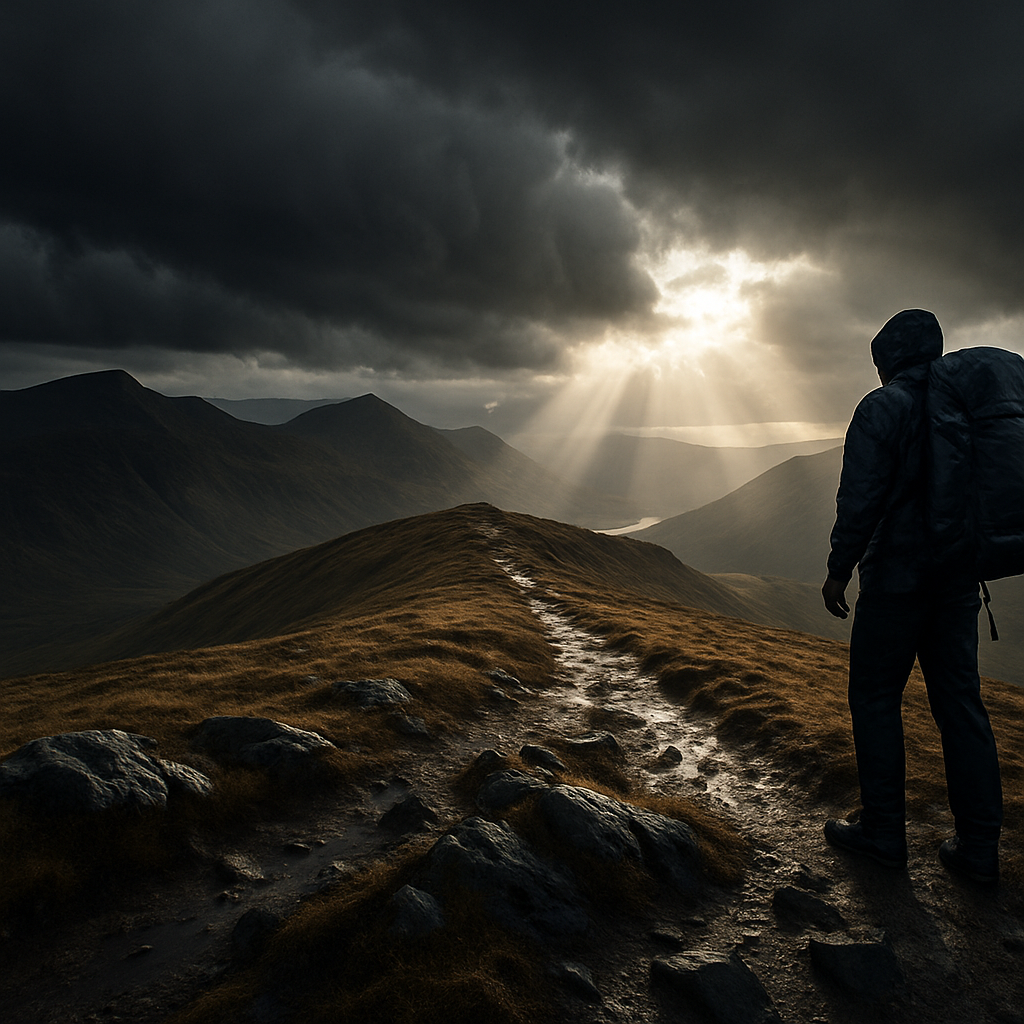
The best mountain storm safety strategy is catching trouble early. By the time thunder rumbles, you’re already behind the curve. Watch for darkening skies to the west (weather in the UK almost always arrives from the south-west), sudden drops in temperature, a sharp increase in wind, or a strange stillness before a front moves in. Lenticular clouds sitting like lids over summits are a reliable warning. So is that drop in air pressure you can sometimes feel in your ears.
Check the Mountain Weather Information Service (MWIS) before any serious hill walk. The Met Office also publishes mountain-specific forecasts that go beyond what their general app shows. Don’t rely on a town forecast for high ground. A pleasant 16°C in the valley can mean 3°C with 50mph gusts on the ridge.
The Decision to Turn Back: Make It Early
This is where ego gets people into trouble. There’s no shame in turning around. In fact, I’d argue it takes more confidence to call it than to push on. The summit will always be there. A working rule: if the weather is clearly deteriorating and you’re still an hour or more from the top, turn back. Do it before you’re committed to exposed ground with no easy escape route.
Descend the way you came if you know that route. Unfamiliar descents in worsening visibility are where navigational errors compound quickly. Know your escape routes before you start; look at the map the evening before and identify two or three bail-out options at different points along your planned route.
Emergency Shelter Techniques When You’re Caught Out
If turning back isn’t an option, your first priority is getting out of the wind. Wind chill is a killer. A temperature of 5°C with 40mph wind creates a felt temperature close to freezing, and wet clothing accelerates heat loss dramatically.
Seek natural shelter first: the lee side of a large boulder, a hollow in the hillside, a rock face that breaks the wind. Avoid ridge lines and exposed plateaus. Get low without descending into a gully that could become a watercourse in heavy rain.
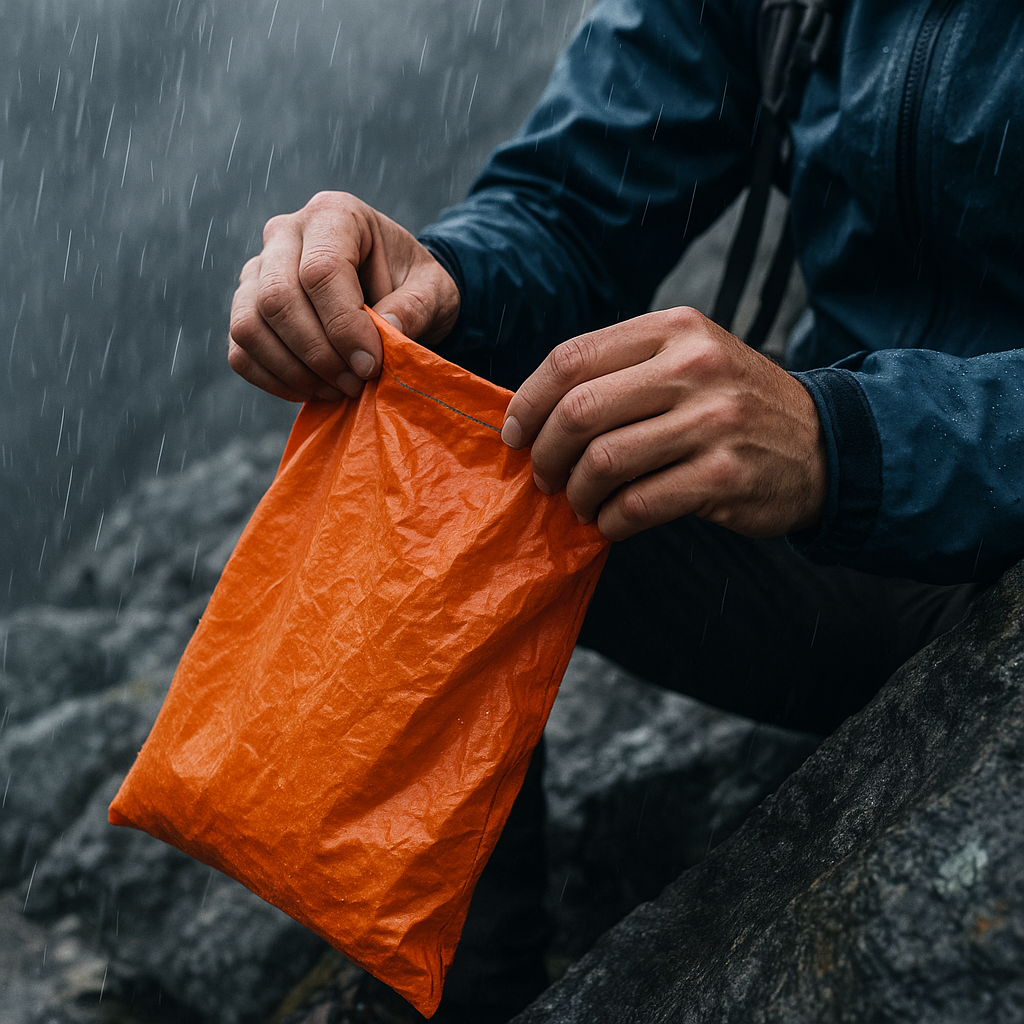
Carry an emergency bivvy bag. This is non-negotiable kit for any serious hill walk in the UK. A good foil or polyethylene bivvy weighs almost nothing and will hold your core temperature in a situation that would otherwise become fatal. Get inside it with your legs and torso covered, sit on your rucksack to insulate yourself from the ground, and keep your head down. Eat something; your body needs fuel to generate heat. If you’re with others, huddle together.
Lightning Safety on High Ground
Lightning on a mountain is terrifying, and the UK gets more mountain lightning incidents than many people realise. The core rule is simple: get off exposed high ground before a storm is directly overhead. But if you’re caught in the open with lightning already striking nearby, these steps can reduce your risk considerably.
- Get away from summits, ridges, and lone trees immediately.
- Avoid cave entrances and overhangs; ground current can jump across gaps.
- Don’t shelter under isolated trees or near metal fences and pylons.
- Get at least 15 metres from any other person in your group; a strike near one person shouldn’t incapacitate everyone.
- Adopt the lightning crouch: feet together, squat low, arms wrapped around knees, head down. This minimises your contact with the ground and reduces your profile.
- Do not lie flat on the ground; this increases your surface area for ground current.
Count the seconds between lightning and thunder and divide by three; that gives you the approximate distance in kilometres. If the gap is under ten seconds, the storm is less than 3.5km away and you need to act immediately.
Navigation in Low Visibility and Heavy Rain
Mist, driving rain, and cloud can reduce visibility to a few metres on a plateau. This is when people wander off paths, lose track of their position, and end up on the wrong side of a mountain entirely. Mountain storm safety in poor visibility comes down to preparation and slowing down.
Use your compass deliberately. Take a bearing from your map to the next waypoint before you leave the path or any known landmark. Count your paces to estimate distance. On Dartmoor or the Scottish Highlands, this skill is the difference between finding the col you’re aiming for and stumbling towards a cliff edge.
Don’t depend entirely on your phone for navigation. Batteries die in the cold, screens are unreadable in rain, and signal coverage on remote British hills is patchy at best. Carry a proper 1:25,000 OS map in a waterproof case and a Silva or Suunto compass. Know how to use them. I keep mine clipped to my chest harness so I don’t have to fumble around in a pocket when conditions are bad.
Signalling for Help and Getting Rescued
If you’re injured or completely unable to move safely, it’s time to call for help. In the UK, call 999 and ask for Police, who will coordinate Mountain Rescue. If you’re out of mobile signal, try moving to higher ground briefly to get a bar of coverage, or send a text (texts sometimes get through when calls don’t). Register your route with someone before you go so they know when to raise the alarm if you don’t return.
The international distress signal is six whistle blasts, six torch flashes, or six shouts in quick succession, followed by a pause of one minute, then repeated. Three blasts is the reply from rescuers. A bright orange or red emergency bivvy is also visible from above, which matters enormously for helicopter rescues in poor conditions.
If you drive a 4×4 to reach remote trailheads and rely on it for reliable transport in rough weather and terrain, keeping it in solid working order matters too. Sourcing good quality Mitsubishi shogun parts from a specialist supplier can be the difference between a reliable mountain vehicle and one that leaves you stranded before you’ve even started walking.
Kit That Could Save Your Life in a Mountain Storm
The right gear won’t replace good judgement, but it gives you options when things go wrong. At minimum, every mountain walker in the UK should carry: a waterproof jacket and trousers rated for serious weather (not a lightweight running shell), insulating mid layers, a hat and gloves even in summer, emergency bivvy bag, whistle, head torch with spare batteries, first aid kit, and enough food and water for a day longer than you planned.
The Mountain Rescue England and Wales organisation publishes regular guidance on what to carry and what skills to develop. It’s worth reading before your next big day out.
After the Storm: Getting Down Safely
Once the worst has passed, don’t rush. Waterlogged ground is slippery, streams will be running hard, and your energy reserves will be lower than you think. Take stock, eat something, check your position carefully, and descend at a steady pace. Twisted ankles happen most often when tired walkers try to move quickly on rough ground after a long day.
Mountain storm safety ultimately comes down to preparation before you leave, early decisions on the hill, and staying calm when things get uncomfortable. The mountains aren’t out to get you. They’re just indifferent. The more you understand them, the more freely you can move through them.
Frequently Asked Questions
What should I do first if a storm hits while I'm hiking on a mountain?
Get off exposed high ground immediately and find natural shelter on the lee side of large boulders or in hollows that break the wind. If the storm was forecast or is building quickly, the right call is to begin descending the route you know before conditions deteriorate further.
Is it safe to shelter under a rock overhang during lightning on a mountain?
No. Rock overhangs and shallow cave entrances are dangerous during lightning because ground current can jump across the gap between the rock and the floor. Move away from cliff faces and overhangs; instead, adopt the lightning crouch in an open area well below the summit and ridge line.
How do I navigate in thick cloud or mist on a mountain with no visibility?
Use a 1:25,000 OS map and a compass together. Take a specific bearing to your next waypoint before leaving any known landmark, then count your paces to track distance. Never rely solely on a mobile phone for navigation in poor visibility; batteries fail in the cold and signal coverage on remote hills is unreliable.
How do I signal for mountain rescue in the UK?
Call 999 and ask for Police, who co-ordinate Mountain Rescue in the UK. If you have no signal, move slightly higher to try to get coverage, or send a text which often gets through when voice calls cannot. The international distress signal is six whistle blasts or torch flashes per minute, repeated after a one-minute pause.
What is the minimum kit I should carry for mountain storm safety in the UK?
At minimum: a waterproof jacket and trousers, insulating layers, a hat and gloves, an emergency bivvy bag, a whistle, a head torch with spare batteries, a physical OS map and compass, a basic first aid kit, and food and water for longer than planned. An emergency bivvy bag is the single most important item for surviving an unexpected overnight on the hill.