
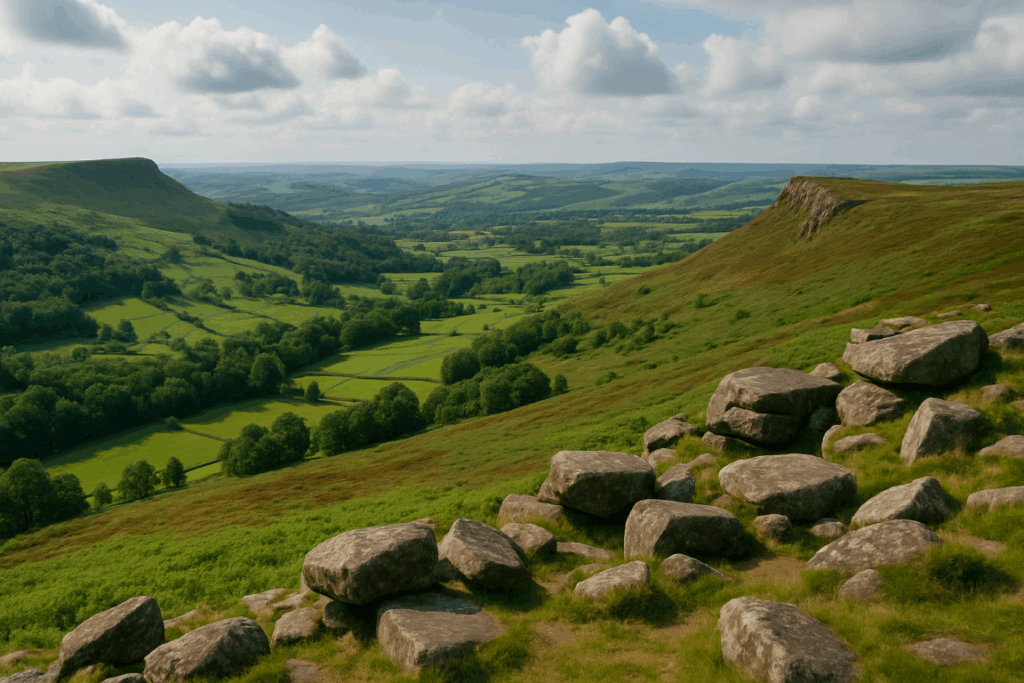
There is a window, roughly six weeks wide, when the North York Moors stop being merely good and become genuinely extraordinary. From late July through to the first week of September, the heather flushes purple across something like 44,000 hectares of open moorland, and walking the ridges during that period feels like a different activity entirely compared to any other time of year. I’ve walked up here in spring and in winter, and both are worth your time. But heather season is something else. The colour, the scent, the low hum of bees, the way a ridge that looked grey and functional in April suddenly looks like it was designed by someone with a flair for the dramatic.
The North York Moors National Park, managed under the authority of the North York Moors National Park Authority, covers around 1,436 square kilometres of moorland plateau, wooded dales and dramatic coastal edge. It is not mountainous in the way that Snowdonia or the Cairngorms are. The highest point, Urra Moor near Chop Gate, tops out at 454 metres. But what the Moors lack in elevation they more than compensate for in sheer openness, and in heather season that openness becomes the whole point.
When exactly does the heather bloom?
Peak colour on the North York Moors usually falls between mid-August and early September, though the precise timing shifts by a week or so depending on the summer. A cool, wet July pushes the bloom slightly later; a warm, dry one can bring it forward. I’d aim for the second half of August as your best single bet if you can only pick one date. By the third week of September, it’s fading fast, turning rust-coloured and then brown as autumn tightens its grip. Late July is still early for the full purple effect, but the moorland feels alive and the light on a clear evening is spectacular even when the bloom hasn’t quite peaked.
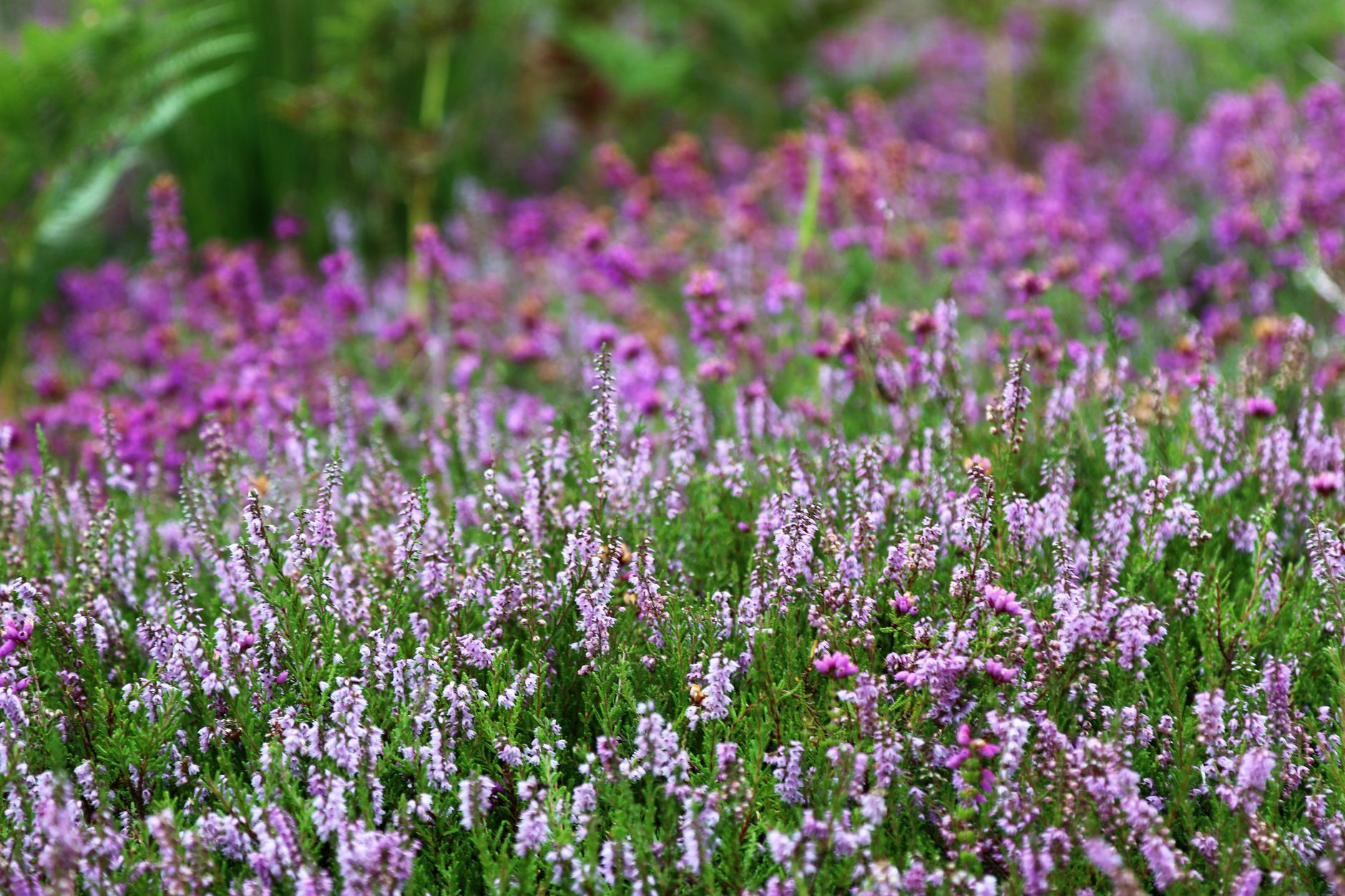
What most people don’t appreciate until they’re standing in it is how the colour varies across the moor. Calluna vulgaris, the common heather, provides the main purple wash, but bell heather (Erica cinerea) blooms a couple of weeks earlier and tends a slightly deeper, redder tone. Cross-leaved heath (Erica tetralix) favours the boggier ground. Walking a ridge at the right moment, you’re seeing all three layered together across different ground conditions, and the effect is richer than any single photograph really captures.
The best ridge routes for North York Moors heather walks
The classic approach for a first heather-season visit is the Blakey Ridge. The road along it (the B6527 from Hutton-le-Hole to Rosedale Abbey) is one of the highest classified roads in England, and it means you can park at the Lion Inn and step almost immediately onto open moorland either side. Walk south-east towards Rosedale Head and you’re crossing some of the most intact, expansive heather moor in England. No forests interrupting the view, no major inclines to slow you, just ridge and sky and purple as far as the eye carries.
The Farndale-to-Rudland Rigg circuit is my personal favourite for a full day. You drop into Farndale (famous for its daffodils in spring, but completely transformed in August), follow the River Dove briefly, then climb back onto the ridge at Rudland Rigg. The contrast between the sheltered dale and the exposed moorland above is sharp and satisfying. Plan on 18 to 22 kilometres depending on where you start, and allow time to stop. The views east towards the coast on a clear day are worth a long rest.
Levisham Moor is worth knowing about if you want to avoid the crowds that gather around the more famous spots. It sits south of Pickering, is accessible via Levisham village, and the moorland here has that slightly wilder character, less manicured, with good heather cover and long sight lines north across Newton Dale. I’d pair it with a walk along the top edge of the dale for a circuit that takes the better part of a day without feeling rushed.
For something with a coastal dimension, the stretch of moor between Ravenscar and Robin Hood’s Bay combines ridge walking with sea views that feel genuinely earned. The Cleveland Way National Trail clips through this section, and in heather season the contrast between the purple moor and the grey-blue North Sea is one of those views that actually stops you in your tracks. If you’ve been following the debates around how UK National Trails are funded and maintained, you’ll know that footpath quality here has improved significantly in recent years, though some sections still get boggy after rain.
Moorland management and what it means for access
The heather you’re walking through doesn’t manage itself. The North York Moors is dominated by grouse moor, and the heather is actively managed through rotational burning (or, increasingly, cutting) to maintain the patchwork of young, feeding heather and older, taller nesting cover that red grouse need. That patchwork is also why the moorland looks so visually complex from a ridge: different ages of heather create different shades, the younger growth a brighter, more vivid purple than the mature plants.
Burning on the moors is tightly regulated. The burning season runs from 1 October to 15 April (outside the heather bloom period entirely), so your summer walk won’t be disrupted by smoke or fire. What can affect access is the grouse shooting season, which opens on 12 August. Some shooting estates may divert walkers on shooting days via temporary notices, though rights of way remain open and Open Access land (designated under the Countryside and Rights of Way Act 2000) cannot be legally closed for grouse management except in very specific fire risk circumstances. If you’re planning a walk on or around the Glorious Twelfth, check the National Park Authority’s website for any temporary access notices before you set off.
The management regime here produces a landscape that is, ecologically speaking, more simplified than many walkers realise. The monoculture of managed heather is beautiful but not especially biodiverse compared to what would exist naturally. That tension between agricultural heritage, landscape character and ecological complexity is something the National Park is actively grappling with. As someone who also cares about upland path erosion and what it does to moorland habitats, I find the management question here genuinely interesting. The Moors are not wild in any pristine sense. They are a managed landscape that happens to look spectacular for six weeks a year.
What to carry and what to expect underfoot
The ridges are largely firm in summer, particularly on the main paths. Away from paths, the heather itself is the challenge. Mature heather is thick, ankle-height, and uneven underfoot, and walking through it off-path is significantly harder than it looks. I’d always stay on the paths where they exist, partly to protect the plants and partly to protect your knees. Waterproof boots are still worth wearing; there are boggy patches on most moors regardless of recent rainfall, and the dips between ridges can be wet even in a dry August.
Navigation is straightforward on the main ridges, most of which follow obvious topography, but mist can descend quickly on the high moor and the landscape becomes very uniform when visibility drops. Carry a map and compass and know how to use them. Mobile signal is unreliable across most of the upland sections. The same principles that apply to planning a night walk in the British hills apply here: tell someone your route and expected return time before you go.
Midges are less of a problem on the North York Moors than in the Scottish Highlands, but flying insects in August are a reality. A light head net for sitting at lunch is worth more than its minimal weight. The bigger nuisance is usually the heat on a still August day, so carry more water than you think you need and start early to get the cool morning hours on the ridge before the sun climbs.
Getting there without a car
The North Yorkshire Moors Railway runs between Pickering and Whitby with stops at Levisham, Goathland and Grosmont, and in summer it runs daily services. Levisham station is a short, steep walk from the moorland above Newton Dale, and Goathland puts you within easy reach of Wheeldale Moor. For the western moor, Thirsk and Northallerton both have direct rail connections from Leeds and York, with local buses connecting to some villages in season. The bus network is thin, though, and you’ll need to plan carefully. The Moors Bus service, run seasonally by the National Park, operates on Sundays and bank holidays through the summer and is worth checking before you assume a car is essential.
Whatever route you pick and however you get there, the North York Moors in heather season earns its reputation. It is not the most dramatic landscape in Britain by most measures. But there is a particular, unhurried pleasure in walking a broad purple ridge under a wide sky, with the smell of heather drifting across and the distant murmur of bees in the warm air. I’d take that over a more technically demanding day on a bigger hill at almost any other time of year.