
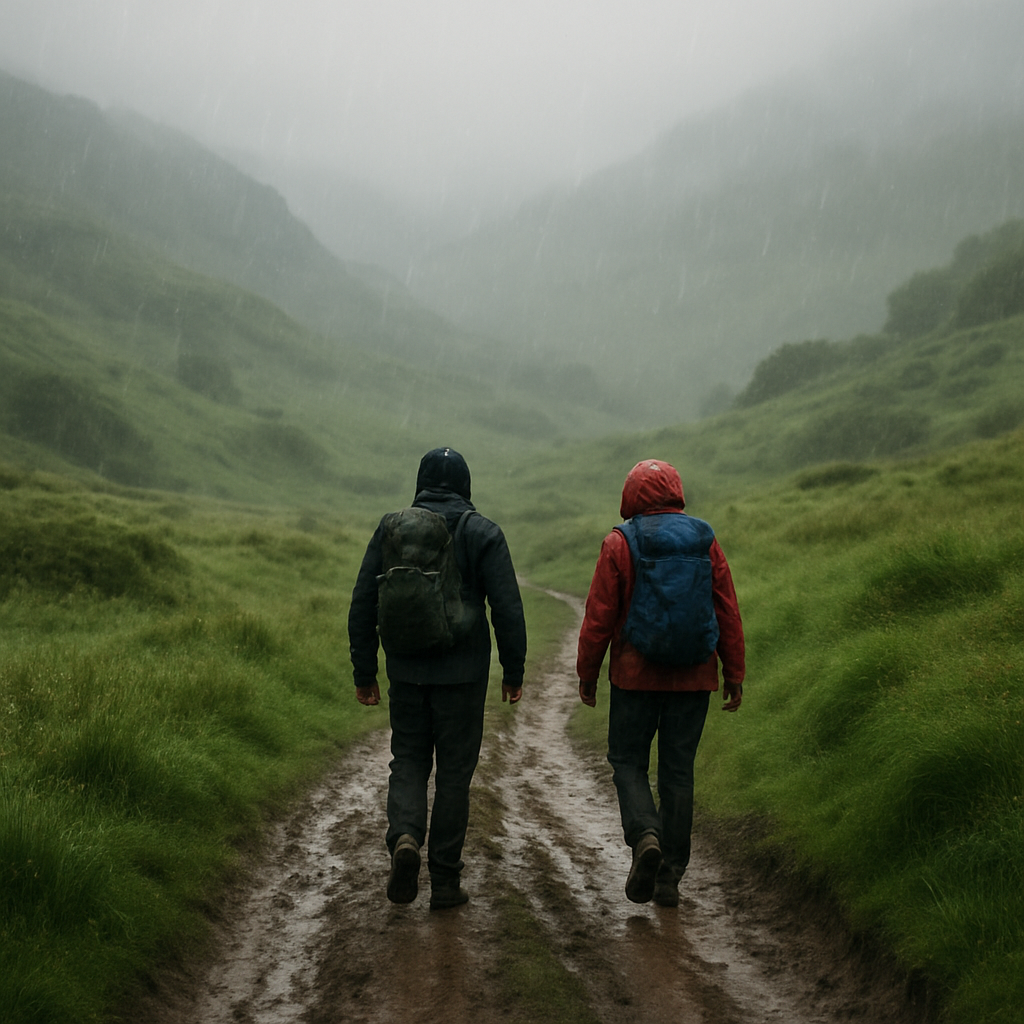
If you spend much time outdoors, you soon realise that rainy day hiking in the UK is not the exception – it is the norm. Showers roll in, clouds cling to the hills, and the trail turns muddy under your boots. With the right kit, mindset and route choice, those wet days can become some of your most memorable walks.
Why rainy day hiking in the UK can be brilliant
Rain changes the landscape in a way sunshine never can. Streams roar to life, waterfalls swell, woodland smells richer and colours deepen. Mist softens ridgelines and makes familiar paths feel new. As long as you are warm, reasonably dry and moving safely, there is a quiet magic to being out when most people stay indoors.
It also builds confidence. Learning how your body responds to cold and damp, how your boots grip on slick rock, and how your gear performs in a downpour makes you a stronger, more capable walker for every future trip.
Layering for damp conditions
Good layering is the secret to comfortable rainy day hiking in the UK. You are aiming to stay warm without overheating, and dry enough that you do not start to shiver when you stop.
Start with a moisture wicking base layer next to your skin. Synthetic or merino tops move sweat away so you do not feel clammy. Avoid cotton, which holds onto moisture and chills you quickly once the wind picks up.
On top, add a light insulating layer such as a fleece or thin synthetic jacket. This traps warm air even if it gets a little damp. In cooler months, you might carry a second mid layer to pull on for stops.
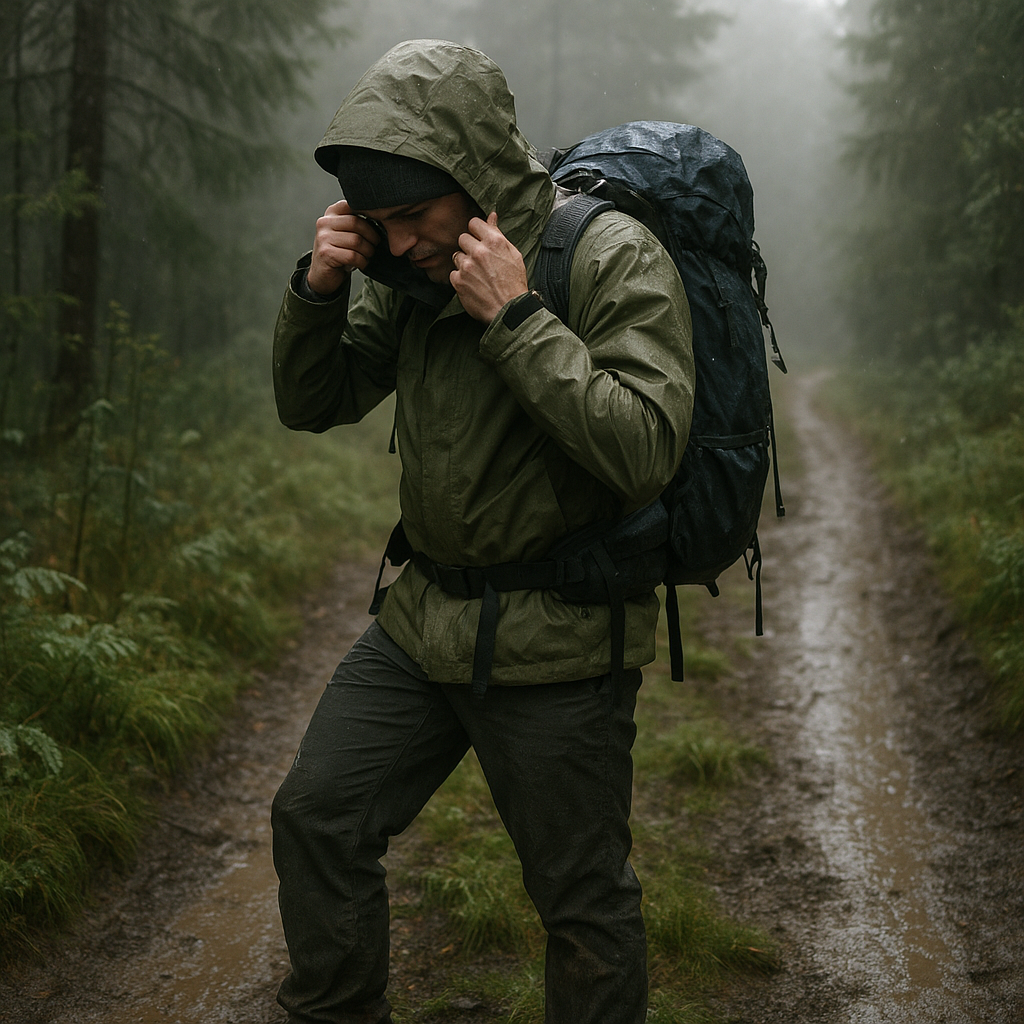
Your outer shell needs to be waterproof and windproof, with a decent hood that moves with your head. Pit zips and front zips help you dump heat on climbs, so you do not soak yourself from the inside out. On very wet days, waterproof trousers over walking trousers keep your legs comfortable and help cut windchill.
Managing body temperature on wet trails
On a soggy hill day, you will constantly balance effort, sweat and rain. Start slightly cool at the car or campsite, because you will warm up quickly once you are moving. If you set off feeling toasty, you are likely wearing too much.
Use every pause as a chance to fine tune. Too hot on the ascent? Open zips, remove a hat, or take off a mid layer and stash it in your pack. Feeling a chill when you stop for a snack? Pull on a warm layer straight away, before you get properly cold.
Hands and head make a big difference. A thin beanie and a pair of light gloves weigh almost nothing but can transform your comfort on a windy, wet ridge. In milder rain, a cap under your hood helps keep water off your face so you can look around and enjoy the views.
Keeping maps and essentials dry
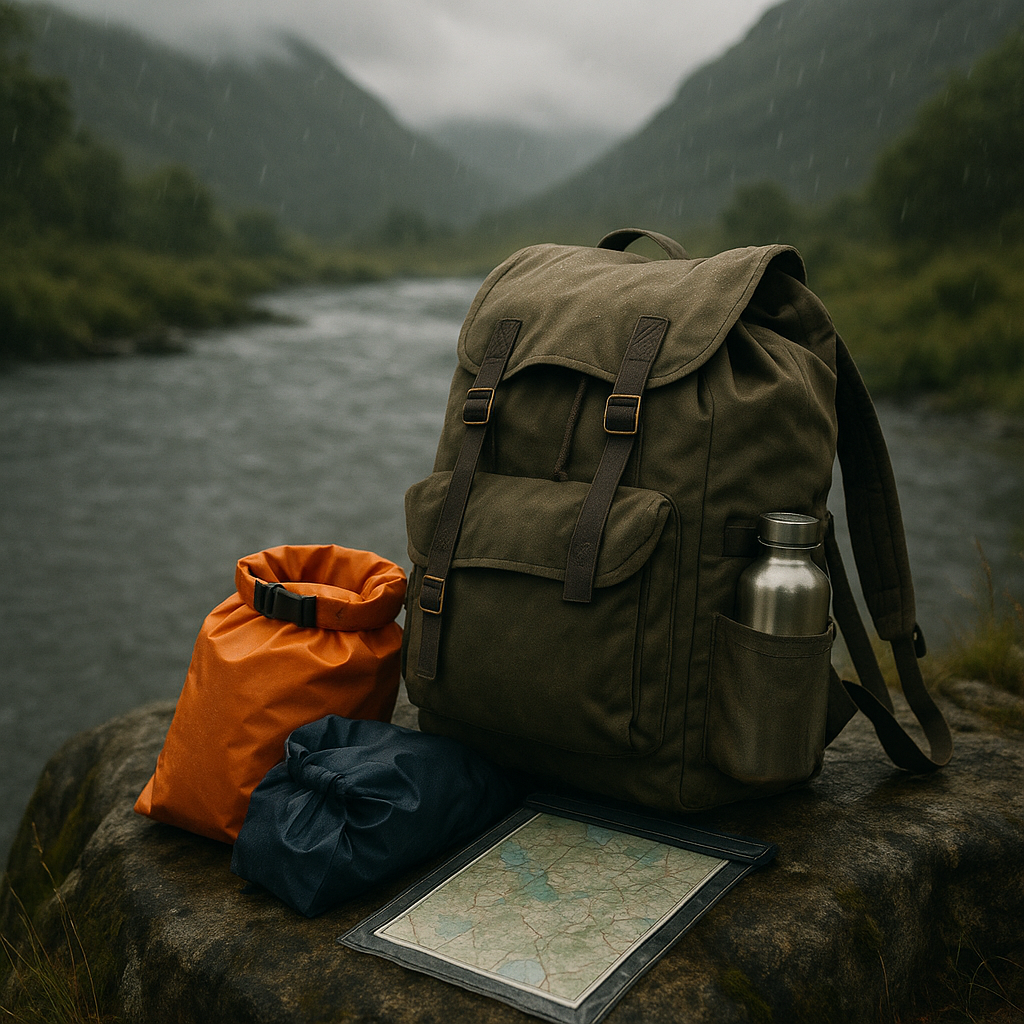
When you are planning rainy day hiking in the UK, think about what must stay dry at all costs: map, phone, spare layers, first aid kit, and food. A pack liner or large dry bag inside your rucksack is the simplest way to protect everything. Even if water sneaks in around zips or seams, your kit stays safe.
Keep your map in a waterproof case or map sleeve so you can read it in the rain without it turning to mush. If you use a guidebook or printed notes, tuck them in a small zip lock bag. Small dry bags are handy for grouping items like spare socks, gloves and hats so you can find them quickly with cold fingers.
Snacks and a hot drink make a big difference on wet days. Store food in easy to reach pockets so you do not have to unpack half your bag in the rain. A flask of tea, coffee or soup can lift spirits when the cloud drops and the wind picks up.
Choosing routes that work well in the rain
Some trails shine in sunshine, others come alive in wet weather. Picking the right route is key to enjoying rainy day hiking in the UK.
Rainy day hiking in the UK FAQs
Is it safe to go hiking in heavy rain?
It can be safe to hike in heavy rain if you choose your route carefully and know your limits. Avoid steep, eroded slopes, scrambling terrain, narrow ledges and paths that cross fast rivers or streams. Lower level woodland and valley routes are usually a better choice. Always check the forecast, be prepared to turn back if conditions worsen, and let someone know your plans before you set out.
What should I wear for a short rainy walk?
For a short wet walk, focus on staying comfortable rather than buying lots of specialist kit. A moisture wicking base layer, warm mid layer and a waterproof jacket with a decent hood are the basics. Add comfortable walking trousers, waterproof overtrousers if you have them, and boots or shoes with good grip. A hat, light gloves and dry socks waiting in the car will help you finish the day smiling.
How do I dry my hiking boots after a wet day?
After a wet walk, remove insoles and laces, then gently stuff your boots with newspaper or clean rags to draw out moisture. Change the paper as it becomes damp. Leave boots to dry naturally in a warm, airy place, away from direct heat like radiators or fires, which can damage the materials. Once dry, brush off any remaining mud and reproof the outer if water is no longer beading on the surface.