
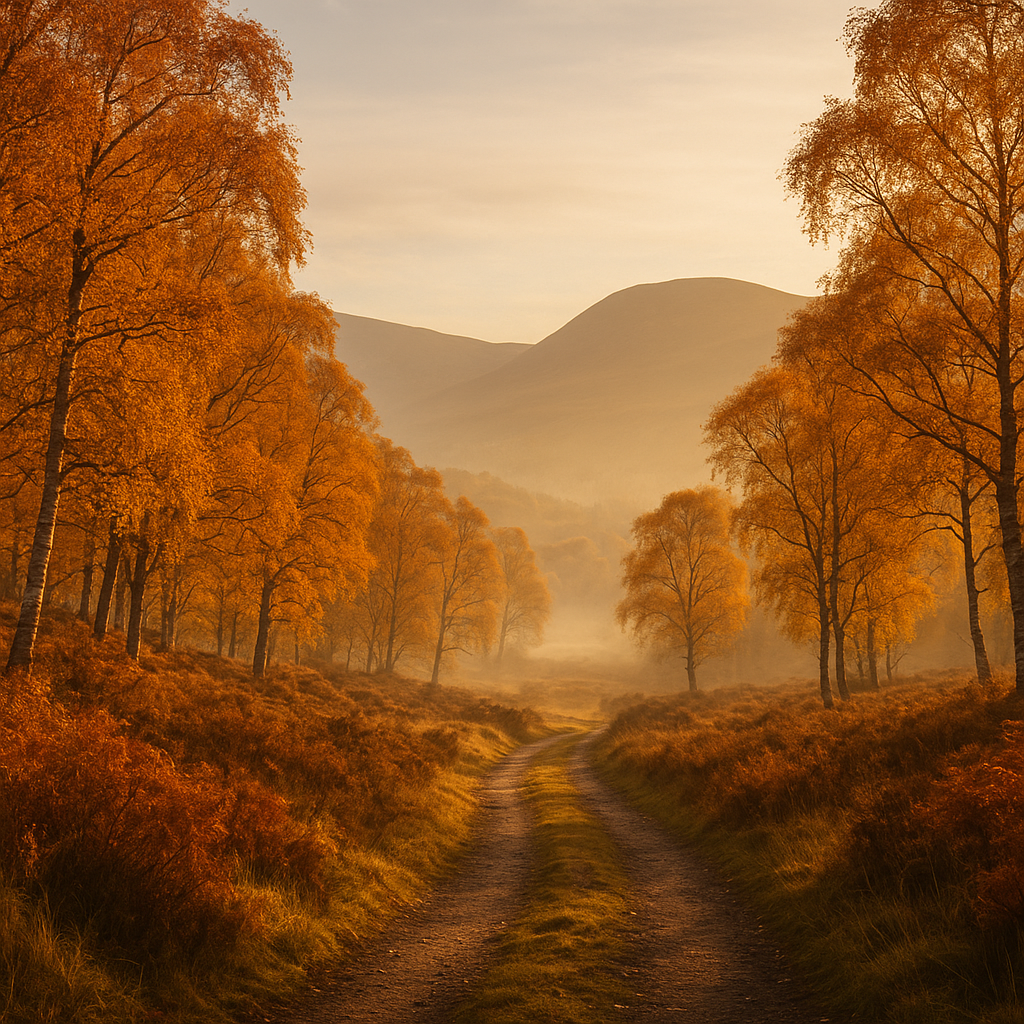
September and October are, in my opinion, the finest months to be walking in the Cairngorms. The summer crowds have thinned out, the midges are mostly done, and the birch woodland turns into something genuinely spectacular. Amber, copper, gold, the occasional flash of russet where a rowan is heavy with berries. If you’ve only ever visited in summer or winter, autumn walks in the Cairngorms will feel like discovering the place all over again.
There’s also the rut. From mid-September through to late October, red deer stags are in full voice across the glens, and if you’ve never heard a stag roar from a ridge above the treeline at first light, it’s one of those sounds that stays with you for a long time.
Why September and October Are the Sweet Spot
The Cairngorms in September still hold some warmth in the middle of the day, but the light is completely different from summer. It sits lower, rakes across the heather at a golden angle in the mornings and evenings, and makes every photograph look like someone’s applied a filter they haven’t. The bracken is going brown and the birches are starting their turn by mid-September, peak colour usually landing somewhere in the first two weeks of October depending on the year.
Daylight does shorten noticeably. By the end of October you’ve got roughly nine hours between sunrise and sunset, so planning your start time matters. I’d always aim to be walking by 8am at the latest on any serious route. Headtorches in the pack from September onwards is just sensible, not paranoid.
Temperatures can drop fast once the sun drops below the ridgeline, and the Cairngorm plateau in particular can see conditions that feel genuinely wintry even in September. Layers remain essential, and don’t underestimate how quickly weather moves across the high ground. The Met Office mountain forecast for the Cairngorms is worth checking every morning before you head out.
The Best Birch Woodland Routes for Autumn Colour
The birch woodland around Rothiemurchus and Glen Feshie is where you want to be for colour. These aren’t tame park walks. They’re proper ancient woodland with uneven ground, tree roots everywhere, boggy sections, and the feeling that not many people have come this way recently even when they have.
Rothiemurchus Forest Circuit
Starting from the visitor centre at Inverdruie near Aviemore, a loop through Rothiemurchus forest taking in Loch an Eilein gives you some of the most photogenic birch and Scots pine in the national park. The loch itself, with its ruined island castle, looks extraordinary reflected in still October water beneath orange canopy. It’s around 8 miles for a full loop with minimal elevation gain, which makes it a good choice if you want to move slowly and actually take photographs rather than just tick off summits.
Glen Feshie to Achlean
Glen Feshie is wilder, quieter, and in October it’s extraordinary. Walking south along the river from the Feshiebridge car park, the birch woodland thins as the glen opens out, but the views back north with colour on the lower slopes are something else entirely. Rewilding efforts in Glen Feshie led by Wildland Limited have dramatically reduced deer grazing pressure, and the natural regeneration of birch and Scots pine here is visible and remarkable. You can see young trees growing where there were none fifteen years ago.
Abernethy Forest and Loch Garten
On the eastern side of the national park, Abernethy Forest is an RSPB reserve with easy trails through ancient Scots pine and birch. The pine here are massive, gnarled, genuinely old. It’s less dramatic than the high glen walks but deeply atmospheric in autumn mist, and the birdwatching is exceptional. Crested tit, crossbill, capercaillie if you’re very quiet and very lucky.
Watching the Red Deer Rut Safely
The red deer rut in the Cairngorms runs roughly from mid-September through to late October, peaking around early to mid-October. Stags roar, clash, and herd their hinds across the open hillsides and glens. It’s spectacular, and it’s one of those wildlife experiences that genuinely doesn’t need you to travel abroad to find.
Safe distance is crucial. The general rule is a minimum of 50 metres, but honestly 100 metres or more is better, particularly with stags actively in rut. During this period, stags are stressed, exhausted, and can be unpredictable. This is not the moment to try and get a closer shot for your phone. Binoculars and patience get you far more than closing the gap.
Some practical points: move slowly on the hillside when deer are visible. Crouching behind natural features rather than standing on the skyline keeps you less intrusive to the animals. Early morning is the most active period. The glens around Glen Clunie, the Cairnwell, and the open hillsides above Braemar consistently offer good rut viewing from the road or from a discreet distance on the hill. Dogs must be kept on leads during this period around deer.
NatureScot, the Scottish nature agency, has clear guidance on watching deer during the rut without causing disturbance, and it’s worth reading before your visit if you’re new to this kind of wildlife watching.
Navigating Shorter Days on Autumn Walks in the Cairngorms
Losing the light is the most common way autumn walks in the Cairngorms catch people out. You leave in daylight, spend longer on the hill than planned, and suddenly the descent is happening in the dark on terrain you only half-remember from the ascent.
A few habits that help: always calculate your turnaround time before you set out rather than on the hill. For October, assume you need to be descending by 3:30pm at the latest on any route with rough terrain. Tell someone your plan. The Cairngorm Mountain Rescue Team covers a huge area and they’re volunteers; the best thing you can do for them is not need them.
A map and compass as backup to your phone GPS is not optional on the plateau or in the high glens. Autumn mist and low cloud can reduce visibility substantially, and there are sections of the Cairngorm plateau where the plateau edge is invisible until you’re very close to it.
Getting There and Where to Base Yourself
Aviemore is the obvious base, with good links by Scotrail from Inverness and further afield. Braemar gives you access to the eastern and southern glens and is worth considering if you want quieter, less-visited ground. Kingussie and Newtonmore are good options for Glen Feshie and the southern approaches to the massif.
Accommodation in October is easier to find than in peak summer, though weekends during the rut are busier than you might expect, wildlife watching has grown considerably as an activity in Scotland over the past decade. Book ahead if you’re planning a Friday to Sunday trip.
Autumn in the Cairngorms rewards patience and early starts. Go when the light is low, move quietly through the birch, listen for the stags, and give yourself enough time to get off the hill before dark. It’s the best version of this landscape, and it’s right there.
Frequently Asked Questions
When is the best time for autumn walks in the Cairngorms?
Mid-September through to late October offers the best combination of autumn colour and red deer rut activity. October is typically peak colour for the birch woodland, while the rut is most intense in early to mid-October. Weekdays are noticeably quieter than weekends.
How close can you get to red deer during the rut in the Cairngorms?
A minimum of 50 metres is the general guideline, though 100 metres or more is safer and less disruptive to the animals. Stags during the rut can be unpredictable, so binoculars are far more useful than trying to close the gap for a photograph.
Are the Cairngorm birch woodland walks suitable for beginners?
Routes like the Loch an Eilein circuit in Rothiemurchus are accessible to most walkers with reasonable fitness and decent footwear. Glen Feshie and more open terrain require more experience, particularly once you move beyond the lower woodland onto open hillside.