
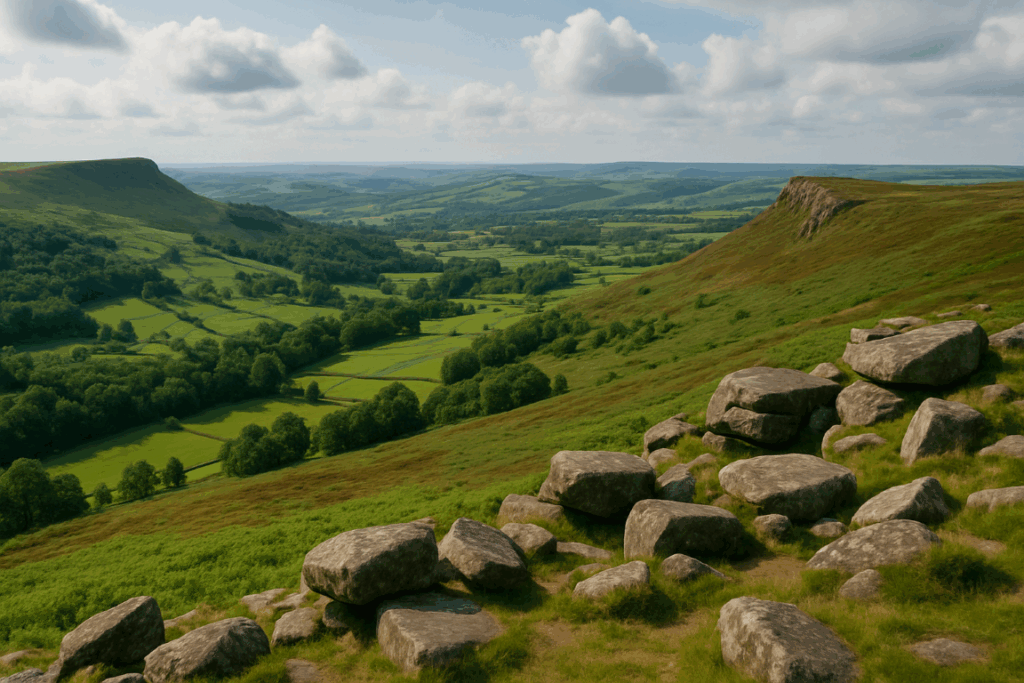
At some point, most keen walkers reach a ridge or a rocky step and think: right, this is more than walking. Your hands come out. You’re reading the rock, picking lines, feeling the exposure beneath you. That moment is usually your first taste of scrambling, and it’s addictive. But once you start looking into it properly, you’ll quickly run into the grading system, and if nobody’s ever broken it down for you, it can feel a bit baffling. So here’s a plain-English guide to scrambling grades UK explained, with real routes thrown in so you can match the theory to the terrain.
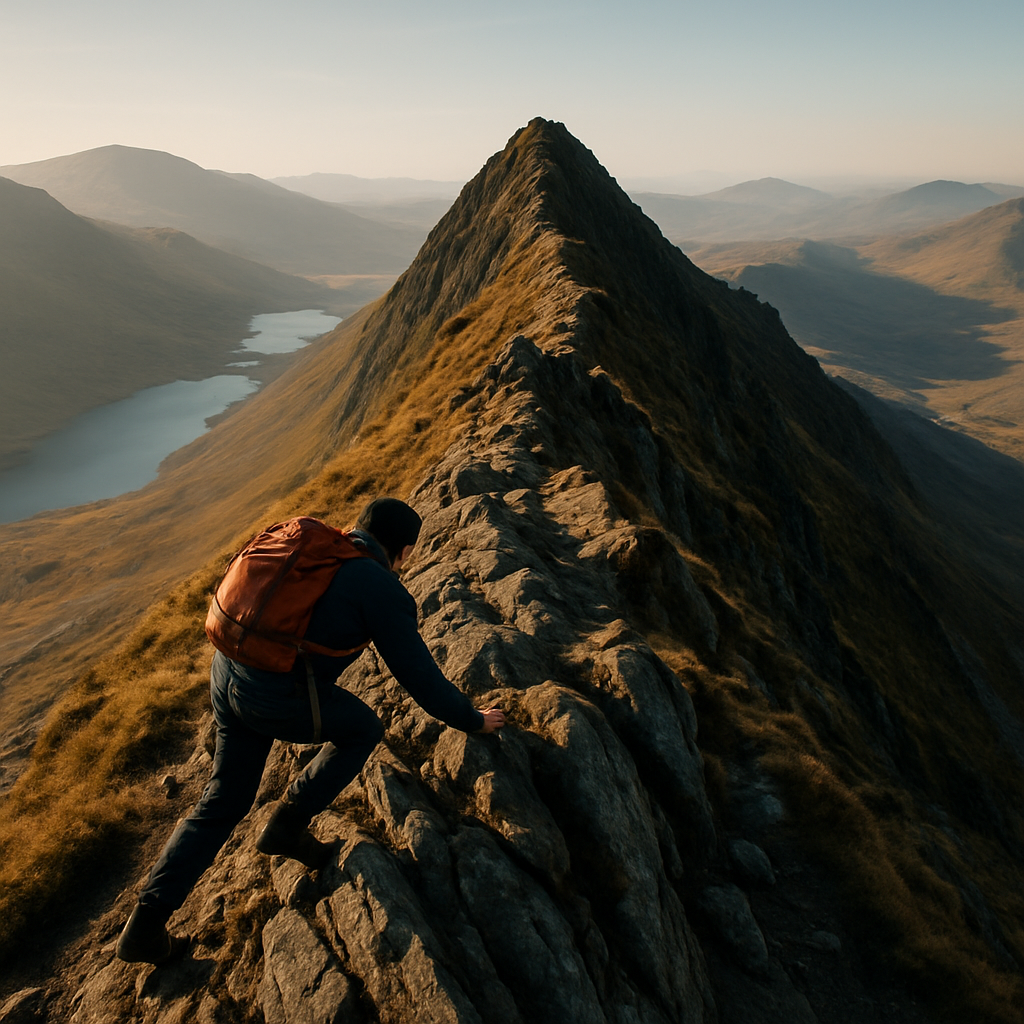
What Is Scrambling, Exactly?
Scrambling sits in the gap between hillwalking and technical rock climbing. You’re using your hands as much as your feet, the terrain is steep and rocky, and there’s genuine exposure on harder ground. It doesn’t require a rope on the lower grades, but it absolutely rewards good footwork, a calm head, and some basic route-finding ability. In the UK, we’re lucky to have world-class scrambling terrain scattered across Snowdonia, the Lake District, and the Cuillin Ridge on Skye. Each of those areas has routes at every grade, which makes them brilliant places to progress.
The grading system used in the UK runs from Grade 1 up to Grade 3, with some guidebooks adding a Grade 3S (or “Severe”) to flag routes that are pushing into roped climbing territory. It’s worth knowing that these grades are subjective and can vary slightly between guidebooks, but the broad descriptions hold up well across the board. The British Mountaineering Council has solid guidance on scrambling safety and what to expect at each level if you want further reading alongside this.
Grade 1: A Confident Walker’s Natural Next Step
Grade 1 scrambling is where most hillwalkers end up without even realising they’ve crossed a line. The terrain is steep and rocky, your hands touch the rock regularly, but you’re rarely in a position where a slip would be catastrophic. The exposure is real but manageable, and most confident walkers with good hill fitness will handle Grade 1 routes without needing any specialist skills or equipment.
A brilliant example is Tryfan’s North Ridge in Snowdonia. It’s one of the most popular mountain days in Wales, and the lower sections of the ridge are classic Grade 1, with some short stretches nudging Grade 2 near the top. The route rewards anyone who’s comfortable on rough ground and doesn’t mind using their hands. It’s not a walk, but it’s not intimidating either. In the Lake District, the ascent of Helm Crag above Grasmere via the ridge has scrambling sections that give a good feel for Grade 1 terrain without committing to anything serious.
If you’re moving from walking to scrambling, Grade 1 is the right place to start. Pick a dry day, wear grippy boots rather than trail shoes, and go with someone who’s done it before if you can. Confidence on rock comes quickly once you’ve had a few outings at this level.
Grade 2: Where It Gets Serious
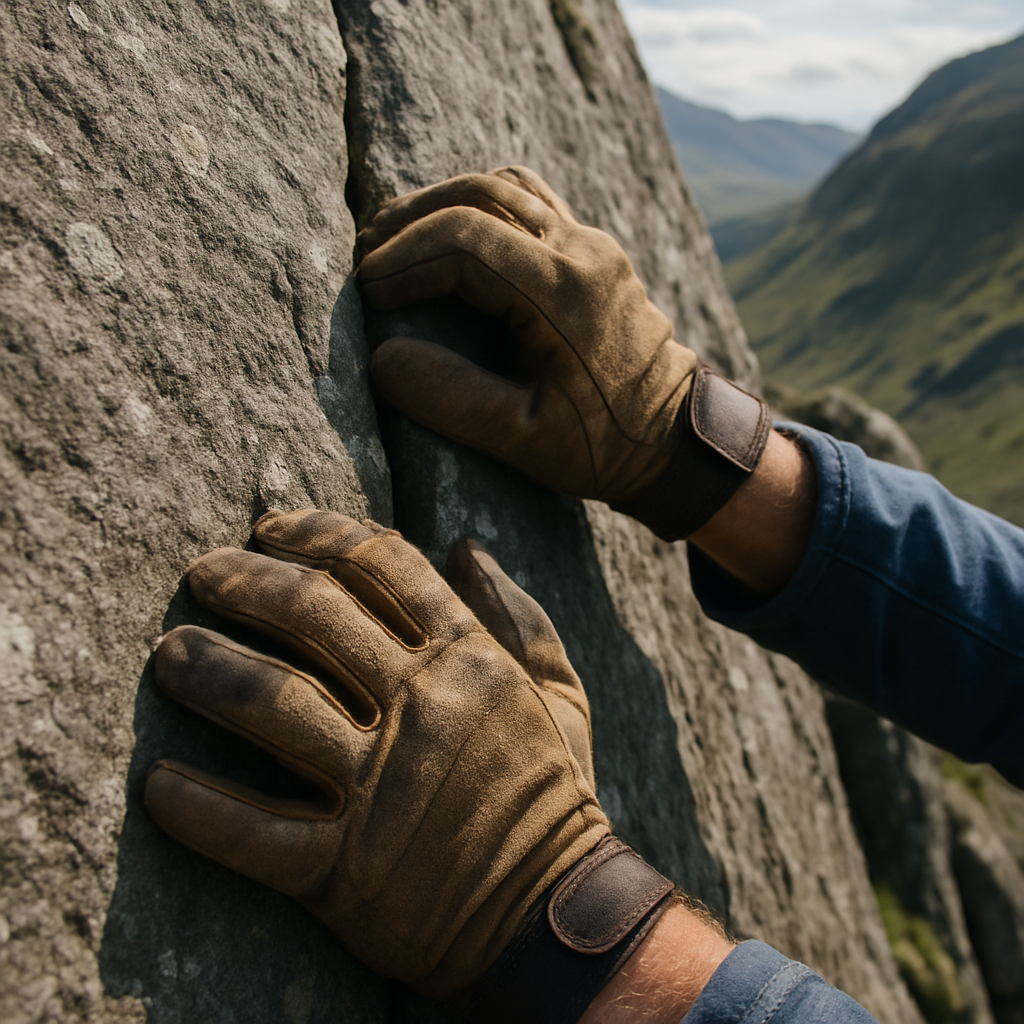
Step up to Grade 2 and the character of the terrain shifts noticeably. The moves are more sustained, the route-finding demands more thought, and the consequence of a slip becomes something you can’t ignore. Most experienced scramblers carry a short rope on Grade 2 routes, not because you’ll necessarily need it, but because there are sections where you’d want to protect a nervous or less experienced partner. Solo Grade 2 in poor conditions is a different beast entirely from the same route on a calm, dry day.
In Snowdonia, Bristly Ridge on Glyder Fach is a textbook Grade 2 outing. It’s direct, the rock is generally solid, and the ridge itself is spectacular. The moves require commitment and good balance, and there are sections where the wrong line could leave you exposed and uncomfortable. In the Lake District, Sharp Edge on Blencathra is perhaps the most famous Grade 2 scramble in England. It’s narrow, airy, and demands respect. People do come unstuck on it, especially in wet conditions when the polished rock becomes treacherous.
On Skye, the Cuillin begins throwing Grade 2 terrain at you from the moment you leave the path. The approach to Sgurr na Banachdich via the south ridge involves sustained Grade 2 scrambling, and the Cuillin’s gabbro rock, whilst grippy when dry, demands a completely different mindset to the softer rock of Snowdonia or the Lakes. If you’re taking your scrambling north to Skye, do your groundwork elsewhere first.
Grade 3: Roped Territory for Most People
Grade 3 scrambling is effectively the boundary between scrambling and climbing. The moves can be genuinely hard, protection is necessary in most cases, and you’ll benefit from knowing how to place gear or at least how to use a rope safely. Most people who regularly do Grade 3 routes carry a rack and know how to use it. These routes are not for someone who’s done a handful of Grade 1 days and fancies a jump.
Crib Goch in Snowdonia is frequently cited as a Grade 1 scramble in some guides and Grade 3 in others, which illustrates how subjective grading can be. The classic traverse in good conditions sits at the lower end, but the descent to the Pyg Track in poor visibility is a very different proposition. What’s consistent is that the exposure is significant throughout. In the Cuillin, Curved Ridge on Buachaille Etive Mor (technically in Glencoe rather than Skye, but part of the same scrambling conversation) is a Grade 3 in places and a rite of passage for many aspiring mountaineers.
The Inaccessible Pinnacle on Skye, the only Munro summit that requires actual climbing to reach the top, sits beyond even Grade 3 and into genuine rock climbing, which shows how the grading ladder keeps extending for those who want to push further.
Practical Tips for Moving Through the Grades
Getting the scrambling grades UK explained in theory is one thing. Putting it into practice is another. A few things I’ve found genuinely useful over the years:
- Don’t rush the grades. Spend proper time at Grade 1 before moving up. Confidence on easy terrain translates directly to calmer thinking on harder ground.
- Dry rock is a different material from wet rock. Routes that feel manageable in summer can be genuinely dangerous in rain or frost. Grade them up in your head when conditions deteriorate.
- A short rope and a few slings go a long way on Grade 2. You don’t need a full climbing rack, but having the ability to protect a step or lower someone down a section is worth the small extra weight.
- Guidebooks matter. Mark Glaister’s scrambling guides for the Lake District and Snowdonia are well-regarded and give detailed route descriptions with honest grade assessments.
- Consider a course. A single day with a qualified mountain leader or guide on Tryfan or Sharp Edge will teach you more about footwork and route-finding than a dozen solo outings.
Where Do You Actually Sit?
The honest answer is: get out and find out. If you’ve walked the Three Peaks, done a few Munros, and you’re comfortable on rough ground in wind and rain, Grade 1 scrambling is well within reach right now. Grade 2 is a season or two away with the right progression. Grade 3 is a project, something to work towards over a few years with proper technique behind you.
The mountains aren’t going anywhere. Take your time with the grades, enjoy each level for what it offers, and the scrambling will reward you handsomely.
Frequently Asked Questions
What is the difference between Grade 1 and Grade 2 scrambling in the UK?
Grade 1 scrambling involves frequent hand use on steep rocky terrain but is generally manageable without a rope for confident walkers. Grade 2 is more sustained and exposed, with sections where a slip could have serious consequences, so most scramblers carry a short rope for protection.
Do I need a rope for UK scrambling?
On Grade 1 routes, a rope is rarely necessary for experienced hillwalkers in good conditions. For Grade 2 and above, carrying a short rope and knowing how to use it is strongly recommended, particularly if you’re with less experienced partners or tackling the route in poor weather.
What are the best beginner scrambling routes in the UK?
Tryfan’s North Ridge in Snowdonia and Helm Crag above Grasmere in the Lake District are excellent Grade 1 introductions. Both are well-documented, relatively forgiving in dry conditions, and popular enough that you’ll rarely be alone on the mountain.
Is Sharp Edge on Blencathra suitable for beginners?
Sharp Edge is generally graded as Grade 2 and is not ideal for complete beginners. It’s a narrow, exposed ridge with polished rock that becomes genuinely treacherous in wet or icy conditions. Building confidence on easier Grade 1 routes first is the sensible approach before attempting it.
How do UK scrambling grades compare to rock climbing grades?
UK scrambling grades sit below the rock climbing grading systems such as the British adjectival system (Moderate, Diff, VS, etc.). Grade 3 scrambling is roughly equivalent to the easiest roped climbing, around Moderate or Difficult grade, meaning some Grade 3 routes genuinely benefit from a climbing rack and rope work.