
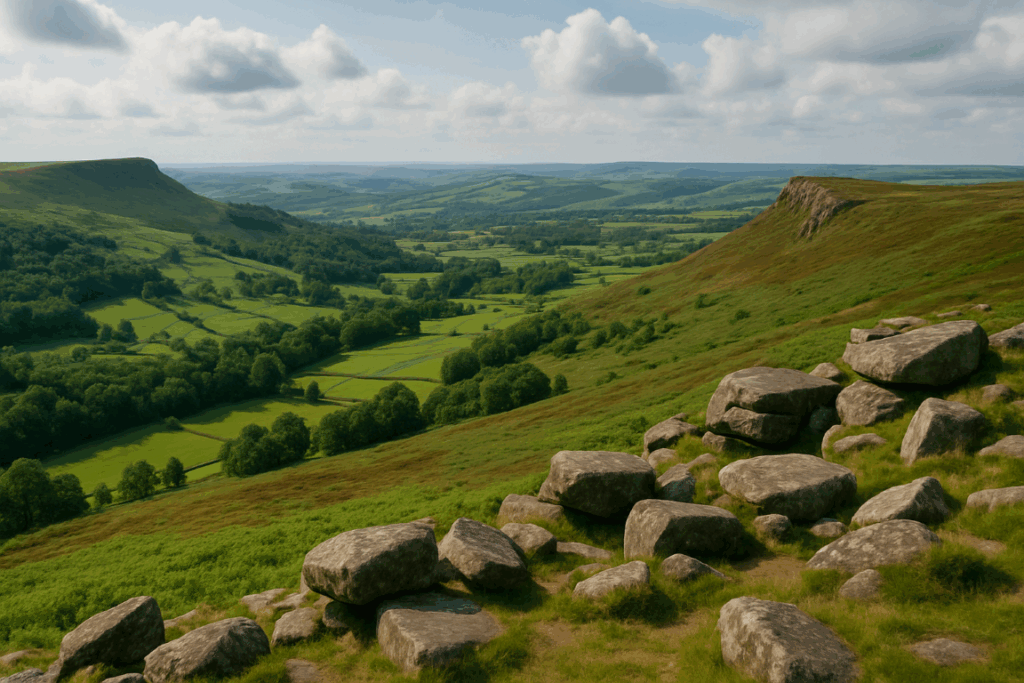
There is a particular type of hiker who grimaces at the words “blanket bog”. They’ve been there: boot sucked down into peat so dark it looks like crude oil, trousers soaked to the knee, the horizon offering nothing but brown sponge in every direction. I used to be that hiker. Then I started paying attention. Properly paying attention. And walking UK peat bogs started to feel less like a punishment for choosing the wrong route and more like a genuine privilege. Britain holds some of the oldest, most ecologically important land on the planet, and most walkers stride across it cursing their socks.
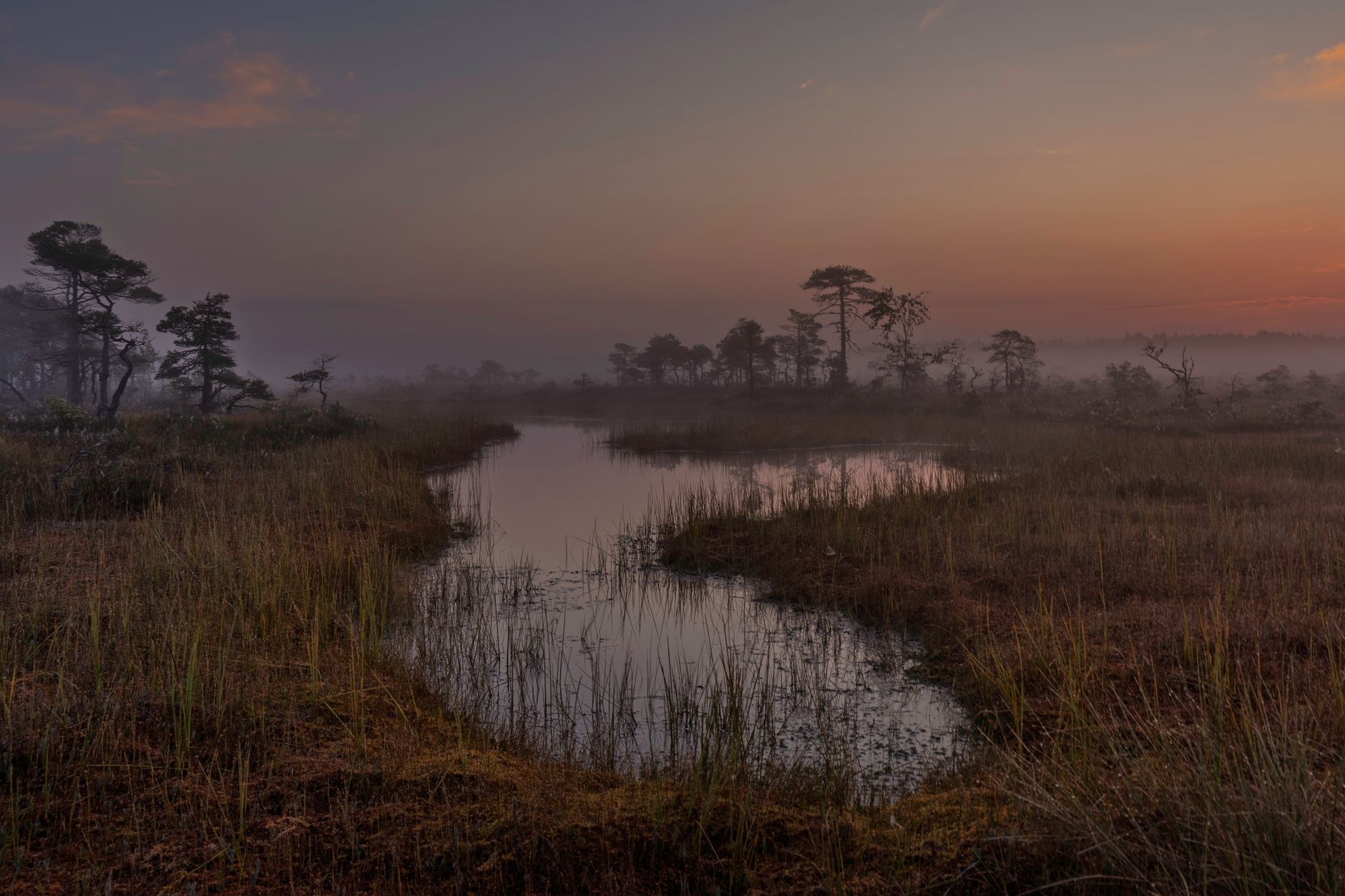
What actually is a blanket bog?
A blanket bog is a type of peatland that forms in high-rainfall, cool climates where dead plant matter accumulates faster than it decomposes. The UK is one of the best places on Earth for this. We hold around 13% of the world’s blanket bog, concentrated in Scotland, northern England, Wales, and Ireland. The peat itself is partially decomposed sphagnum moss, sedge, and heather, compressed over thousands of years. Some UK peat deposits are six metres deep and more than 10,000 years old. You are, quite literally, walking on a living archive.
The ecological value is staggering. According to DEFRA’s peatland guidance, UK peatlands store around three billion tonnes of carbon, more than all the forests in Britain and France combined. A healthy bog also regulates water flow, filters runoff, and supports a cast of specialist species: sundew, bog asphodel, golden plover, dunlin, short-eared owls. These are not barren wastelands. They are dense with life once you know where to look.
Where to find the best peat bogs for walking in the UK
The Flow Country in Caithness and Sutherland is the one that stops you in your tracks. It covers around 4,000 square kilometres and was designated a UNESCO World Heritage Site in 2024, the first peatland in the world to receive that status. I’d rate it as genuinely unmissable for anyone serious about wild landscapes. The sense of scale out there is otherworldly, all sky and dark water and absolute quiet.
Closer to most English walkers, the Pennines offer extensive bog walking. Cross Fell, the highest point in the Pennines at 893 metres, sits amid genuine blanket peat. The moors around Kinder Scout in the Peak District are textbook upland bog, though years of erosion have left the notorious “groughs” (deep peat channels) that make navigation genuinely challenging. The Cairngorms plateau holds substantial peat above the treeline, and if you’ve walked up there in early autumn you’ll know the peculiar, faintly medicinal smell of wet sphagnum in the air. Parts of Dartmoor in Devon carry deep peat too, particularly around the northern moor.
Wales has its share. The Berwyn Mountains in northeast Wales hold some of the most intact upland bog in Wales, and the Elenydd (Cambrian Mountains) upland is rich in wet heath and blanket peat. These are quieter than Snowdonia, which makes them worth the detour.
How to walk on peat bogs without causing damage
This is where I think a lot of walkers go wrong, and I include my younger self in that. Peat erosion is a serious problem. Once the surface vegetation is broken, peat dries out, erodes, and releases stored carbon. A single footpath worn into deep peat can take decades to recover.
Walk on existing paths where they exist. Many restored bogs now have timber boardwalks or stone pitching through the most fragile sections. Use them, even if a direct line across open ground looks faster. Off those paths, aim for tussocky grass and heather rather than bare peat or wet sphagnum pools. Sphagnum hummocks are spongy and alive; compressing them repeatedly does real harm. Spread out if you’re walking in a group rather than following each other’s footprints into a new line.
Peat hagging (the exposed banks of eroded peat) should be avoided as walking surfaces. They crumble, they’re slippery when wet, and breaking down the edges accelerates erosion further. Step around them, not along the tops. It’s the same principle as leaving no trace, just applied to ground rather than litter. If you’re thinking about how to be genuinely responsible on difficult upland terrain, bog walking demands the same awareness you’d give to any sensitive environment.
Kit matters too. Waterproof boots are obvious, but gaiters are underrated for bog walking. They keep peat off your trousers, protect your boot-top seams from repeated submersion, and give you more confidence to step into soft ground without hesitating. I wear mid-height gaiters for most upland bog and switch to full-length ones in the Flow Country. Trekking poles help enormously for balance on tussocky ground, and they can test the depth of pools before you commit your weight.
Restored bogs: why they’re worth seeking out
Around 80% of UK peatland is in a degraded state, damaged by drainage, burning, overgrazing, and historic peat cutting. But restoration is happening at serious scale. The RSPB, the Wildlife Trusts, and organisations like Rewilding Britain are blocking drainage ditches, re-wetting former grouse moors, and reintroducing sphagnum. The results, within a few years, can be dramatic.
Forsinard Flows RSPB reserve in Sutherland is worth a specific visit. There is a boardwalk trail out across the restored bog that gives you a proper sense of what a healthy peatland feels like underfoot: soft, yielding, very much alive. Hen Harriers nest there. The views are astonishing in their blankness, which sounds like faint praise but absolutely is not. On Dartmoor, the Mire Restoration Project has re-wetted several valley mires and the difference compared to adjacent drained land is visible to the naked eye.
Seeking out restored bogs adds a different dimension to a walking trip. You are not just passing through; you are witnessing recovery. That is worth something. The same curiosity that sends people to bag trig points or explore remote bothies can push you towards these quieter, stranger, historically significant places.
The atmosphere that keeps bringing me back
There is a quality of silence on a big bog that you do not get anywhere else. No trees to catch the wind. No valleys to create echo. Sound travels oddly, and the absence of human noise is total in a way that even high ridge lines do not quite achieve. Golden plovers call from nowhere visible. A short-eared owl quartering low over the heather looks like something prehistoric.
I find upland bog walking genuinely meditative in a way I cannot fully explain to people who haven’t experienced it. The terrain demands constant micro-attention, where to place your foot, what colour the ground ahead is, whether that patch of bright green sphagnum is an inch deep or thigh-deep. That level of focus clears your head in ways a straightforward ridge walk sometimes doesn’t. It’s a different mode of being outside.
If you have been dismissing blanket bog as something to endure between the interesting bits, I’d encourage you to try giving it a walk planned around it rather than through it. Go to the Flow Country if you can manage it. Walk the Kinder Scout plateau in mist. Spend a morning at Forsinard. If you’re planning bigger upland routes, the same kind of careful preparation that goes into avoiding classic mistakes on multi-day challenges will serve you well on open peatland too.
The bogs were here before us. The peat under your boots might be eight thousand years old. Give it the respect that deserves, and it will give you back one of the stranger, quieter, more compelling days you can spend on foot in Britain.
Frequently Asked Questions
Is it safe to walk across a peat bog?
Generally yes, if you take care. The main risks are getting stuck in deep peat pools (bright green sphagnum patches can be deceptively deep) and losing your footing on wet, tussocky ground. Test uncertain ground with a trekking pole before committing your full weight, and stick to existing paths where they exist. Gaiters and waterproof boots are essential.
Where are the best peat bogs to visit in the UK?
The Flow Country in Caithness and Sutherland is the most impressive, now a UNESCO World Heritage Site. Other notable areas include Kinder Scout in the Peak District, Cross Fell in the Pennines, the Berwyn Mountains in Wales, and Dartmoor’s northern moor. The RSPB’s Forsinard Flows reserve in Sutherland has an excellent boardwalk trail for accessible bog walking.
Why do peat bogs matter for climate change?
UK peatlands store around three billion tonnes of carbon, far more than all British and French forests combined. When bogs are drained or degraded, that carbon is released as CO2. Healthy, wet peat continues to lock carbon away; restored bogs can begin sequestering carbon again within a few years of re-wetting.
What gear do I need for bog walking?
Waterproof boots are non-negotiable. Gaiters (mid-height at minimum, full-length in the Flow Country or deep peat areas) protect your boots and trousers from repeated immersion. Trekking poles help enormously with balance on uneven tussocks and are useful for testing soft ground. A map and compass are especially important in featureless bog terrain where GPS can struggle in low cloud.