
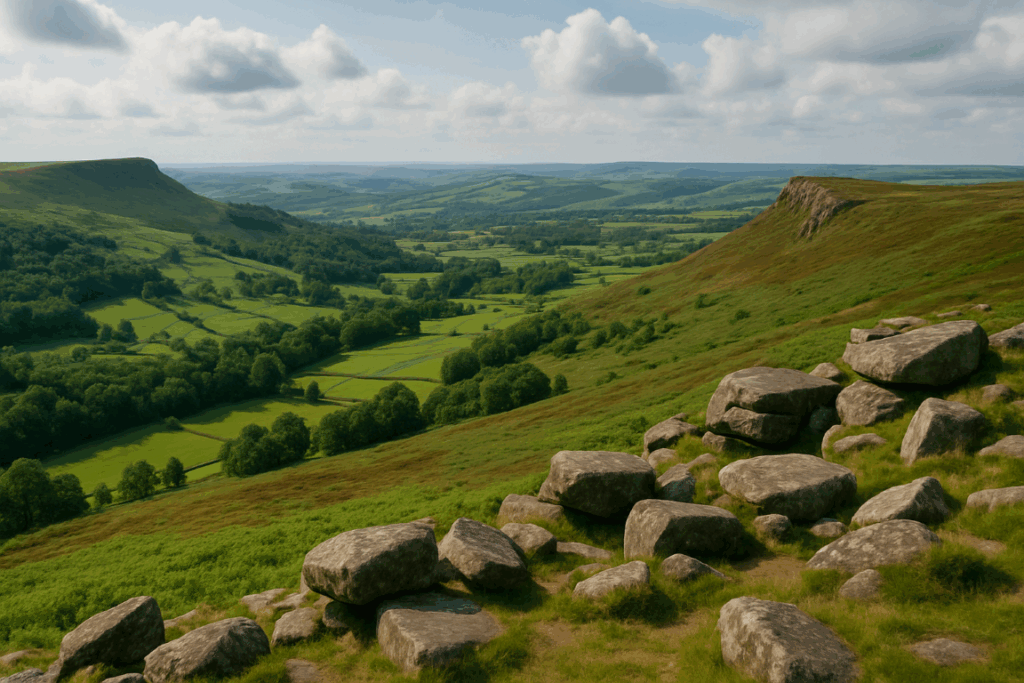
There is something deeply satisfying about pausing mid-stride on a woodland path, crouching down, and realising the hedgerow beside you is quietly loaded with food. Wild foraging on UK trails is not a niche pursuit reserved for survivalists or professional botanists. It is an ancient skill that most of us simply lost touch with, and one that is very much worth reclaiming. Whether you are halfway up a fell in the Brecon Beacons or ambling along a South Downs bridleway, knowing what grows around you transforms the landscape entirely.
That said, foraging carries real responsibility. Getting it wrong can mean anything from an upset stomach to something far more serious. This guide covers the most accessible wild edibles you are likely to encounter, how to identify them with confidence, when to find them, and how to harvest without leaving a trail of damage behind you.
Understanding the Law Around Wild Foraging in the UK
Before you start filling a bag, it is worth knowing where you legally stand. Under the Theft Act 1968, picking wild plants, fungi and fruit for personal consumption is generally permitted on common land and public rights of way, provided it is not done for commercial gain and the plants are not uprooted. However, in National Nature Reserves and Sites of Special Scientific Interest (SSSIs), picking is often restricted or prohibited entirely. Always check local land access rules before you start. The Countryside Code is a solid baseline for responsible behaviour on any trail.
The golden rule: take only what you will use, never uproot the whole plant, and leave at least two-thirds of any patch undisturbed so it can regenerate.
Essential Safety Rules Before You Eat Anything
Wild foraging UK trails can be genuinely rewarding, but a few safety principles are non-negotiable. First, the rule of positive identification: if you are not completely certain what you have found, you do not eat it. No guessing. Second, cross-reference every find with at least two reliable sources, ideally a physical field guide and a knowledgeable person. Apps can help with initial leads, but they should never be your final authority. Third, introduce new wild foods gradually. Even correctly identified edibles can cause reactions in some people, particularly fungi.
Keep a good field guide in your pack. Food for Free by Richard Mabey is the classic UK reference, updated regularly and genuinely useful in the field. There are also foraging courses run across the UK by experienced practitioners, many of whom are members of the Association of Foragers.
What to Look For in Spring and Summer
Spring is one of the most generous seasons on UK trails. Wild garlic (Allium ursinum) carpets ancient woodland floors from late March through May, often covering entire hillsides in a sea of white star-shaped flowers. The broad, glossy leaves have an unmistakable garlicky scent when crushed, which is the key identifier. It works brilliantly in pesto, soups, or simply tossed into scrambled eggs at camp. Be cautious in areas where it grows alongside lily of the valley, which is toxic; lily of the valley lacks the garlic smell entirely.
Also in spring, look for hawthorn leaves before they fully mature. Young, fresh leaves have a mild nutty flavour and make a decent trail snack. By June and July, elderflowers are everywhere on hedgerows across England and Wales, perfect for cordial or a simple syrup if you have the stove going at camp.
Summer brings wood sorrel, a delicate, shamrock-shaped plant with a sharp citrus tang that grows in damp, shaded woodland. It is easy to identify and a genuinely pleasant addition to a packed lunch. Raspberries (both wild and semi-wild) appear on open hillsides and woodland edges from July onwards, and bilberries grow on upland moorland across Wales, northern England and Scotland from late summer.
Autumn: The Best Season for Wild Foraging on UK Trails
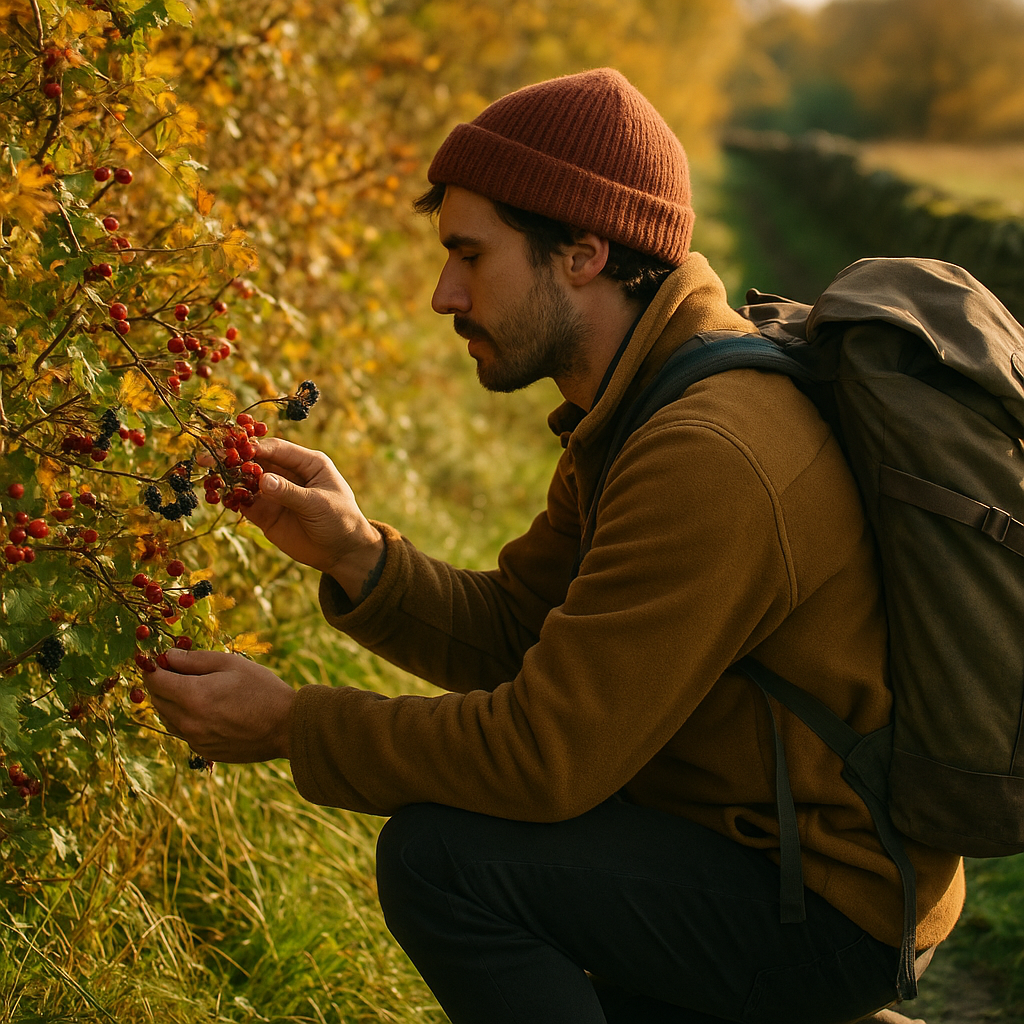
Autumn is the absolute peak for anyone interested in wild foraging UK trails. The hedgerows go into overdrive. Blackberries are the obvious star, ripening from late August into October, and found on almost every rural path in the country. Pick from higher up the bush where possible, away from the road splash zone. Sloe berries (the fruit of the blackthorn bush) appear a little later and are too bitter to eat raw, but they are ideal for sloe gin if you are willing to wait a few weeks.
Hazelnuts ripen from August onwards, and a good hazel tree heavily laden with nuts is one of the more joyful trail finds you can have. Crab apples turn up in hedgerows and wood edges; again, very tart but excellent cooked with a little honey over a camp stove.
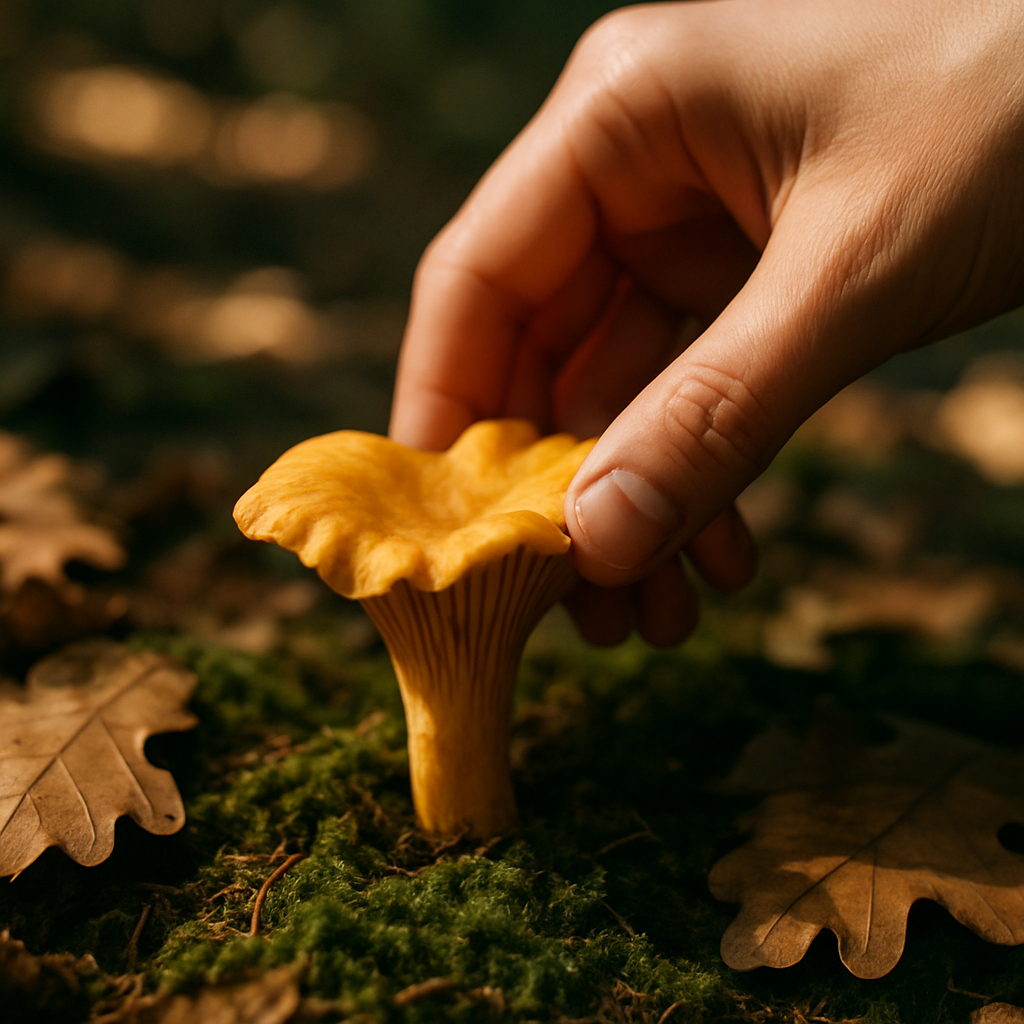
Fungi deserve their own serious mention here. Autumn is prime mushroom season, and there are some genuinely excellent edibles to find, alongside some deadly lookalikes that make identification absolutely critical. The chanterelle is a golden, funnel-shaped fungus found in mossy woodland, particularly under birch and oak, and is one of the most prized wild mushrooms in the UK. Giant puffballs are hard to misidentify when fully grown and make for a surprisingly filling camp meal when sliced and fried in butter. Chicken of the woods, a vivid orange and yellow bracket fungus growing on tree trunks, is another reliable find once you know it.
Avoid any white gilled mushrooms unless you have expert-level certainty. The death cap and destroying angel are both present in UK woodlands, and both are lethal. No wild mushroom is worth the risk unless you are absolutely sure.
Responsible Foraging Ethics on the Trail
Wild foraging UK trails only stays viable if we treat it as a shared resource. That means sticking to personal quantities, never stripping a patch bare, and being especially careful in popular areas. If you are on a heavily walked trail near a city, the reality is that dozens of other foragers may have passed through before you. Spread your picking across different spots rather than hammering one area.
Avoid foraging within a few metres of busy roads, where plants absorb pollution and vehicle spray. Similarly, check for signs of pesticide use on farmland edges. Use a wide, open basket rather than a sealed bag where possible; this allows spores and seeds to fall back to the ground as you walk, which is particularly important for fungi.
Getting Started: Your First Foraging Walk
The best way to begin is to focus on just two or three easily identifiable species and learn them thoroughly before expanding your repertoire. Wild garlic, blackberries and elderberries are a solid starting three because they are common, hard to confuse with anything dangerous, and genuinely delicious. Once you have those down, add bilberries, wood sorrel and hazelnuts in their respective seasons.
A good foraging walk is also just a brilliant walk. You slow down, you look more carefully, and you start reading the landscape in a completely different way. The hedgerows and woodland edges that blur past when you are striding towards a summit suddenly become maps of seasonal abundance. That shift in perspective is one of the real gifts of learning to forage, and it makes every trail richer for it.
Frequently Asked Questions
Is wild foraging legal on UK public footpaths?
Yes, picking wild plants, berries and fungi for personal use is generally legal on public rights of way and common land under the Theft Act 1968, as long as you do not uproot plants or pick for commercial gain. Always check local restrictions, particularly in National Nature Reserves or SSSIs where rules may differ.
What are the safest wild edibles for beginners to forage in the UK?
Blackberries, wild garlic, elderberries, bilberries and hazelnuts are considered among the safest starting points because they are distinctive, widespread and have no genuinely dangerous lookalikes when identified correctly. Building confidence with these before moving to fungi is strongly advisable.
When is the best time of year for wild foraging on UK trails?
Autumn is generally the richest season, particularly for fungi, berries and nuts. Spring is excellent for wild garlic and young leafy greens, while summer brings elderflowers, raspberries and wood sorrel. There is genuinely something to find on UK trails in every season.
How do I safely identify wild mushrooms in the UK?
Use a reputable UK field guide such as Roger Phillips’ ‘Mushrooms’ alongside cross-referencing with a knowledgeable forager or a structured foraging course. Never rely solely on an app for mushroom identification. If there is any doubt at all, leave it behind; several UK mushrooms are fatally toxic.
How much can I legally take when foraging on UK trails?
There is no fixed legal limit for personal-use foraging, but the accepted ethical standard is to take only what you need and leave at least two-thirds of any patch undisturbed. Avoid stripping any single location bare, particularly on popular trails where many other foragers may also visit.