
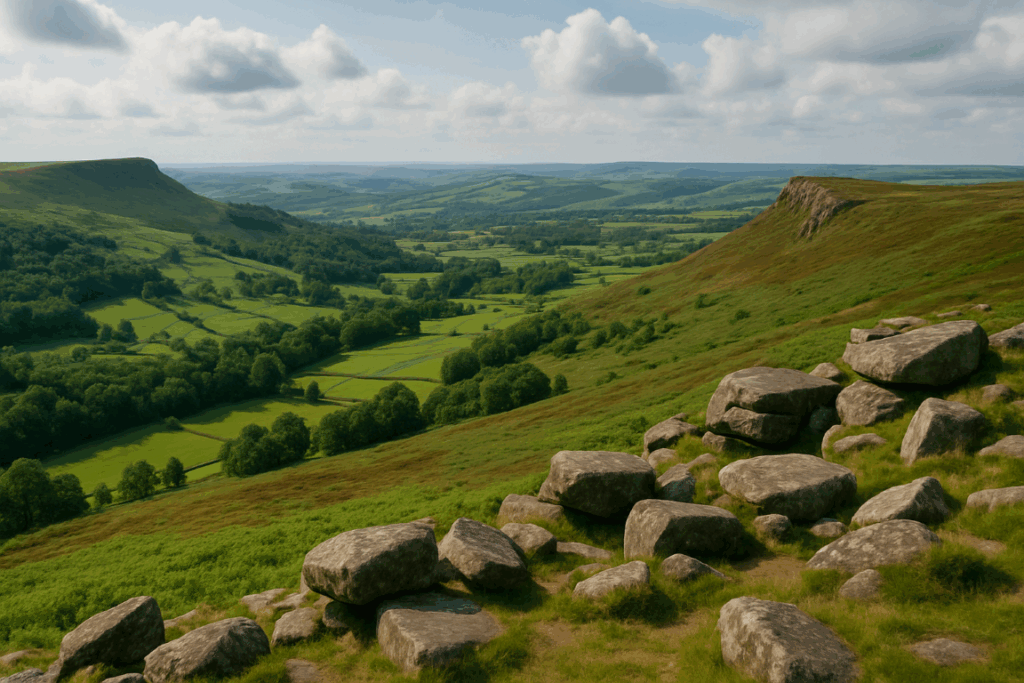
Ben Nevis in summer is a demanding day out. Ben Nevis in winter is a different mountain entirely. The crowds thin to almost nothing, the plateau transforms into a genuine alpine environment, and the mountain stops tolerating mistakes. A Ben Nevis winter climb is one of the most rewarding experiences the UK outdoors has to offer, but it demands respect, preparation, and a willingness to turn back when conditions say no.
I’ve been on the Ben in January with near-perfect neve underfoot and visibility for miles. I’ve also stood at the CIC Hut with 70mph gusts screaming off the summit plateau and turned around without a second thought. Both days were worthwhile. Getting the balance right is what this guide is about.
When Does Winter Season Actually Start on Ben Nevis?
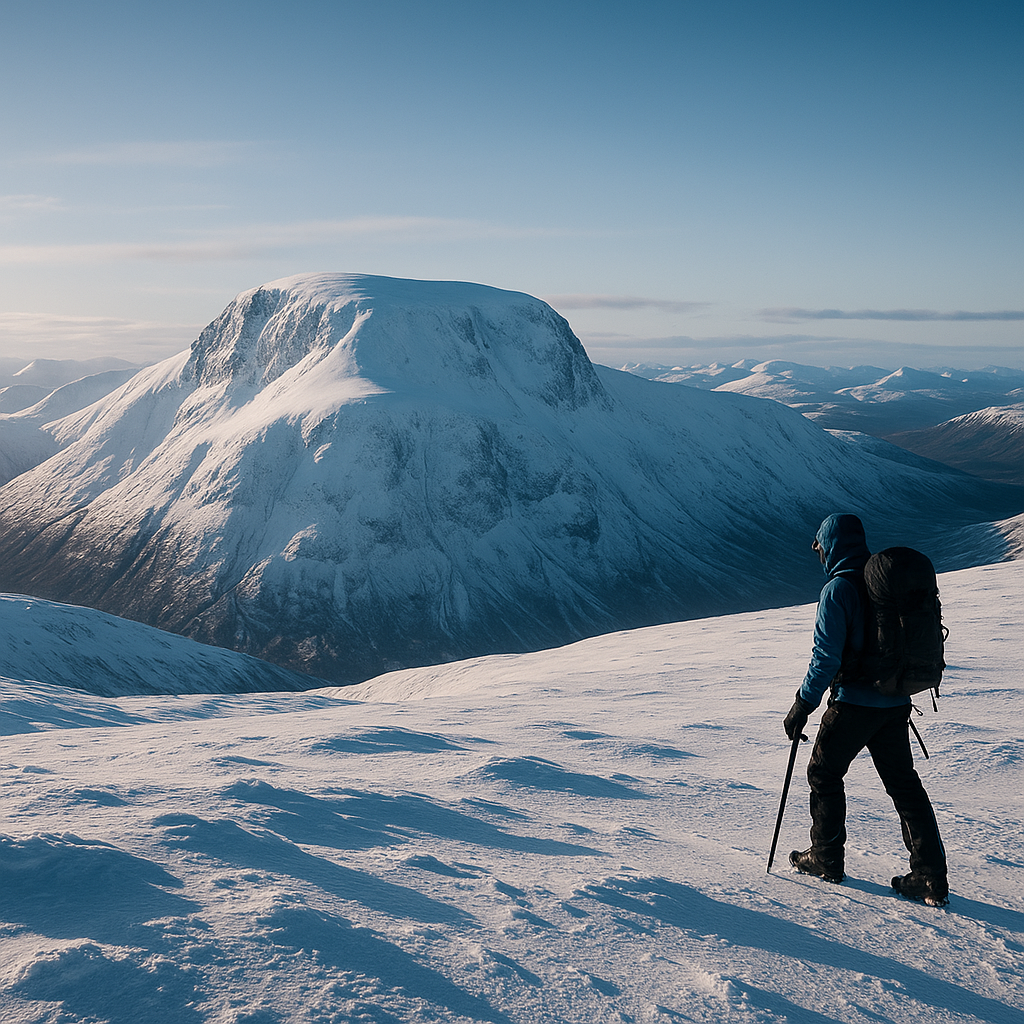
The mountain doesn’t flip a switch in December. Winter conditions on Ben Nevis can arrive as early as October and linger well into April or even May. Snow, ice, and high winds are all possible from late autumn onwards. The Scottish Avalanche Information Service (SAIS) publishes daily forecasts for Lochaber from December through to April, and checking these before any winter outing on the Ben is non-negotiable.
What defines winter conditions isn’t just snow on the ground. It’s the combination of ice on the tourist path, spindrift reducing visibility to near zero, windchill dropping effective temperatures well below what the Met Office forecast suggests, and hard-packed névé on the upper slopes that makes every footstep a commitment. The mountain sits at 1,345 metres, the highest point in the British Isles, and the summit plateau behaves like nowhere else in mainland Britain.
Route Options for a Ben Nevis Winter Climb
The Mountain Track (Tourist Route)
Most people attempting a winter ascent use the Mountain Track, also called the Pony Track, which starts from the Ben Nevis Visitor Centre near Glen Nevis. In summer it’s a straightforward slog. In winter, the upper section above Red Burn becomes serious terrain. The path becomes icy, the zigzags above 900 metres are exposed, and the plateau edge near the summit is not somewhere to wander in poor visibility without a compass bearing and the confidence to use it.
Navigation on the plateau is genuinely tricky. The cliffs of the North Face drop away sharply to the north-east, and in whiteout conditions people have walked off them. Specific compass bearings are essential for safe descent. The classic recommended bearings from the summit cairn are well documented, and I’d strongly suggest writing them on your hand or laminating them before you go.
The CMD Arête
The Càrn Mòr Dearg Arête is an outstanding winter route for those with scrambling experience and the right kit. It links Càrn Mòr Dearg to the Ben via a narrow rocky ridge, offering spectacular views into the North Face. In winter, this ridge requires crampons, an ice axe, and the judgement to assess whether the conditions are suitable. Cornices can build along the arête and the consequences of a slip are serious. This is a route for competent winter walkers, not a casual upgrade from the tourist path.
Winter Mountaineering Routes
The North Face of Ben Nevis is home to some of Scotland’s finest winter climbing, including classics like Tower Ridge and Observatory Ridge. These are technical mountaineering routes requiring ropes, full winter gear, and significant experience. If you’re drawn to those lines, a guided course with Glenmore Lodge or a qualified Mountain Instructor is the sensible starting point.
Essential Kit for Winter Conditions
The layering system matters enormously on a Ben Nevis winter climb. A moisture-wicking base layer, a mid-layer with real insulation, and a hardshell that can genuinely handle Scottish winter weather. Cotton kills in these conditions; leave it at home. Waterproof over-trousers are not optional.
Beyond clothing, the kit list for winter on the Ben is specific:
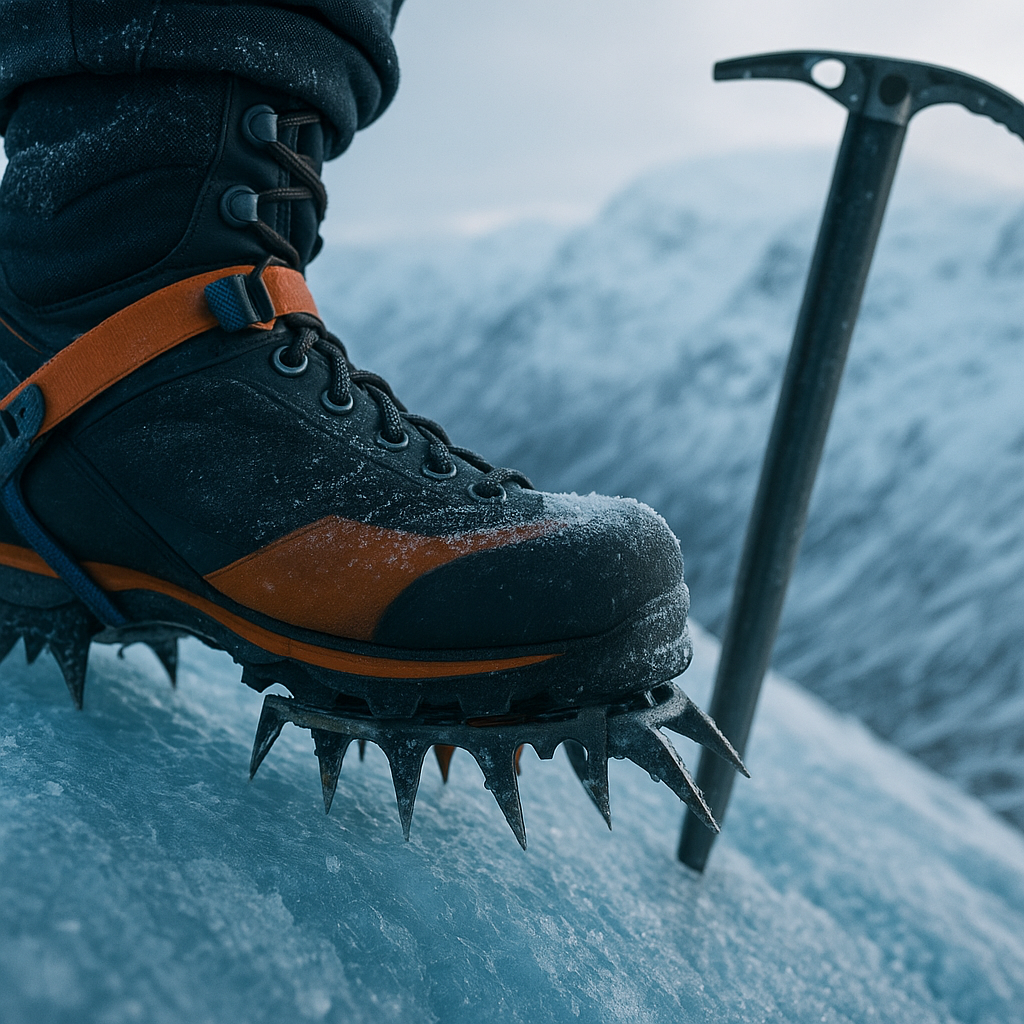
- Crampons: Ten or twelve point crampons that fit your boots securely. Microspikes are not sufficient for the upper mountain in hard winter conditions.
- Ice axe: A walking-length axe and, critically, the knowledge of how to use it for a self-arrest. An ice axe you don’t know how to use is dead weight.
- Navigation tools: A 1:25,000 OS map of the area (Landranger 41 covers the Ben), a compass, and a printed set of the summit plateau bearings. A GPS device is a useful backup but should never replace paper and compass.
- Head torch: Winter days in Scotland are short. Being caught above the snowline after dark without a head torch is not a situation you want to engineer.
- Emergency shelter: A group shelter or bivvy bag. Small, light, potentially life-saving.
- Food and hot drinks: A flask of something warm makes a real difference at the summit in January. Calorie intake matters too; cold conditions burn through energy faster than you’d expect.
Boot choice is worth mentioning. A full shank mountaineering boot that accepts a step-in crampon is what you want for anything beyond the lower slopes. Winter hiking boots with a B2 or B3 rating are the sensible minimum for the upper mountain.
Avalanche Awareness on Ben Nevis
The Ben Nevis winter climb carries genuine avalanche risk, particularly on and around the approaches to the North Face and on the upper slopes after heavy snowfall or during wind-loaded conditions. The SAIS Lochaber forecast gives a daily hazard rating from Low to Very High, along with the aspect and elevation of the greatest risk. Reading and understanding that forecast is a basic competency for winter outings here.
Key points to understand: avalanches don’t only happen on steep ground. Wind-loaded slopes above 30 degrees are the primary hazard, but smaller slides on lower-angled terrain can still knock you off your feet and bury you. After heavy snowfall, wait 24 to 48 hours before venturing onto loaded aspects. If the SAIS forecast is Considerable or above, have a serious think about whether the Mountain Track is the right day out or whether a lower-level winter walk is the smarter call.
Safety Considerations and Turning Back
Mountain Rescue callouts on Ben Nevis increase sharply in winter. Lochaber Mountain Rescue Team responds to dozens of incidents each year, and a significant portion involve people who underestimated the conditions or overestimated their own fitness and experience. This isn’t a criticism; it’s just the reality of what the mountain is during the colder months.
A few simple principles help keep a winter day on the Ben from going wrong. Start early, ideally before 8am in midwinter, to give yourself a full margin of daylight. Set a firm turnaround time before you leave the car park and stick to it regardless of how close the summit feels. If the weather closes in on the plateau, trust your compass over your instincts. And tell someone your route and expected return time before you set off.
If you’re new to winter hillwalking and keen to build skills, a winter skills course in the Cairngorms or on the Ben itself is genuinely one of the best investments you can make. Learning crampon technique, ice axe arrest, and avalanche awareness from a qualified instructor in a day or two changes how safe and confident you feel on the mountain entirely.
Why It’s Worth Doing
None of the above is meant to put you off. A successful Ben Nevis winter climb is a genuinely brilliant experience. The views from the summit on a clear winter’s day stretch further than any summer visit offers, with the Scottish Highlands laid out in white in every direction. The silence on the upper mountain, the crunch of crampons on good névé, the sharp cold air. It’s the kind of day that reminds you why you got muddy boots in the first place. Just go prepared, go informed, and know when to go home.
Frequently Asked Questions
Do I need crampons and an ice axe for a Ben Nevis winter climb?
Yes, for any attempt above the snowline in winter conditions, crampons and an ice axe are essential. The upper slopes and plateau can be sheet ice, and without the right equipment a slip becomes extremely dangerous. Equally important is knowing how to use an ice axe to self-arrest before you set out.
How long does a Ben Nevis winter climb take compared to summer?
Allow considerably more time than a summer ascent. A fit, experienced party might complete the Mountain Track route in 7 to 9 hours in winter, but cold ground, snow conditions, and shorter daylight hours all add time. Starting no later than 8am gives you the best margin of safety.
What is the best time of year for a winter ascent of Ben Nevis?
January through to March generally offers the most settled winter conditions with good snow consolidation, though this varies year to year. Late November and early December can be icy and unstable after early snowfall. April can still carry significant winter hazard on the upper mountain despite longer days.
Is a Ben Nevis winter climb suitable for beginners?
Not without prior experience or a qualified guide. The mountain in winter demands competent navigation, crampon and ice axe skills, and the judgement to read changing conditions. A winter skills course through a provider like Glenmore Lodge is a recommended starting point for those new to winter hillwalking in Scotland.
Where do I check avalanche conditions before climbing Ben Nevis in winter?
The Scottish Avalanche Information Service (SAIS) publishes daily forecasts for the Lochaber region, covering Ben Nevis and the surrounding area, from December through April. Check the forecast at sais.gov.uk before every winter outing and take the hazard rating seriously when planning your route.