Author: Ethan Miller

  • Why Walking to the High Street Is Good for You and the Planet

    Why Walking to the High Street Is Good for You and the Planet

    Many of us think of the high street as somewhere we rush through between errands, but the real magic begins on the way there. The benefits of walking to the high street go far beyond saving a bit of petrol money. For outdoors lovers, it is a simple way to weave more fresh air, movement and nature into everyday life.

    The benefits of walking to the high street for your body

    Regular walking is one of the easiest ways to stay active without needing special kit or a big chunk of time. A brisk walk to your local shops raises your heart rate, warms your muscles and gently strengthens your legs and core. Over time, this kind of low impact movement can improve cardiovascular health, help maintain a healthy weight and keep joints moving freely.

    Unlike a gym session, walking to the high street slots around your normal routine. Ten minutes there and ten minutes back already gives you a decent chunk of daily movement. Add in a slightly longer loop through a park or along a riverside path and you have turned a quick errand into a mini training walk for your next hill day.

    Walking on varied pavements, cobbles and cut through paths also helps your balance and coordination. Your feet and ankles get used to responding to different surfaces, which pays off when you are picking your way over muddy trails or rocky ground at the weekend.

    How a high street walk boosts your mood

    The benefits of walking to the high street are not just physical. Time outside, even in a busy town, can work wonders for your headspace. Natural light helps regulate your body clock, lifting energy levels and improving sleep. A change of scene breaks up long stretches indoors and gives your brain a chance to reset.

    On foot, you notice things you would miss in a car or bus: birds nesting in shopfront eaves, climbers spilling over garden walls, the first frost on parked cars, or blossom drifting along the pavement. These small, seasonal details are gentle reminders that you are part of a wider, living landscape, not just a to do list.

    There is also the quiet social benefit. Nodding to the same dog walkers, chatting to the person at the bakery counter or pausing to watch a busker all help you feel rooted in your local area. That sense of belonging can be as nourishing as a long hike in the hills.

    The environmental benefits of walking to the high street

    Choosing your feet over four wheels is one of the simplest ways to tread more lightly on the planet. Short car journeys are often the most polluting, as engines run cold and traffic is stop start. Swapping even a couple of those trips each week for a walk reduces emissions, cuts congestion and helps keep local air cleaner.

    Cleaner air makes high streets more pleasant places to linger. Trees lining pavements, pocket parks and planted verges all work better when they are not constantly battling exhaust fumes. The more people walk, the stronger the case for greener, people friendly streets with benches, planters and safe crossings.

    Supporting your local shops on foot also encourages more compact, walkable town centres. Instead of sprawling retail parks surrounded by tarmac, we get vibrant streets where daily needs are within easy reach. That is good news for wildlife too, as it reduces the pressure to build over fields and woodland on the edge of town.

    Turning everyday errands into outdoor adventures

    You do not need a mountain on your doorstep to feel like an outdoors person. With a little thought, you can turn your regular high street trip into a small adventure. Try taking a different route each time, following side streets you have never explored or linking up green spaces on the way.

    If there is a canal, river or park near your town, build a loop that takes it in. Notice how the light changes through the year, which trees hold their leaves longest and where puddles always appear after rain. These are the same observation skills that make days on the hill safer and more rewarding.


    Person experiencing the benefits of walking to the high street through a green neighbourhood
    Busy UK high street scene showing the benefits of walking to the high street for people and the environment

    Benefits of walking to the high street FAQs

    How far is reasonable when walking to the high street?

    What feels reasonable will vary from person to person, but many people find that a 10 to 20 minute walk each way is comfortable for regular trips. If you are new to walking more, start with shorter distances and build up gradually. You can also use a bus or lift one way and walk the other, so the benefits of walking to the high street fit easily around your energy levels and daily routine.

    What should I wear for a high street walk in bad weather?

    Comfortable footwear with decent grip and a waterproof layer are the main essentials. In wet or cold weather, a light waterproof jacket, a warm layer and a hat or gloves can make a big difference, especially if you are carrying shopping. Think about what you would wear for a short countryside stroll and apply the same common sense to enjoy the benefits of walking to the high street in all seasons.

    How can I make walking to the high street feel more like outdoor time and less like a chore?

    Try planning a slightly more scenic route that takes in trees, parks or waterways, even if it adds a few minutes. Leave a little extra time so you are not rushing, and give yourself permission to notice the small details of the world around you, from birdsong to changing leaves. Meeting a friend, listening to the sounds of your town or simply focusing on your breathing can all help you feel the benefits of walking to the high street as a pocket of genuine outdoor time.

    town centre app

  • Leave No Trace on Busy UK Trails: A Real-World Guide

    Leave No Trace on Busy UK Trails: A Real-World Guide

    If you love a muddy path and a wild view, you have probably heard people mention leave no trace principles. On busy UK trails and mountain paths, these ideas are less about being perfect and more about keeping our favourite places feeling wild, even as more boots and bikes pass through.

    What are leave no trace principles in real life?

    At heart, leave no trace principles are about one simple question: could the next person walking past tell you were ever there? On crowded routes in the Lakes, Snowdonia, the Peaks or the Highlands, that means thinking about how we walk, rest, eat, camp and even go to the loo outdoors.

    You do not need to be an expert. If you can plan ahead a bit, pack out what you bring in, and show some respect for other people and wildlife, you are already most of the way there.

    Leave no trace principles and litter: more than just picking up

    Litter is the most obvious problem on popular paths. It is not just crisp packets and bottles. Banana skins, orange peel and tea bags all count as litter too. They can take months or years to break down in the cooler, harsher conditions you find on hills and moorland.

    A few simple habits help:

    • Pack a small rubbish bag and take every scrap home, including food waste.
    • Decant snacks into reusable tubs so you carry less packaging.
    • Pick up one or two bits of other people’s litter on the way back if you can.

    On busy weekends, paths can look tired by the afternoon. A small tidy as you walk can quietly undo a surprising amount of damage.

    Human waste outdoors: dealing with the awkward bit

    Toilets are not always where you need them, especially on long ridges or remote moorland. Yet nothing ruins a view like used loo roll flapping in the heather.

    In popular areas, the best option is often to plan around public toilets at car parks, visitor centres and pubs before and after your walk. If you do get caught short:

    • Move at least 50 metres away from paths, streams, lakes and walls.
    • Dig a small hole with a trowel, go in the hole, then cover it properly.
    • Always pack out used toilet paper and hygiene products in a sealed bag.

    It can feel odd at first, but treating waste this way is one of the most important leave no trace principles on crowded hillsides.

    Path erosion: how you walk really matters

    On popular mountains, erosion is often the biggest issue. Hundreds of feet, especially in wet weather, can quickly turn a neat path into a scar of loose stones and mud.

    To help protect paths:

    • Stick to the main path, even if it is a bit boggy or rocky.
    • Avoid cutting corners on zigzags, which creates new tracks and speeds erosion.
    • Walk single file through muddy sections rather than spreading out and widening the path.

    It can be tempting to step onto the grass to dodge puddles, but staying on the rough line of the path keeps the damage in one place instead of spreading it across the hillside.

    Wildlife disturbance: sharing space with nature

    Hills and moors are home first, playground second. Ground-nesting birds, deer, hares and livestock are all trying to get on with life while we pass through.

    Simple choices make a big difference:

    • Keep dogs under close control, especially in lambing season and during bird nesting time.
    • Give any wildlife you see plenty of space and keep noise down.
    • Do not feed wild animals or leave food scraps that might attract them.

    Following local signs and seasonal restrictions is part of respecting leave no trace principles too. They are usually there because something delicate needs a bit of extra peace.

    Wild camping etiquette where it is allowed

    Wild camping can be a beautiful way to experience the hills, but it comes with responsibilities, especially in busy areas. In Scotland, and in a few spots elsewhere where it is accepted, aim for a quiet, low-impact style.

    Good habits for wild camping include:

    Walker tidying rubbish on a UK trail to follow leave no trace principles
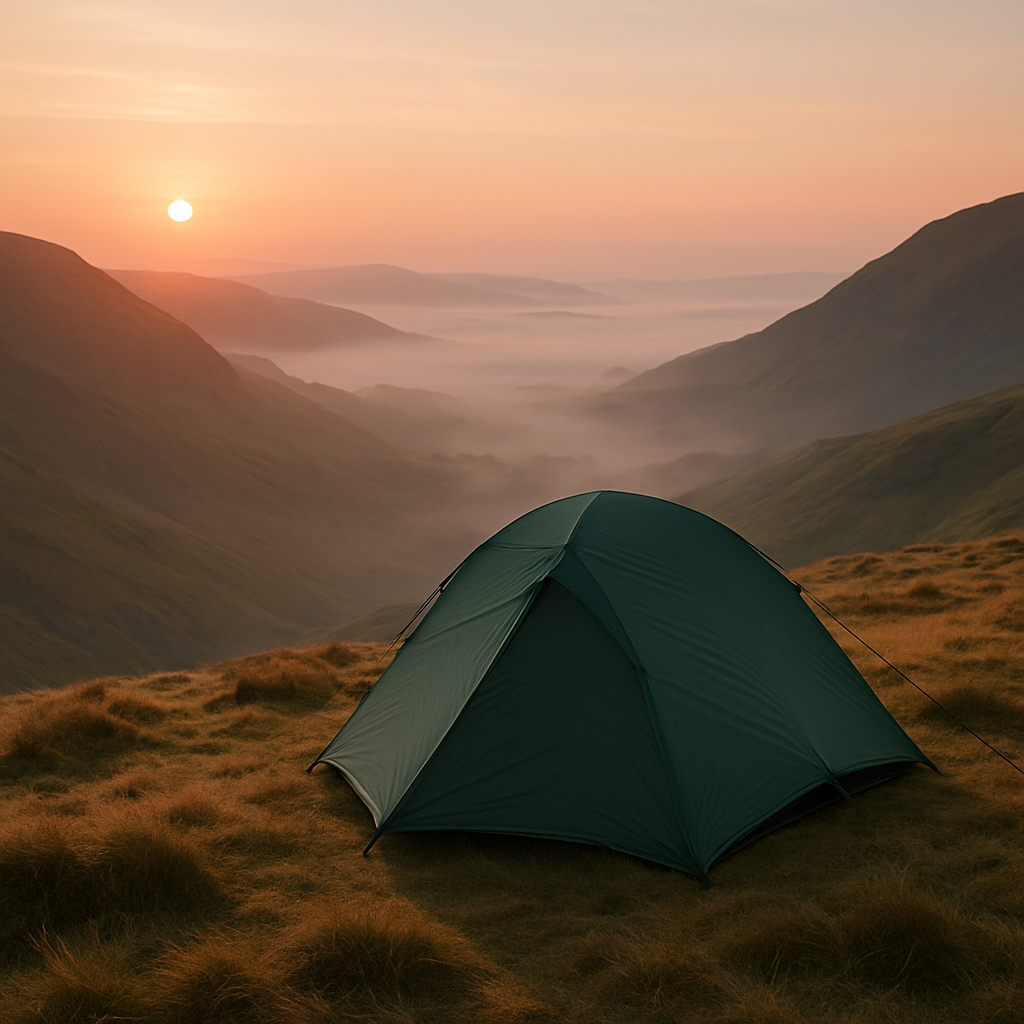
    Wild camper using a small tent in the hills while respecting leave no trace principles

    Leave no trace principles FAQs

    Do leave no trace principles mean I cannot enjoy myself outdoors?

    Not at all. Leave no trace principles are about enjoying the outdoors in a way that keeps it special for the next person too. You can still have picnics, take photos, paddle in streams and camp where it is allowed. The key is to plan a little, tidy up after yourself, avoid damaging paths and plants, and respect wildlife and local rules.

    Is it really that bad to leave banana skins or orange peel on the hill?

    Yes, even natural food waste goes against leave no trace principles. In the cooler, harsher conditions found on hills and moorland, banana skins and orange peel can take a very long time to rot. In the meantime they look messy, can attract animals to busy paths and car parks, and encourage others to litter. It is always best to pack all food waste out with you.

    How can I start following leave no trace principles if I am new to hiking?

    Begin with a few simple steps: plan your route and toilet stops, carry a small rubbish bag, stay on marked paths where they exist, keep dogs under control, and learn the basics of local access rules. As you gain experience, you can add more habits, like using a trowel for toilet needs and choosing low-impact wild camping spots where it is allowed. Small changes soon become second nature.

  • Why Working With Wood Outdoors Feels So Good

    Why Working With Wood Outdoors Feels So Good

    If you love fresh air, muddy boots and the smell of timber, then outdoor woodworking projects for beginners can be the perfect way to spend more time outside. You do not need a fancy workshop or years of experience. A small corner of the garden, a few basic tools and a free weekend are enough to build something useful while soaking up the sights and sounds of nature.

    Why make things outside instead of indoors?

    Working with wood outdoors changes the whole feel of a project. Instead of being shut away, you are listening to birds, feeling the breeze and watching the light move across the day. Sawdust falls onto soil instead of a spotless floor, and mistakes feel less serious when you are standing under an open sky.

    There are practical benefits too. Long planks are easier to move around in the garden than in a cramped shed. You can work on bigger pieces like benches or planters without worrying about hitting the ceiling or denting the walls. Ventilation is built in, so you are not breathing in dust in a tight space, and it is easier to keep the mess under control.

    Choosing the right beginner projects

    Good outdoor projects for new makers are simple, sturdy and forgiving. Think about things that will actually be used in the garden or on the patio so you see them every day and feel proud of your work. Classic ideas include planter boxes, a simple potting bench, a rustic bird table or a chunky outdoor stool for slipping your boots on and off.

    Look for designs that rely on straight cuts and basic joints. Screws and outdoor glue are your friends. Avoid anything that demands tight, delicate joinery at first. The aim is to build confidence and enjoy being outside, not to chase perfection.

    Tools and timber for outdoor making

    You do not need a van full of gear to get started. A handsaw, drill-driver, tape measure, square and some clamps will take you a long way. As you grow more confident and start tackling bigger builds, you might decide to use workshop kit like panel saws to break down large boards before carrying them outside to assemble.

    For timber, choose species and boards that can cope with life in the weather. Treated softwood is affordable and widely available, and it is ideal for planters, benches and simple tables. Cedar and larch are naturally more durable and smell fantastic while you work. Try to avoid warped or badly knotted boards, as they make measuring and fixing more frustrating than it needs to be.

    Setting up a simple outdoor workspace

    A comfortable outdoor workspace does not have to be permanent. Two sturdy trestles and a straight plank make a perfectly good temporary bench. Choose a spot that gets some shade in the middle of the day, and try to keep your back to the wind so dust and chips blow away from you.

    Keep a basic kit close at hand: pencil, tape, square, screws, drill bits and sandpaper in a small box or bucket. That way you are not constantly walking back indoors. If the ground is muddy, lay down an old sheet of plywood or a couple of pallets to stand on. It is easier on the legs and stops you sinking into the soil while you work.

    Looking after your projects and the environment

    Anything that lives outdoors needs a bit of protection. Once you have finished sanding, brush off the dust and use an exterior oil, stain or paint to help the timber shrug off rain and sun. Soft, natural colours often sit best in a garden, blending with leaves, bark and stone rather than shouting for attention.

    It is worth thinking about your impact on the wider landscape too. When you buy wood, look for certifications that show it has come from responsibly managed forests. Use finishes that are suitable for outdoor use and avoid spilling them onto soil or into drains. Collect offcuts and shavings into a bag rather than letting them blow across paths and streams.

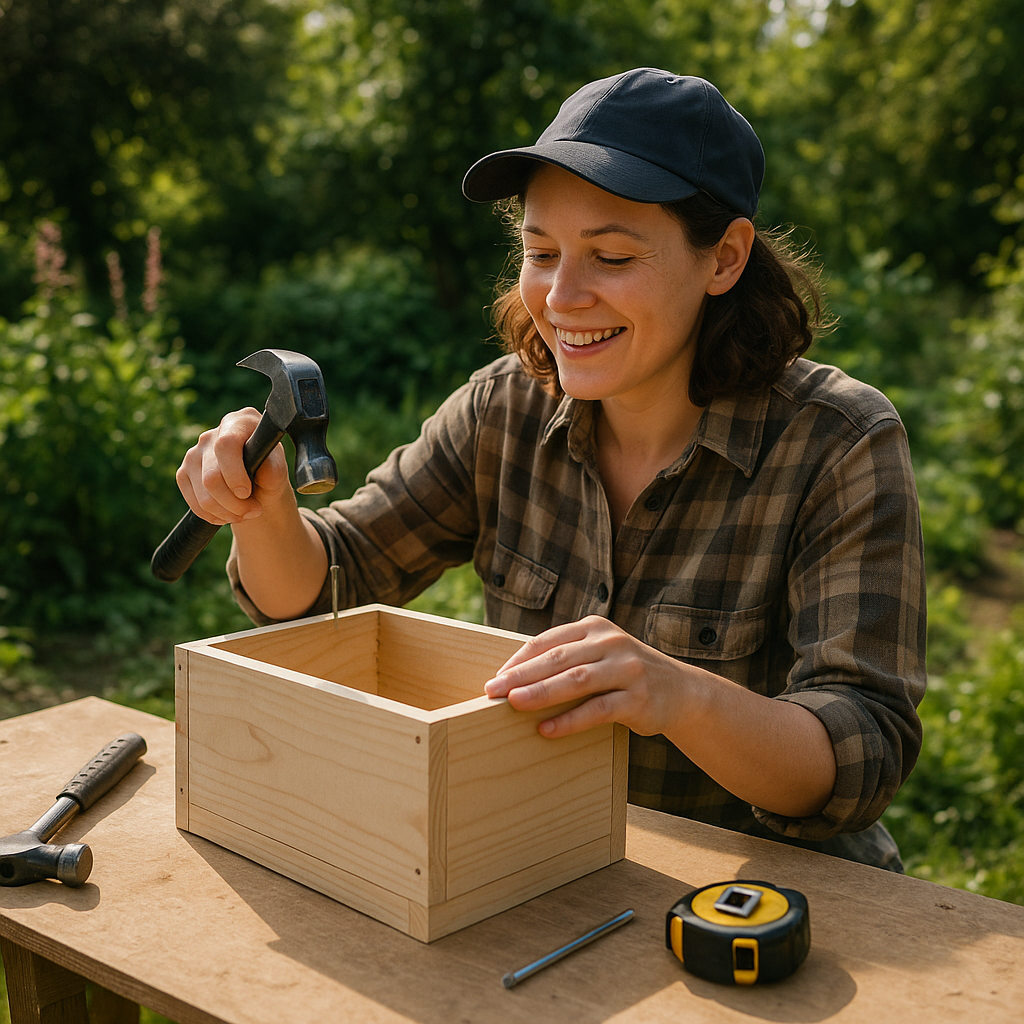
    Rustic bench being finished in a garden, showing outdoor woodworking projects for beginners in a natural setting.
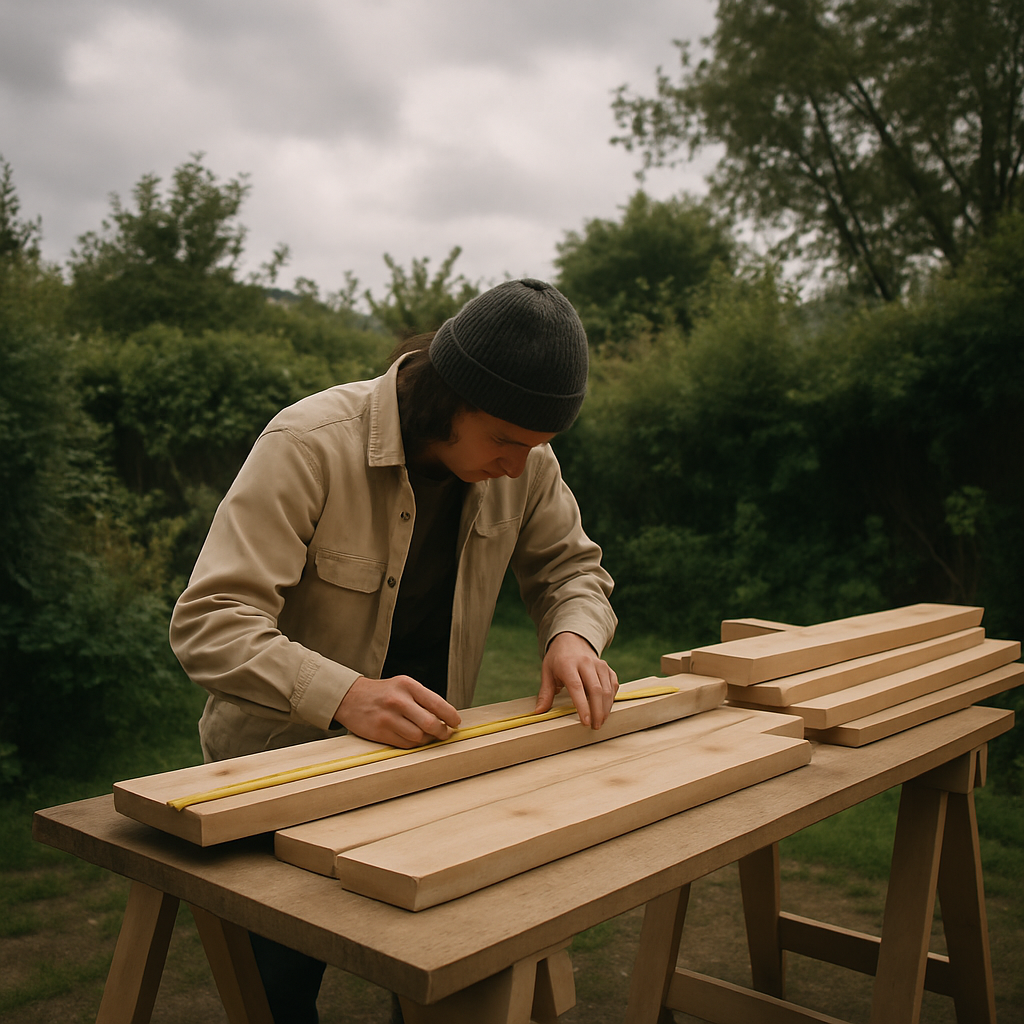
    Simple garden workspace set up for outdoor woodworking projects for beginners among trees and greenery.

    Outdoor woodworking projects for beginners FAQs

    What is an easy first woodworking project for the garden?

    A simple planter box is an ideal first project. It only needs straight cuts, basic screws and outdoor glue, and the measurements are quite forgiving. Once it is built, you can fill it with herbs or flowers and enjoy the results every time you step outside.

    How can I protect wooden projects that stay outside all year?

    Choose timber that is suitable for outdoor use, such as treated softwood, cedar or larch. Sand any rough edges, then apply an exterior oil, stain or paint according to the instructions. Reapply the finish every year or two, and keep the project off bare soil where possible so moisture does not soak in from underneath.

    Do I need a workshop for outdoor woodworking projects for beginners?

    No, you can start with a very simple setup in your garden, yard or even a balcony. A pair of trestles and a board make a good temporary bench, and basic hand tools are enough for many small builds. As long as you have a flat surface, some fresh air and space to move around safely, you are ready to begin.

  • Bringing More Natural Light Into Your Home, Naturally

    Bringing More Natural Light Into Your Home, Naturally

    Spending time outside is one of the simplest ways to feel calmer, happier and more alive. Yet many of us still spend most of our day indoors, cut off from the changing sky, weather and wildlife. Thoughtful natural light home design can soften that divide, pulling daylight, views and a sense of the outdoors deep into our living spaces.

    This is not just about chasing a pretty Instagram shot. It is about wellbeing, energy use and our relationship with nature. With careful choices, you can turn your home into a brighter, more grounded place that changes with the seasons instead of shutting them out.

    Why daylight matters more than ever

    Our bodies are tuned to the sun. Natural light helps regulate sleep, boosts mood and even affects how productive we feel. In darker months, many people feel the weight of short days, and a dim home only makes that worse.

    On top of this, brighter interiors reduce the need for artificial lighting, cutting electricity use and helping to lower your carbon footprint. Daylight is free, endlessly renewable and surprisingly powerful when you design your space around it.

    Key principles of natural light home design

    Whether you live in a city terrace or a countryside cottage, the same ideas apply:

    • Work with orientation – South and west facing spaces tend to be brighter and warmer. Reserve these for rooms where you spend the most time, such as kitchens and living rooms.
    • Layer your glazing – A mix of vertical windows, high-level openings and roof glazing lets light enter from different angles, reducing gloomy corners.
    • Keep sightlines clear – Large items of furniture, tall cupboards and heavy curtains can block precious light. Think low, simple shapes and slim frames.
    • Use reflective surfaces sparingly – Pale walls, limewash, soft sheens and mirrors can bounce daylight further into a room without feeling clinical.

    Framing the outdoors, not just brightening a room

    Good natural light is about more than raw brightness. It is about connection. When you can see the sky, trees moving in the wind or birds crossing your view, you get a constant reminder that you are part of a wider landscape.

    Think about how each window or roof opening frames the outside world. A low, wide pane might capture a hedge alive with insects. A higher opening can give you a slice of changing sky. In an extension or garden room, overhead glazing such as lantern roofs can flood the space with daylight while offering dramatic views of clouds and stars.

    Balancing daylight with comfort

    More glass is not always better. Poorly planned glazing can lead to glare, overheating in summer and heat loss in winter. Natural light home design is about balance.

    • Control glare – Use sheer blinds, external shading or deep window reveals to soften harsh sun while keeping the room bright.
    • Think ventilation – Opening roof lights and high-level windows let hot air escape, which is vital as summers become warmer.
    • Choose efficient glazing – Modern units with good insulation and solar control coatings help keep heat where you want it.

    Bringing nature into every room

    Daylight and views are only part of the story. To really feel closer to the outdoors, pair your glazing choices with natural materials and planting.

    Timber frames, stone floors and clay paints echo the landscape outside. Houseplants, herb planters on sunny sills and small indoor trees blur the line between garden and interior. Even in a compact flat, a single well lit corner filled with greenery can feel like a tiny indoor woodland edge.

    Simple changes that make a big difference

    You do not always need a major build to enjoy the benefits of natural light home design. A few low impact tweaks can transform how a room feels:

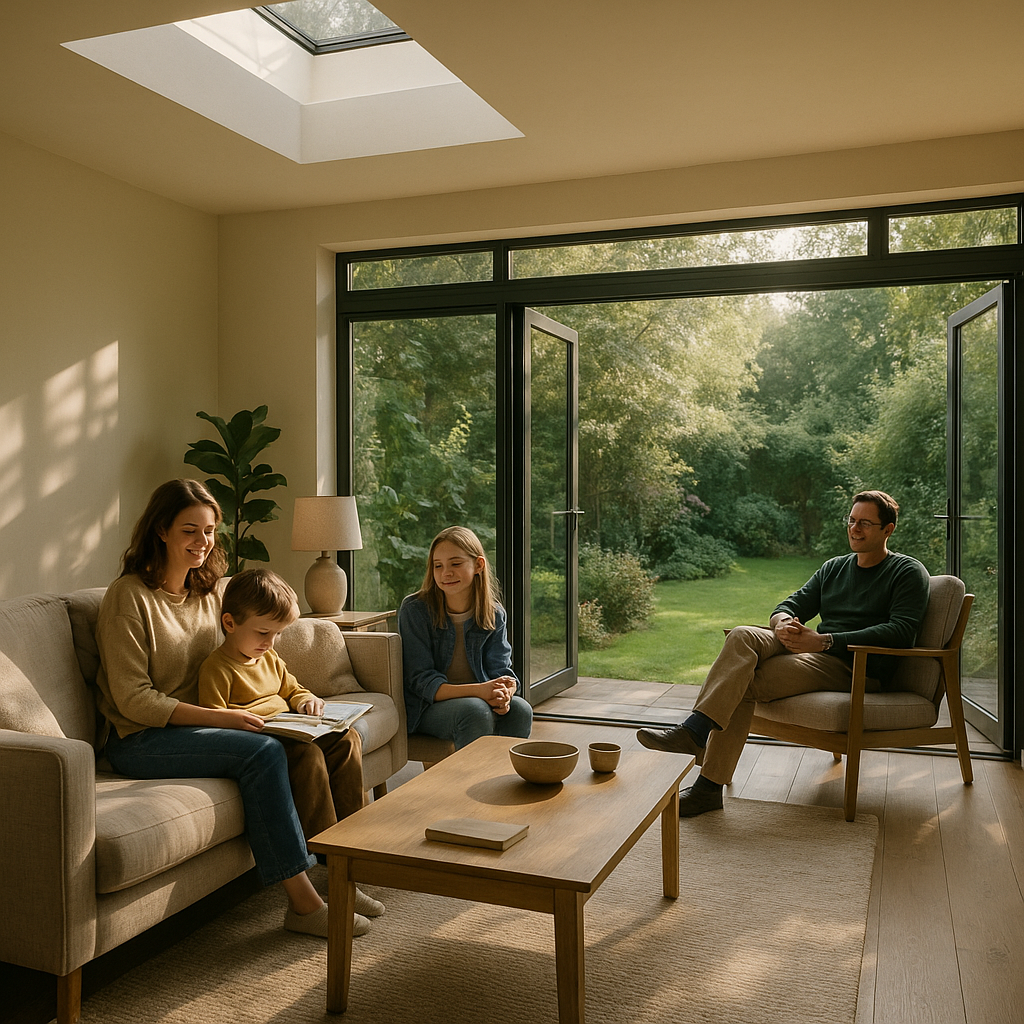
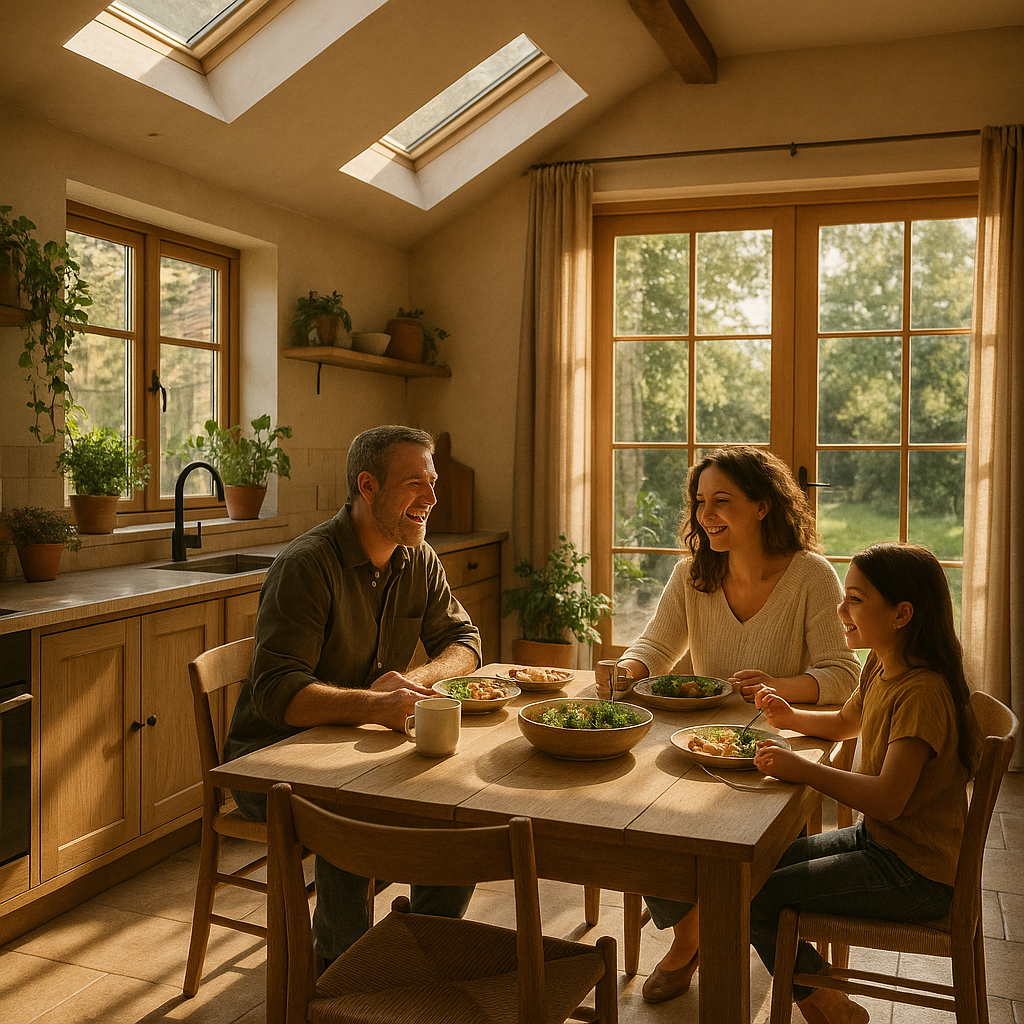
    Kitchen and dining space using natural light home design to blend indoor living with the outdoors
    Reading corner that highlights natural light home design with views of trees and sky

    Natural light home design FAQs

    How can I increase natural light in a dark north facing room?

    Start by clearing window sills and removing bulky furniture that blocks light. Use light coloured, matte wall finishes to spread daylight without glare, and choose slim window dressings that pull fully clear of the glass. A well placed mirror opposite the window can help bounce light deeper into the room, and trimming trees or shrubs outside will often make a surprising difference.

    Does adding more glazing always make a home warmer?

    Not necessarily. While well designed glazing can capture useful solar warmth, too much poorly specified glass can lead to overheating in summer and heat loss in winter. The key is to consider orientation, shading, ventilation and the performance of the glass itself, so you gain brightness and views without creating an uncomfortable space.

    What is natural light home design and why is it important?

    Natural light home design is an approach to planning rooms, windows and materials so that daylight, sky views and a sense of the outdoors are central to how a home feels. It supports better sleep and mood, reduces reliance on artificial lighting and heating, and helps people feel more connected to the natural world even when they are indoors.