
Scotland gets all the headlines on this one, and rightly so. The Land Reform (Scotland) Act 2003 gives walkers and campers a remarkably clear legal right to wild camp on most land north of the border. But in England and Wales, the picture is murkier, and that murk is exactly where most people get confused. I’ve had plenty of conversations on ridgelines with fellow hikers who are convinced that bivvying is either totally fine everywhere or flatly illegal. Neither is true.
This guide is specifically about England and Wales. If you’re heading to Scotland, the rules are different enough that they deserve separate treatment entirely. Here we’re focusing on what bivvying and wild camping actually means legally, which upland areas have a long history of tolerating it, and how to behave so that access remains available for everyone who comes after you.
Wild camping and bivvying: what’s the legal position in England and Wales?
The blunt answer is that there is no general legal right to wild camp or bivvy on open land in England and Wales. Camping without the landowner’s permission is technically trespass. Trespass in England and Wales is a civil matter, not a criminal one, which means the landowner can ask you to leave and pursue civil remedies, but the police cannot arrest you simply for sleeping under the stars. That said, if you refuse to leave when asked, you’re on thin ice.
There are two main exceptions worth knowing. First, the Dartmoor Commons. Dartmoor National Park is the only place in England with a statutory right to wild camp, enshrined in the Dartmoor Commons Act 1985. A legal challenge in 2023 threatened that right briefly, but the Court of Appeal restored it firmly, and Dartmoor’s camping access remains protected. Second, some areas of open access land (designated under the Countryside and Rights of Way Act 2000) are managed by organisations like the National Trust or National Park authorities that give informal permission, or at least turn a blind eye to low-impact overnight stays. The gov.uk guidance on open access land is worth reading if you want the formal picture on CRoW Act rights, though it makes clear that the default access right does not include overnight camping.
Where is bivvying typically tolerated in upland England and Wales?
Tolerance is not the same as a legal right, but it is the practical reality for most experienced wild campers. Certain upland areas have a culture of quiet acceptance, particularly where hikers stay one night, leave before 9am, and leave no trace whatsoever.
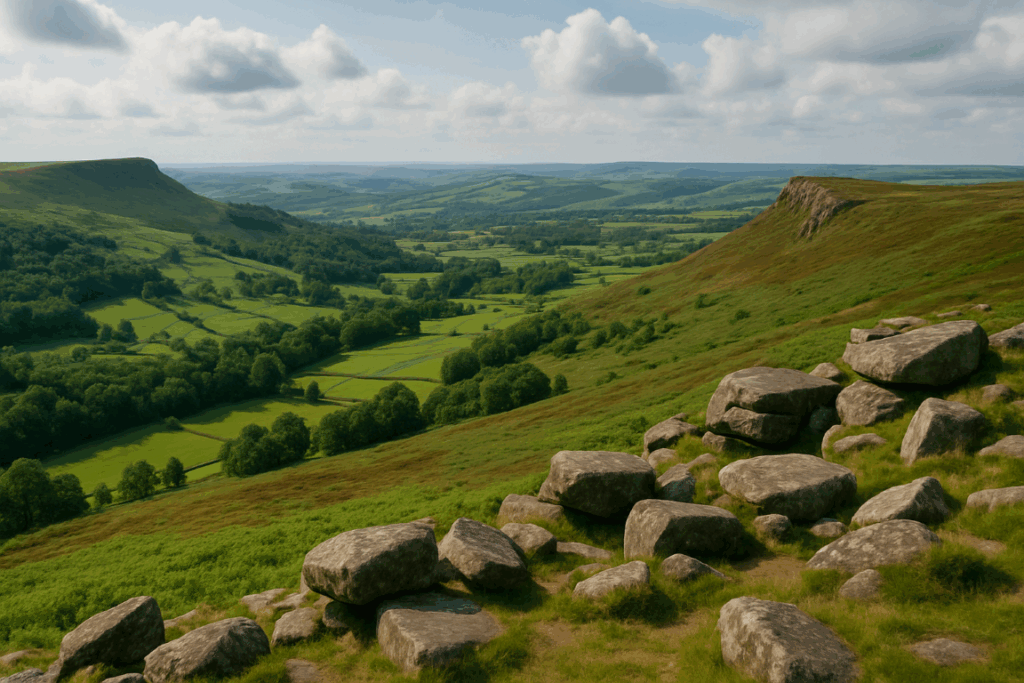
The Lake District is probably the most well-known. Fells above the intake walls (roughly above 600 metres) are where most people pitch up, and the Lake District National Park Authority has long taken an informal stance that low-impact, high-altitude camping is accepted provided you follow the principles they promote. The Brecon Beacons (now Bannau Brycheiniog) have a similar tradition on the higher ground. The Dark Peak in the Peak District, the Howgills, and parts of the Yorkshire Dales above enclosed land all see regular bivvying with little friction.
That said, none of this is guaranteed. Landowner attitudes vary. During dry summers, fire risk changes everything, and some estates have become stricter in recent years. I’d always check recent reports from the relevant national park before assuming the unwritten rules still apply.
Bivvying versus wild camping: is there a meaningful difference?
In practical terms, a bivvy bag (a waterproof shell you sleep in rather than under) is a lighter, lower-profile option than a tent. You’re lying on the ground with minimal visual impact, and you can be packed and gone in minutes. Some land managers and walkers regard this as meaningfully different from pitching a full tent, partly because of the reduced footprint and partly because a bivvy is clearly a single-night, lightweight affair rather than a campsite setup.
I’d be cautious about leaning too hard on this distinction legally. The law doesn’t differentiate. But in terms of landowner tolerance and minimising your visual and physical impact on a place, bivvying does tend to sit at the lower-friction end of the spectrum. A single person wrapped in a dull-coloured bivvy on a high ridge is very different to a group of four with bright orange tents pitched in a valley bottom near a footpath.
If you’re thinking about the kit side, understanding how to plan a multi-day backpacking trip on a budget covers the basics of keeping your pack light and your overnight setup simple, which is exactly the mindset you want for a legal and low-impact bivvy.
How to leave no trace when bivvying in England and Wales
This is where it really counts. The reason bivvying and wild camping have survived in upland England and Wales without being formally banned is largely because most people who do it do it quietly and cleanly. The moment that changes, access erodes.
A few firm habits to build:
- Arrive late, leave early. Get to your spot in the evening, pack up before mid-morning. The longer you stay, the more impact you have and the more likely you are to be noticed.
- No fires. Full stop. Open fires on open moorland are a serious risk and a quick way to lose access for everyone. Use a small stove if you need hot food.
- Pack out everything. Food scraps, wrappers, any human waste if there’s any possibility of contamination near water. Bury solid waste at least 200 metres from any water source if you must go.
- Pick bare ground or rocky areas rather than fragile vegetation. Sphagnum moss and heather take years to recover from compression.
- Keep groups small. Solo or pairs cause far less impact than groups of six or more. Large groups also attract more attention and tend to generate more waste.
The Leave No Trace ethic isn’t just an abstract principle. On sensitive upland habitats, it’s the difference between access being maintained or closed.
What if someone tells you to move on?
Stay calm and be cooperative. If a landowner or their representative asks you to leave, you’re legally required to do so within a reasonable time. Arguing the toss doesn’t help the situation and definitely doesn’t help wild camping access as a whole. Pack up, thank them, move on. In my experience, the vast majority of encounters on the hill are resolved politely when you’re clearly low-impact and clearly respectful of the land.
The bigger picture here is that access in England and Wales is genuinely fragile. Understanding the right of way rules that every UK walker should actually understand is a good grounding in how access law works here, and it makes you a more confident and credible presence on the land. Being informed matters.
If you’re new to spending nights out in the hills and want to work up to full bivvying on remote ground, some routes lend themselves well to experimenting with the format. Plenty of hikers do their first overnight on a long-distance route where bothies are available as a backup option. Understanding how to use a mountain bothy properly is a natural companion to knowing when a bivvy makes more sense.
Bivvying in England and Wales sits in a legal grey area that requires a bit of knowledge, a lot of common sense, and genuine respect for the land. It’s not a right, but it’s a reasonable practice when done properly. Get those habits right from the start and you’ll have years of good nights under the stars ahead of you.
Frequently Asked Questions
Is bivvying legal in England and Wales?
There is no general legal right to bivvy or wild camp in England and Wales without landowner permission. Doing so is technically civil trespass, though Dartmoor is the one statutory exception where a right to camp on the commons exists. In practice, many upland areas tolerate low-impact overnight stays if you arrive late, leave early, and leave no trace.
Can you bivvy on open access land in England?
Not automatically. The Countryside and Rights of Way Act 2000 gives a right of access on foot to designated open land, but that right does not extend to overnight camping. Some national park authorities have informal tolerant policies for high-altitude, low-impact stays, but this varies by area and is not a legal guarantee.
Where is wild camping tolerated in England and Wales?
The Lake District (particularly above the fell walls), Dartmoor (which has a statutory right), the Brecon Beacons on higher ground, and parts of the Peak District’s Dark Peak have long traditions of tolerating quiet, low-impact overnight stays. Tolerance is not the same as permission, and attitudes can vary by landowner and season.