
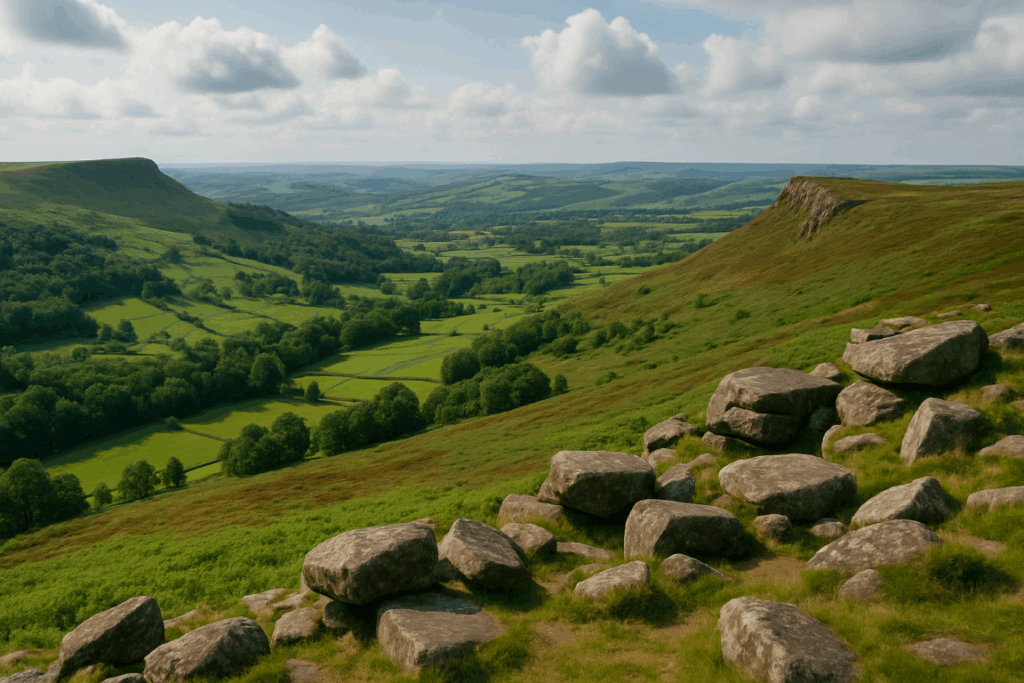
There is something that happens to your perception about twenty minutes into a walk without daylight. The horizon disappears. Familiar landmarks dissolve. What felt like a manageable slope in the afternoon becomes a question you have to answer through your feet and your compass. I’ve done enough night walking in the hills to know that the experience isn’t just a logistical challenge, it genuinely changes the way you relate to landscape. And once you’ve had a good one, you’ll find it hard to go back to treating dusk as a hard stop.
This isn’t a guide for those who’ve ended up walking after dark by accident. It’s for people who want to go out deliberately, with a plan, and come back richer for it. Done right, a night walk in British uplands is one of the more unusual pleasures this country offers.
Why bother walking at night at all?
The honest answer is that the hills feel different. The obvious tourist-trail atmosphere that follows a popular summit in July, the queues, the chatter, the sense that you’re sharing a conveyor belt, is completely gone. You have the ridge to yourself. The wind sounds louder. The cold has a texture. Your sense of direction comes not from a visual scan of the landscape but from memory, map, compass, and the slight variations underfoot.
There is a meditative quality to it that I find hard to replicate in daylight. The parallel people sometimes draw is with mindful dog walking uk, that idea of using slow, deliberate movement through a familiar or unfamiliar place to quiet the noise in your head. Night walking takes that impulse and turns up the dial considerably. You can’t drift mentally. You have to be present, or you’ll trip.
Choosing the right route for night walking in the hills
Start with terrain you already know. That point can’t be stressed enough. The first time I walked the Howgill Fells in the dark, I had been up there at least a dozen times in daylight. I knew where the ground gets spongy near the summit plateau, where the path splits and the left fork leads nowhere useful, where you lose the wind behind the col. That prior knowledge is a genuine safety resource.
Avoid routes with complex ridge navigation, technical scrambling, or significant cliff exposure for your first attempts. The Lake District, the Brecon Beacons and the moorland sections of the South Pennines all have accessible night-walking options with broad, relatively clear paths. The key is choosing routes where the consequences of a navigational slip are manageable, a 300-metre detour back to a path is recoverable; stumbling off a narrow arête is not.
Path condition matters more at night too. If upland path erosion has badly broken up a surface you rely on as a reference, eroded boggy sections, collapsed edges, that becomes a much bigger obstacle when you’re navigating with a headtorch beam rather than a full field of view.
Headtorch use: more nuance than you think
Most walkers own a headtorch that’s perfectly adequate. The issue isn’t usually the kit, it’s how people use it. A powerful beam pointed straight ahead creates a tunnel-vision effect. Everything outside that cone of light becomes invisible, and your eyes struggle to adjust to anything beyond the lit patch. The result is that you’re effectively navigating a narrow corridor through a dark world.
Use a dimmer setting than you instinctively want to. Your eyes adapt well to low light if you give them time, allow at least ten minutes off the torch, or on its lowest setting, before you decide you need full beam. Tilt the beam slightly downward, towards the ground three to five metres ahead, rather than projecting it into the mid-distance. And carry a spare set of batteries. Not because modern torches frequently die, but because finding yourself on a fellside at 2am with a fading headtorch is exactly the kind of situation that turns a good night into a miserable one.
Petzl and Black Diamond both make excellent options at the £40-£80 range, but the brand matters less than understanding the beam modes and knowing how to switch them in the dark, with cold hands and gloves on.

Navigation without visual landmarks
This is where night walking separates people who’ve done the groundwork from people who haven’t. In daylight, most of us navigate semi-consciously, we see the ridge, we aim for the obvious col, we spot the reservoir and triangulate our position without thinking. At night, that visual scaffolding is gone.
Compass bearings become non-negotiable. Take them before you leave each waypoint, not when you’re already unsure of your direction. Count paces for distance, most walkers cover roughly 65 paces per 100 metres on flat ground; adjust for uphill and rough terrain. This sounds old-fashioned, and it is. It also works.
I’d point anyone new to low-visibility navigation towards brushing up on navigating in fog on British hills, because the technique transfers almost directly. Fog and darkness share the same fundamental problem: the removal of visual reference. The compass-and-pacing discipline you use in clag on the Cairngorms is the same discipline that gets you off a dark Yorkshire moor safely.
GPS is a reasonable backup, and I use one, but I keep it in my chest pocket as a check rather than a primary tool. Batteries die faster in the cold. Screens are hard to read with a headtorch reflecting off them. The map and compass don’t need charging.
The psychology of moving through darkness
Nobody talks about this enough. The hills feel actively hostile at night to some people. Sounds amplify, a grouse rocketing up from the heather nearby can be genuinely alarming if you’re not expecting it. Shapes resolve weirdly in peripheral vision. The absence of a horizon creates a mild spatial disorientation that can trigger anxiety in people who’ve never experienced it.
None of this is a reason not to go. It’s a reason to go prepared. Walking with one other person makes a significant difference, partly for safety and partly because the psychological anchor of another voice is real. If you’re going solo, let someone know your route and expected return time. The Mountain Rescue England and Wales organisation regularly emphasises that sharing a route plan costs nothing and saves lives.
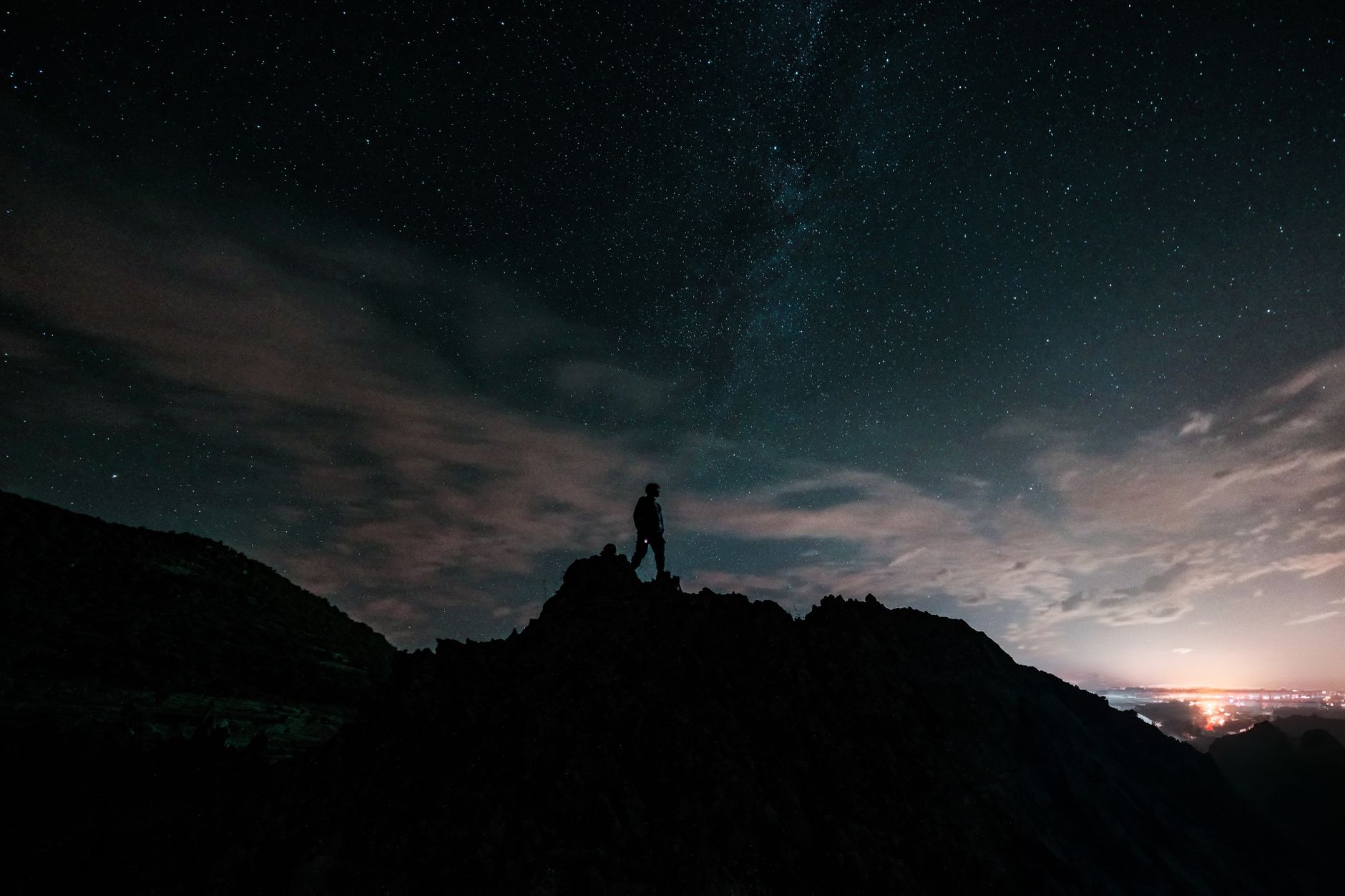
Stillness is something I’ve learnt to build into night walks deliberately. Stopping for five minutes on a clear night, switching the torch off entirely, and letting your senses recalibrate is worth doing. You hear more. Your eyes adjust and the sky becomes remarkable. The fear, if there was any, tends to settle into something closer to awe. That transition is one of the genuinely good things about night walking in the hills.
Practical kit beyond the torch
The temperature drops sharply after dark, even in summer. A warm layer you don’t need at 7pm can be essential at midnight, and the difference between a pleasant bivvy stop and an uncomfortable shiver is usually one extra insulating layer. Pack it. Dew and condensation also make surfaces wetter at night, proper waterproof trousers earn their weight on any after-dark route involving grass or heather.
A bothy bag or emergency shelter is worth carrying. You can read more about the broader question of overnight kit in the outdoors in what to check before sleeping under canvas in a UK national park, and several of those principles apply equally to any night out in the hills, whether you’re camping or just walking through.
Tell someone where you’re going. Write the grid reference of your start point and your planned route. If you have a phone signal at the trailhead, drop a pin. These small habits are the difference between a rescue team finding you quickly and spending hours searching the wrong valley.
When to go, and what conditions to avoid
The best night walks I’ve done have been on clear nights with a moon between half and full. The moonlight on snow-covered fells in the Pennines in February is extraordinary, you can often navigate without a torch at all. Clear nights in autumn also work well, with low humidity keeping visibility sharp.
Avoid going out at night in high winds, heavy rain, or forecast electrical storms. The reduced visibility that darkness already imposes is compounded dangerously by wet underfoot conditions and the disorientation of wind noise. Night walking is a considered choice, not a stubborn one. If the forecast is poor, the route waits.
Start small. A two-hour loop on familiar local moorland will teach you more about dark-hours walking than reading about it ever will. Build from there. The British hills are genuinely extraordinary at night, quiet, expansive, entirely their own thing. I’d encourage anyone who’s curious to give it a proper try.