
Tag: long distance hiking uk

  • The Offa’s Dyke Path in Autumn: What 177 Miles Along the Welsh-English Border Actually Looks Like

    The Offa’s Dyke Path in Autumn: What 177 Miles Along the Welsh-English Border Actually Looks Like

    I finished the last section of the Offa’s Dyke Path on a grey Tuesday in October, boots caked from ankle to tongue in the kind of clay-heavy mud that pulls at every step like the ground is personally offended you’re leaving. My waterproofs had earned their money about a hundred times over by that point. The path runs 177 miles from Prestatyn on the north Welsh coast down to Chepstow on the Severn estuary, tracing the line of an eighth-century earthwork along one of Britain’s oldest political boundaries. Doing it in autumn is a decision I’d make again without hesitation, and also one I’d warn you about very clearly before you packed your bag.
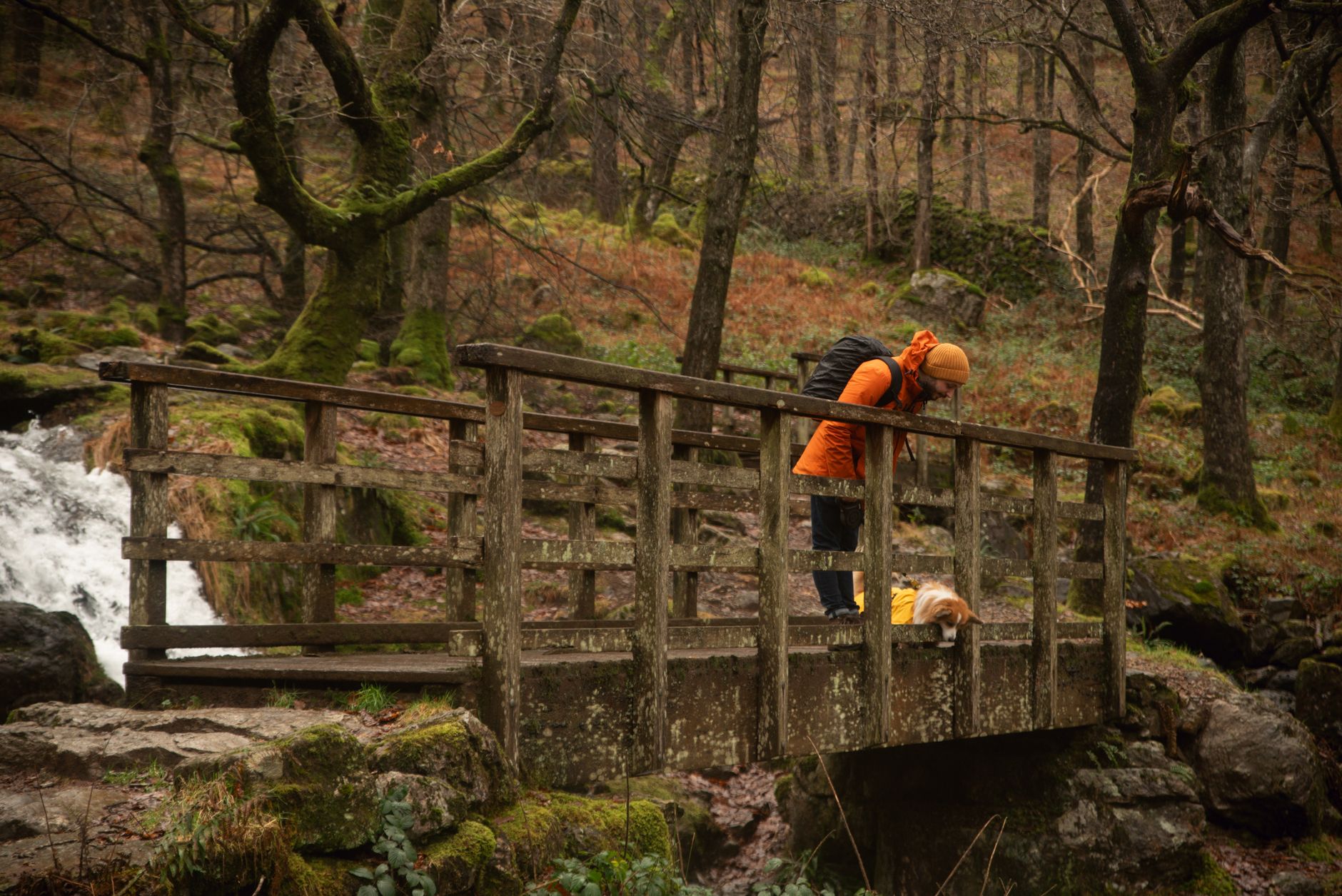
    Hiker walking Offa's Dyke Path in autumn along a muddy Welsh ridgeline with copper bracken
    Photo by Zoe Jackson on Pexels

    What the Offa’s Dyke Path actually looks like in October

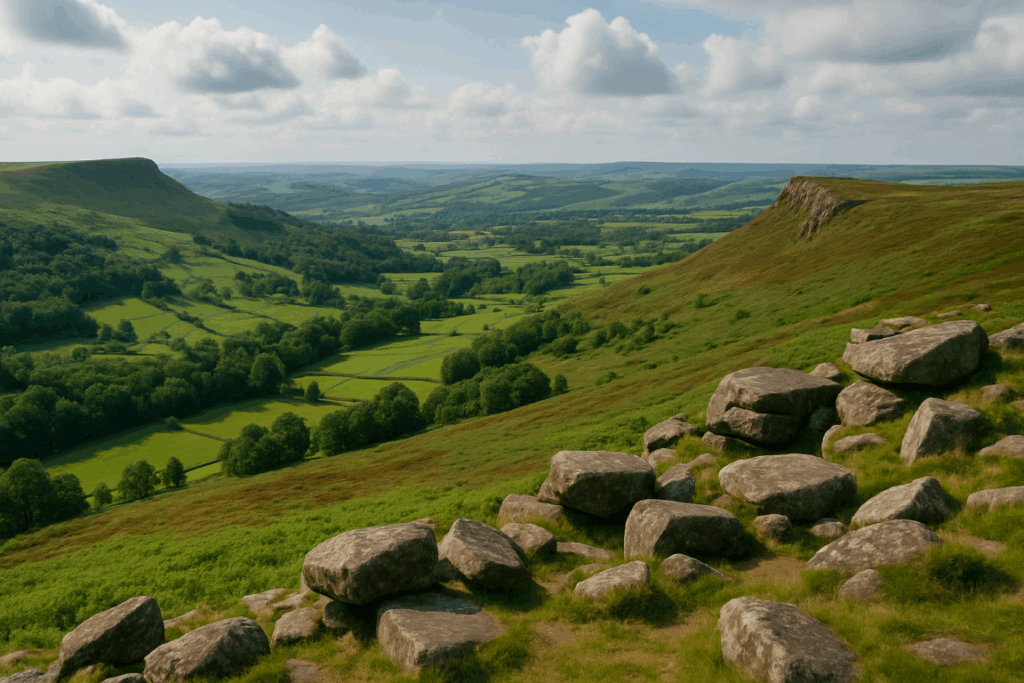
    The honest answer is: spectacular and saturated. Autumn colour in the Clwydian Range and the Black Mountains is genuinely some of the finest you’ll find anywhere in Wales or England. Bracken turns a deep copper, the oak woodland above Knighton glows amber on a clear morning, and the earthwork itself cuts a dark brown line through fields that still hold a faint green despite the season turning. Photographs do not capture the scale of it.

    But autumn also means the ridgelines are wet from the moment you step onto them. The central section, from Kington up through Clun Forest and the Shropshire Hills, holds water in its soil the way a sponge does. After any overnight rain, and there is always overnight rain in October, you are effectively wading through shallow bogs for whole miles at a stretch. I got through two pairs of merino socks a day on the worst sections. This is not a trail that rewards lightweight trail runners in October; it rewards serious waterproof boots with ankle support and, honestly, a decent pair of gaiters. If you want help deciding whether yours are up to it, the guide on choosing the right gaiters for UK hill terrain is worth reading before you commit to packing.

    Resupply stops along the border: what’s actually available

    The path passes through or near enough settlements that you can usually resupply every two to three days, though I’d not call it convenient. Prestatyn, Llangollen, Welshpool, Knighton, Hay-on-Wye, Abergavenny and Chepstow are the main stops with proper shops. Smaller villages in between, places like Llanrhaeadr-ym-Mochnant or Brompton Cross, may have a pub or a post office but rarely a shop stocked for a long-distance walker who needs 3,000 calories a day.

    Hay-on-Wye deserves a mention of its own. It sits roughly at the midpoint and has a good enough selection of independent cafés, a Co-op, and several places to dry wet kit overnight. I stayed two nights there simply to let my boots dry out, which they only halfway did. Knighton is the most useful town for a mid-walk restock because it sits almost exactly on the trail itself and has a Co-op, a chippy, and the Offa’s Dyke Centre with route information. For planning transport logistics around your walk, services like ACE ABC can be useful if you need to sort transfers between trailheads or to the nearest rail station after finishing a section.

    Accommodation is spottier than you might expect. The youth hostels at Clun and Capel-y-ffin are good but book up fast in October, partly because the trail is quieter in autumn but the accommodation supply is also thinner. Wild camping is technically restricted across much of the English side of the border, so plan ahead. The guide on what to check before sleeping under canvas in a UK national park covers the key questions, and the same principles apply to the National Landscape sections of this route.
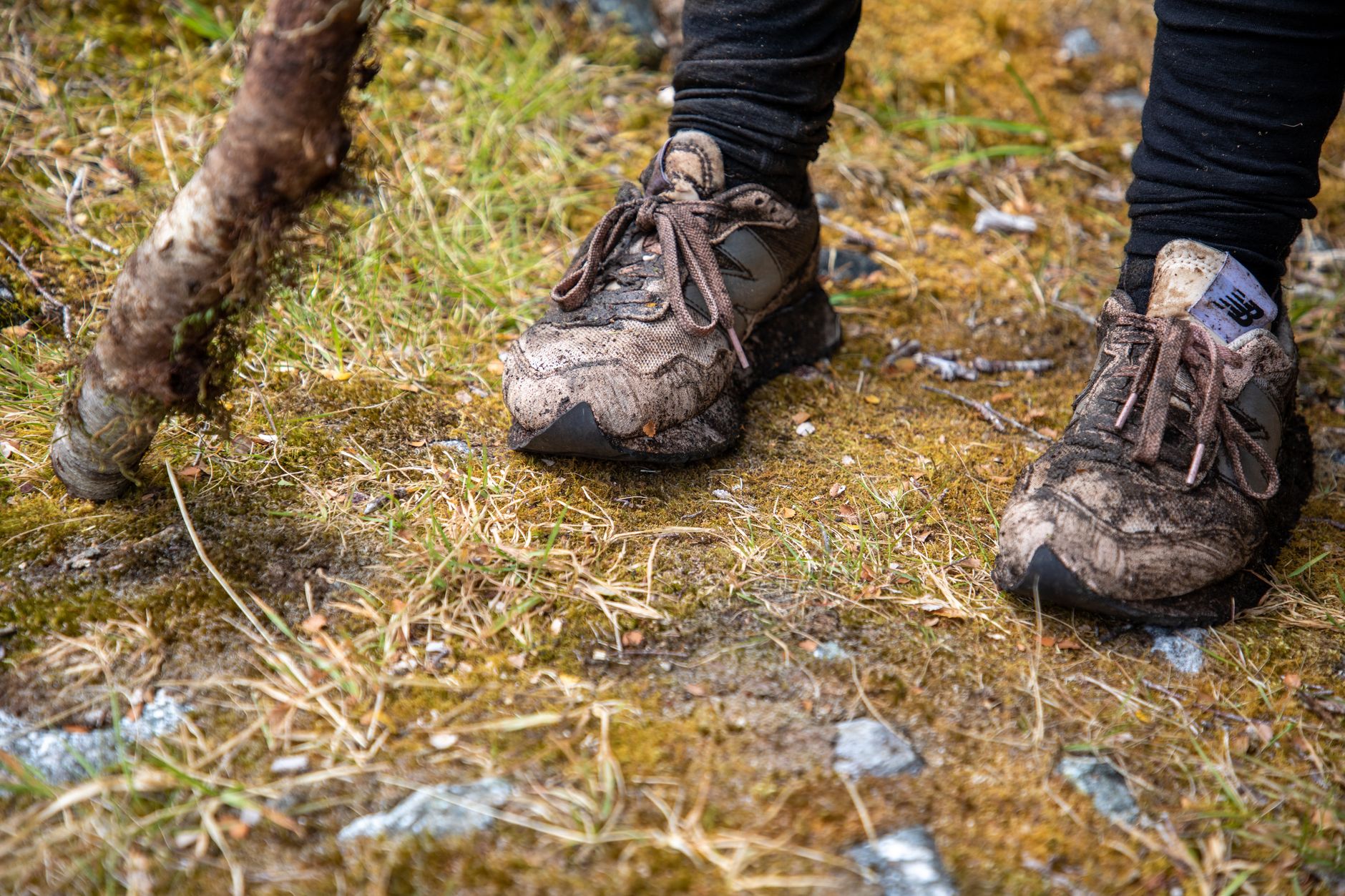
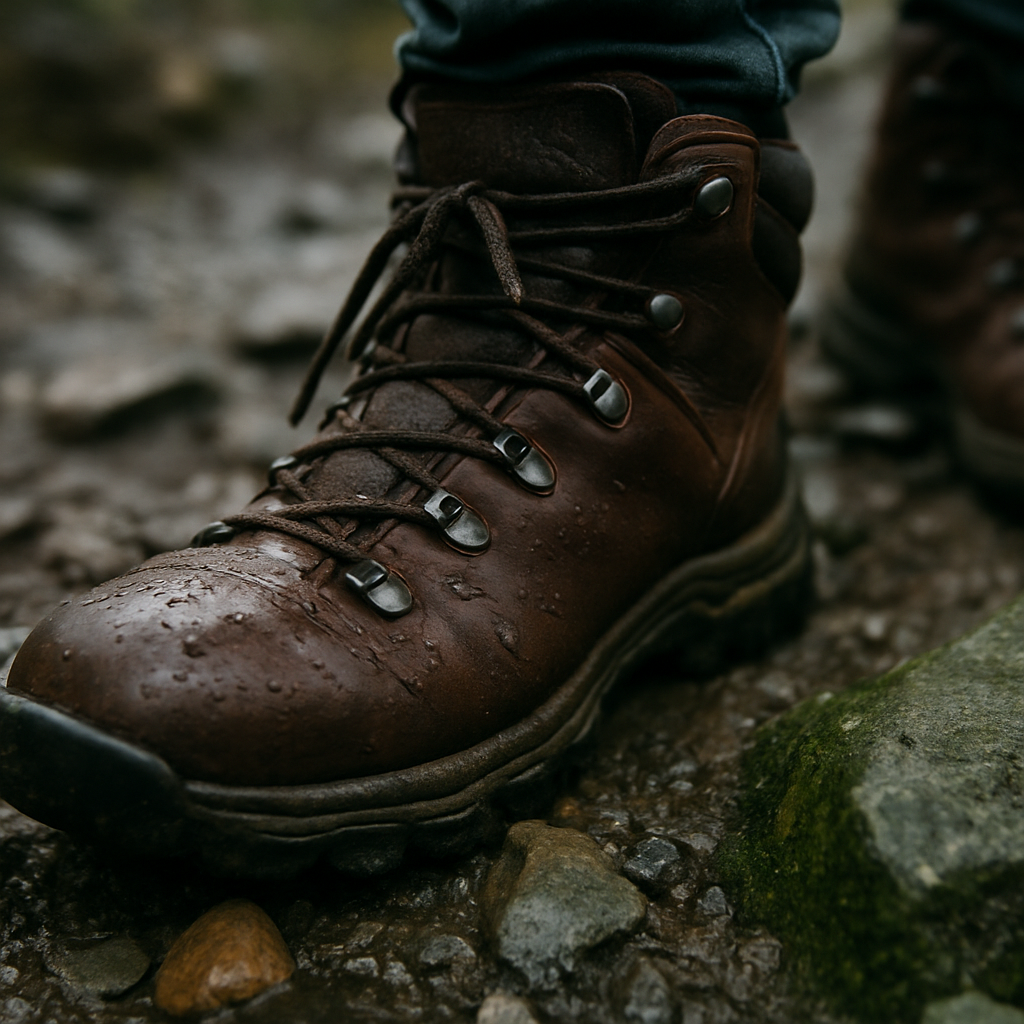
    Mud-caked boots on the Offa's Dyke Path in autumn conditions
    Photo by Liisa Tervinen on Pexels

    The sections that will test you most

    Three sections stand out as genuinely hard going in October.

    The Clwydian Range in the far north throws you onto exposed moorland ridges almost immediately. The views across to the Dee Estuary are extraordinary, but the descent into Llangollen involves a long, steep path that becomes a stream in wet weather. Take it slowly. I watched a walker ahead of me go down on one knee on a section of wet slate and that was that for his week.

    The Kerry Ridgeway section between Knighton and Montgomery is relentlessly boggy in autumn. The path follows high ground through forestry and open moorland where the ground never quite drains. It is also navigationally fiddly in low visibility; the earthwork itself disappears and reappears without much ceremony, and waymarking can be inconsistent. I’d strongly recommend carrying a proper compass and knowing how to use it. The principles behind navigating in poor visibility on British hills apply directly here when mist rolls in off the Welsh hills, which it does regularly through October.

    The Black Mountains section in the south, between Hay-on-Wye and Pandy, is the most dramatic part of the entire route. The ridge above Hay Bluff sits at around 677 metres and feels every bit of it when the wind is coming in from the west. In October you can expect serious gusts, near-zero wind chill, and cloud sitting on the tops for hours at a time. The upside is that on a clear day you can see into four counties. I stopped for twenty minutes on that ridge just to watch the light change over the Wye Valley below. Worth every step of the boggy approach.

    Pace, planning and what most people get wrong

    The standard guide suggests completing the path in twelve to fourteen days. In October, I’d build in at least two additional days. The mud slows you down more than the elevation does; a sixteen-mile day that might take seven hours in summer will comfortably push to nine in October conditions. Factor in shorter daylight hours too. In mid-October you have roughly ten hours of usable light, and losing an hour either end to camp setup or a slow breakfast start leaves you very little margin.

    Many walkers underestimate the cumulative elevation. The Offa’s Dyke Path involves around 8,500 metres of ascent in total, spread across the full route. It is not a mountain trail in the way the West Highland Way is, but it is not flat either. The central sections through Shropshire look deceptively gentle on a map and are anything but underfoot in wet conditions. According to the National Trail’s own guidance, this is rated as a challenging long-distance route and I’d agree with that assessment firmly.

    Why autumn is still worth it

    The crowds simply are not there. Summer brings steady foot traffic on the popular sections, particularly around Llangollen and the Black Mountains. In October you will go whole days without seeing another long-distance walker. The land feels like it belongs to you and the ravens and the occasional bewildered sheep. Farmland sections that must be a social nightmare in July are quiet and still. The light is lower, softer, more interesting at every hour of the day.

    The border country also has a particular quality in autumn that I struggle to describe without sounding like I’m overselling it. There is something about the wet grass and the old earthwork and the grey Welsh sky that makes the history of the place feel very close. Offa had this boundary dug in the 790s to mark out Mercia from the Welsh kingdoms. Standing on it in October mist, with nothing moving in any direction, you feel the age of it.

    Go prepared, go slow, and go in October if you can. Just accept before you leave that you will be muddy every single day, that your kit will never be fully dry, and that it will be one of the better things you’ve done with your legs and your time.
  • How to Train for a Multi-Day Trek: A 12-Week Preparation Plan

    How to Train for a Multi-Day Trek: A 12-Week Preparation Plan

    There is a particular kind of suffering that only reveals itself on day two of a multi-day trek, when your legs have forgotten what fresh feels like and your shoulders have started a quiet protest against the weight on your back. The good news is that suffering is largely optional, provided you put in the groundwork before you set foot on the trail. A solid hiking training plan built over 12 weeks will transform what might otherwise be a gruelling ordeal into one of the most rewarding experiences you can have outdoors.

    This plan is aimed at anyone targeting a challenging multi-day route: think the West Highland Way, the Pembrokeshire Coast Path, or a Lakeland traverse. It assumes you can already walk a few miles comfortably but are not yet trail-fit. By the end, you will have the leg strength, cardiovascular base, and loaded-pack endurance to handle consecutive days of 16-25 kilometres over mixed terrain.

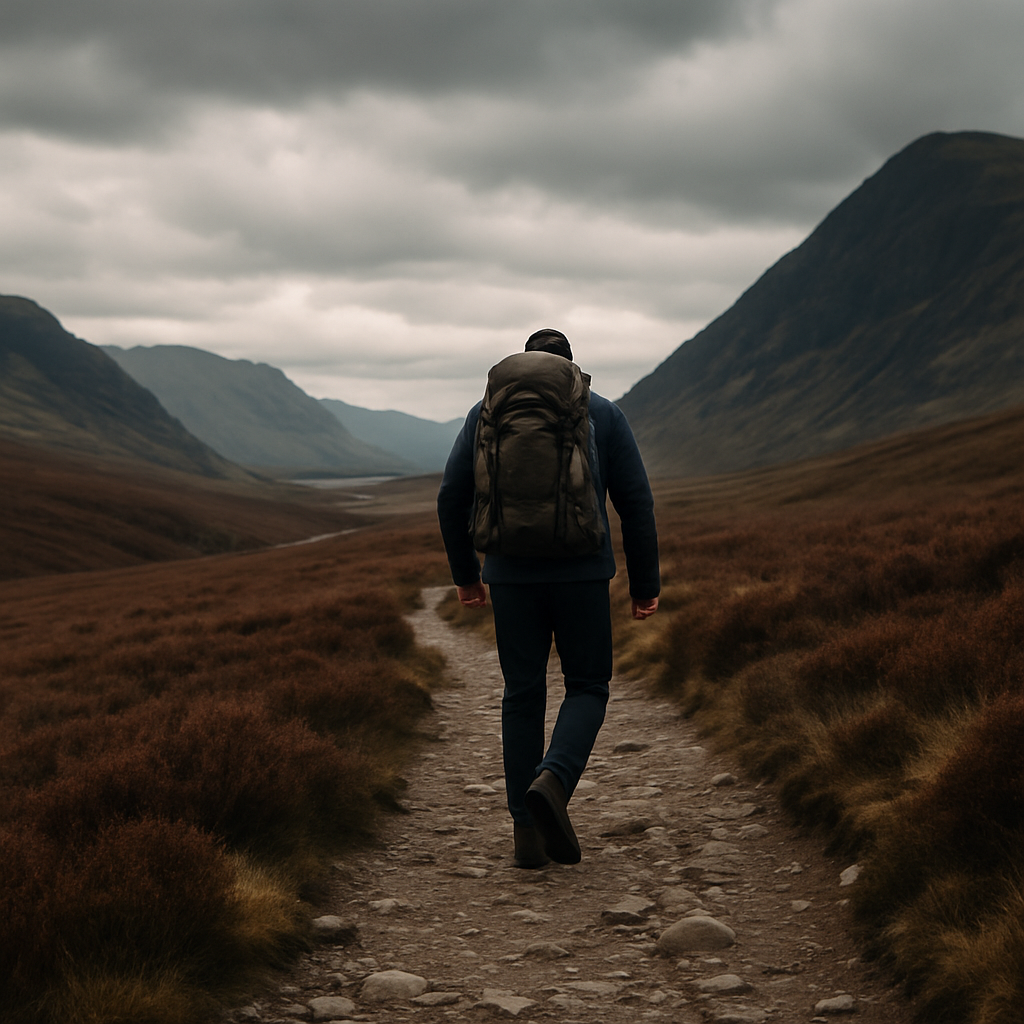
    Hiker with loaded rucksack on a Scottish Highland trail following a hiking training plan
    Hiker with loaded rucksack on a Scottish Highland trail following a hiking training plan

    Before You Start: Establish Your Baseline

    Week one is not about smashing yourself. It is about knowing where you are starting from. Head out for a 6-8 kilometre walk on a local footpath, ideally with some gentle elevation. Note how your legs feel the following morning. That soreness (or absence of it) tells you whether you need to ease into the early weeks or can push a little harder from the off.

    Get your kit sorted early too. Break in your boots now, not on day one of your trek. Wear the socks you intend to use on the trail. Small blisters during training are far preferable to large ones halfway through a 160-kilometre route. Check your rucksack fits properly; a badly adjusted harness will punish your lower back regardless of how fit you are.

    Weeks 1-3: Build the Aerobic Foundation

    The first three weeks are about waking your cardiovascular system up gently. Aim for three sessions per week: two shorter walks of 5-8 kilometres on relatively flat ground, and one slightly longer effort at the weekend pushing towards 12-14 kilometres. Keep the pace conversational. You should be able to hold a full sentence without gasping.

    Add two sessions of bodyweight strength work per week. Squats, lunges, step-ups onto a sturdy bench, and single-leg glute bridges are your friends here. These movements target the quads, hamstrings, and glutes that do the heavy lifting on every ascent and descent. Three sets of 12-15 repetitions is plenty at this stage.

    If you commute into a town or city, you might already be navigating areas affected by clean air initiatives. For those who drive to trailheads, it is worth knowing whether your vehicle is ULEZ-compliant if your route takes you through Greater London, as charges can add unexpected costs to your adventure travel.

    Weeks 4-6: Introduce Elevation and Load

    Now things start to get interesting. Swap one of your flat mid-week walks for a route with genuine ascent. Living somewhere like the Peak District, the Brecon Beacons, or the North York Moors gives you options on your doorstep. If you are based in a flatter part of the country, use staircases, car park ramps, or even a treadmill with a significant incline to simulate the demand. Not glamorous, but effective.

    Start wearing your rucksack on the longer weekend walk, loaded to around 5-7 kg. This is lighter than you will likely carry on a real multi-day trip, but it begins training the stabilising muscles in your core and shoulders and gives you a chance to identify any hot spots the pack creates before it matters.

    Close-up of hiking boots on muddy rocky trail during hiking training plan preparation
    Close-up of hiking boots on muddy rocky trail during hiking training plan preparation

    Your weekend long walk should now reach 16-18 kilometres. Keep one recovery day between every hard session. Overtraining at this stage is the most common mistake, and it is the one most likely to sideline you with a knee or ankle issue.

    Weeks 7-9: Simulate Real Trail Conditions

    This is the heart of your hiking training plan, and this is where the work starts to feel meaningful. The goal now is to replicate, as closely as possible, the conditions you will face on your chosen trek.

    Increase your pack weight to 8-10 kg, which is a realistic load for a multi-day trip with camping gear or a change of clothing and provisions. Your long weekend walk should extend to 20-24 kilometres, ideally on rough or mixed terrain. Grassy paths, stony tracks, boggy sections: the more variety, the better your ankles and stabilisers will adapt.

    Introduce back-to-back walking days. On Saturday, complete your long walk. On Sunday, do a shorter 10-12 kilometre recovery walk. This combination is the closest training equivalent to back-to-back hiking days, teaching your body to perform when it is already tired. According to NHS guidance on walking for health, consistent aerobic walking is one of the most effective ways to build cardiovascular endurance with low injury risk, which is exactly why hikers respond so well to this kind of progressive load.

    Keep your strength sessions in the programme but reduce the volume slightly. Two sets rather than three. Maintain the movements, just manage fatigue.

    Weeks 10-11: Peak Load and Long Days

    These two weeks are the hardest in the plan. Your body should now be adapting well and you should notice genuine improvement in how you feel on the trail. The weekend long walk peaks at 26-28 kilometres with 8-10 kg on your back. If your target route involves significant total ascent, try to find a route that mirrors it.

    Continue back-to-back days. If you can manage a three-day hiking weekend during week ten or eleven, even better. Head somewhere like the Yorkshire Dales or Dartmoor for a proper weekend out. Sleep in a tent or a bothy. Eat trail food. Cook on a small stove. The whole experience matters, not just the fitness numbers. You are training your systems, your gear management, and your mental resilience as much as your muscles.

    Your hiking training plan should also include some deliberate descending practice. Descents are where knees suffer most, and many people neglect this. Walk downhill slowly and with control, keeping your weight back slightly over your heels. Trekking poles are genuinely useful here and worth investing in if you have not already.

    Week 12: Taper and Prepare

    The final week before your trek is not the time to squeeze in extra miles. Taper down sharply. A couple of easy 8-kilometre walks, no heavy pack, no long days. Your body needs this week to consolidate everything it has built. Trust the work you have put in.

    Use the time to sort your kit list, check your maps, charge your head torch, and confirm your food plan for each day of the trek. Check the weather forecast for the area using the Met Office, and if you are heading into the hills, familiarise yourself with the terrain using the relevant Ordnance Survey maps. Good preparation at this stage is as valuable as any training session.

    What the 12 Weeks Actually Builds

    Done properly, this hiking training plan delivers four things: a cardiovascular base that lets you sustain effort across long days without blowing up, leg strength that protects your knees on descents and powers you through ascents, postural endurance that means your back and shoulders can carry a pack for seven hours without collapsing, and mental familiarity with discomfort, which is honestly half the battle on any serious multi-day route.

    The mountains are not going anywhere. But the version of you that walks into them in twelve weeks will be a very different animal from the one sitting here reading this now. Get your boots on.

    Frequently Asked Questions

    How many days a week should I train for a multi-day hiking trip?

    Four to five days per week is a solid target, combining walking sessions with two days of bodyweight strength work. One full rest day per week is essential, and during peak training weeks two shorter recovery days can prevent overuse injuries.

    How heavy should my training pack be?

    Start with 5-7 kg in weeks four to six, then build to 8-10 kg during the hardest training weeks. This mirrors the weight most hikers carry on a multi-day trip with camping or guesthouse kit and trains the stabilising muscles in your core and shoulders progressively.

    Can I follow this hiking training plan if I live in a flat area with no hills?

    Yes, with some adaptation. Use a treadmill set to a steep incline, climb stairs repeatedly, or load your pack heavier to compensate for the lack of elevation gain. Try to get out to hilly terrain at least two or three times during the 12 weeks, even if you need to travel to do so.

    What exercises are most important for hiking fitness?

    Squats, lunges, step-ups, and single-leg glute bridges are the most transferable exercises for hiking. They strengthen the quads, hamstrings, and glutes which do the majority of the work on ascents and descents. Calf raises are also worth including to protect the ankles on uneven ground.

    How long before a big trek should I start training?

    Twelve weeks is the minimum for building a meaningful fitness base from a moderate starting point. If your target route is particularly demanding, such as a high-level mountain traverse or a route with over 1,000 metres of daily ascent, 16-20 weeks would give you more margin and reduce injury risk.