
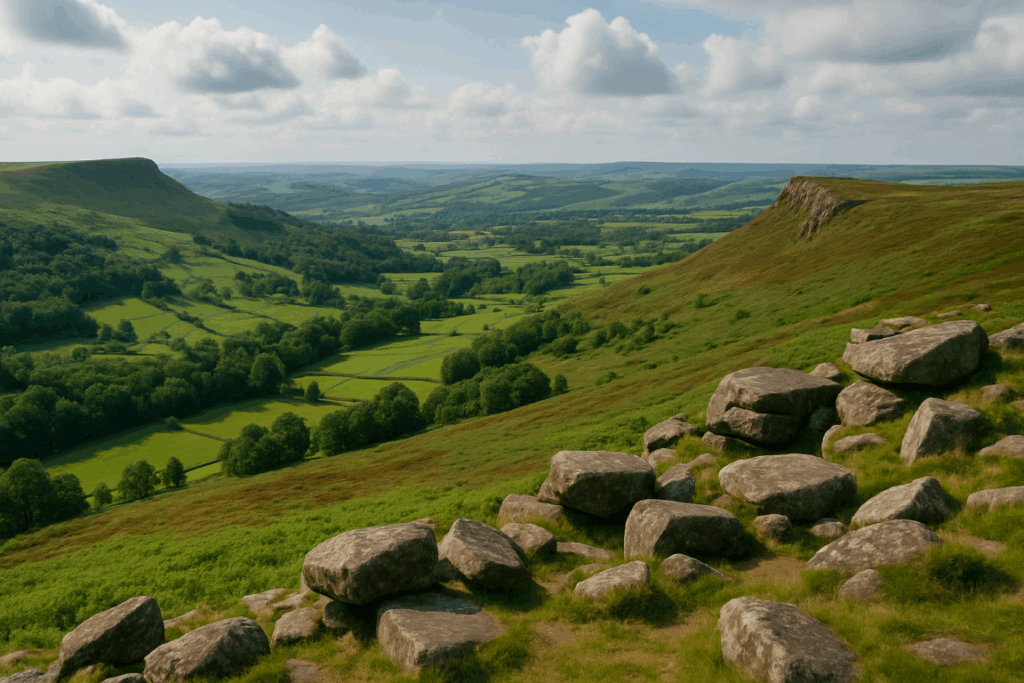
Stand at the top of Helvellyn on a dry Saturday in August and count the lines. Not just the one path you followed up, the three or four braided alternatives spreading out either side, each one started by walkers dodging a puddle or a boggy patch, widening the scar a little more with every boot. I’ve watched this happen in real time. You drift left to avoid the mud, the person behind you does the same, and within a season there’s a new ghost path carved into the hillside. That’s upland path erosion in its most visible, most human form.
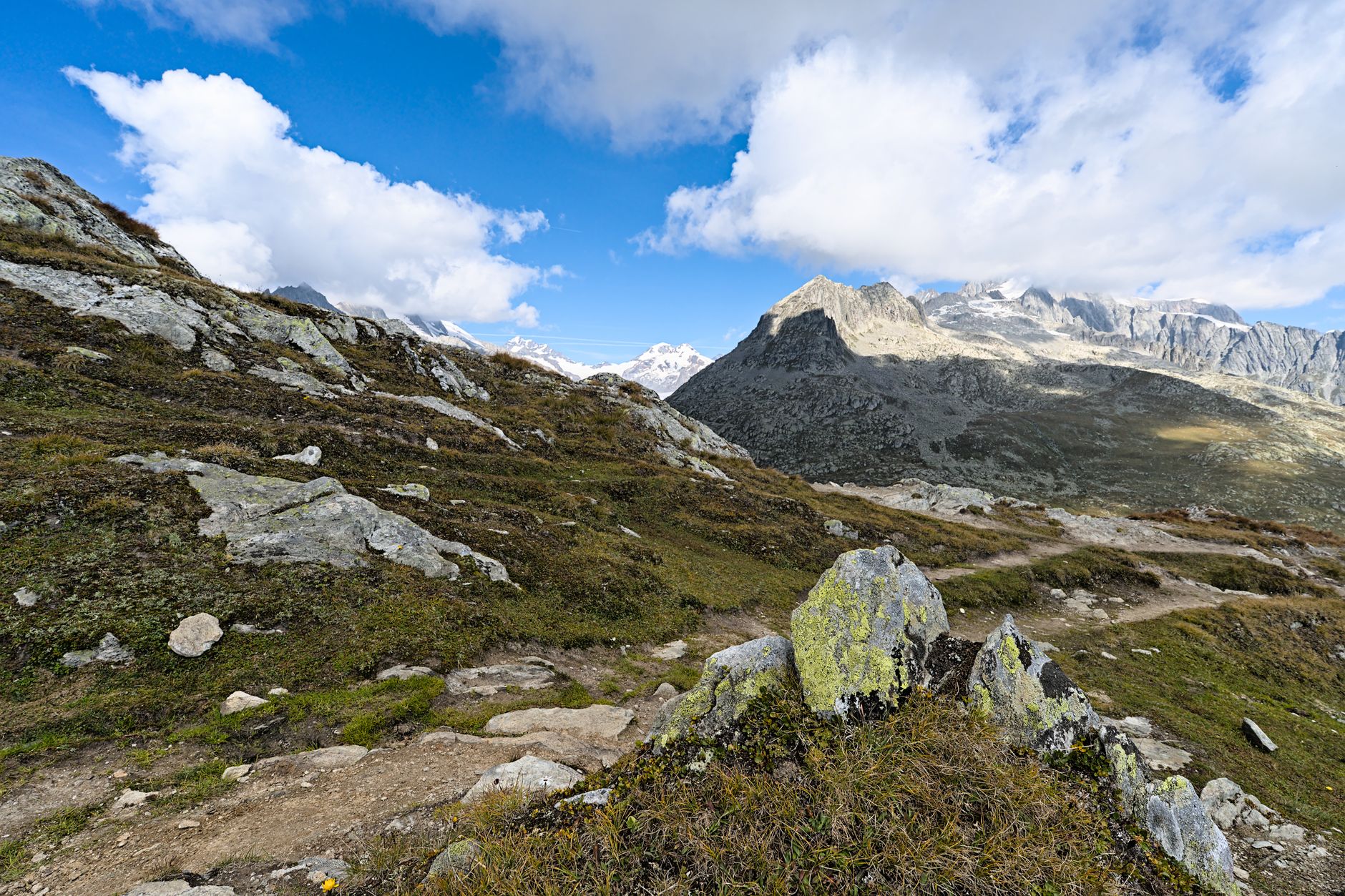
It’s happening on our most famous peaks right now. Helvellyn in the Lake District, Pen y Fan in the Brecon Beacons, Ben Nevis in the Highlands. These are the mountains that tens of thousands of people climb every year, and that sustained pressure, combined with winters that are wetter and more intense than they were thirty years ago, is grinding the landscape down in ways that take decades and serious money to fix.
The scale of the problem on Helvellyn, Pen y Fan and Ben Nevis
Helvellyn is probably the clearest example in England. The main ascent via Striding Edge draws an estimated 150,000 walkers a year, possibly more. The Swirral Edge approach and the gentler Red Tarn routes add further volume. All of that foot traffic on thin, acidic upland soils strips the vegetation that holds everything together. Once the turf is gone, rain does the rest, channelling down the bare ground, cutting ruts, widening hollows into what conservationists call erosion pans. Some of the worst on Helvellyn’s ridge are more than a metre deep.
Pen y Fan is a slightly different story. The Brecon Beacons’ highest point is accessible enough that it pulls in families, casual walkers and groups who wouldn’t normally head into the hills at all. That broad demographic means the path gets hit hard at weekends and bank holidays in a way that the more committing Highland routes don’t. The ground at the summit plateau has been so heavily compacted that drainage is permanently compromised, keeping the soil saturated even in drier spells and making each boot placement that much more destructive.
Ben Nevis handles roughly 125,000 ascents per year according to data cited by the John Muir Trust, and the Mountain Track, the main tourist route, shows the strain. Loose scree, eroded zig-zags and a path surface that in places has been worn down to bare rock or bare mineral soil well below the original ground level. The upper mountain’s exposure means repair work is expensive, slow and weather-dependent.
What climate change is adding to the mix
Foot traffic alone doesn’t explain everything. The Met Office’s UK Climate Projections point clearly to wetter autumns and winters across upland Britain, with more intense rainfall events rather than gentle, steady rain. That matters enormously on mountain terrain. A prolonged downpour of 20mm in an hour does far more erosive work than the same total falling over twelve hours. It concentrates flow, cuts channels and strips the topsoil before vegetation has any chance to recover.
Freeze-thaw cycles, the repeated freezing and expansion of water in the soil overnight, then thawing by day, are also shifting. We’re getting more crossover days around 0°C rather than sustained cold, which means more freeze-thaw events per winter rather than fewer. Each cycle loosens the soil structure a little more, making it easier for the next rainstorm to carry it downhill.
The organisations doing the actual repair work
Fix the Fells is the most visible force in the Lake District. Run as a partnership between the Lake District National Park Authority, the National Trust and Natural England, it has been repairing upland paths in the fells since 2003. The approach has evolved a lot since the early days of simply pitching stone flags across boggy sections, the team now uses a range of techniques including revegetation, drain cutting to divert water off the path surface, and the careful placement of stone pitching that follows the natural line walkers want to take rather than fighting it. Since the project began, Fix the Fells has managed over 300 kilometres of upland path, though funding is never guaranteed year to year, which I wrote about in more depth in my piece on how UK national trails are funded and why walkers should care.
In Wales, Natural Resources Wales carries upland path repair work alongside the Brecon Beacons National Park Authority (now operating as Bannau Brycheiniog National Park). Helicopter airlifts of stone are expensive but sometimes the only practical option, road access to the high ground simply doesn’t exist, and dragging materials up by hand is backbreaking work limited to smaller quantities. A single day of helicopter operations can shift enough stone to repair a section of path that would otherwise take a volunteer team weeks.
On Ben Nevis, the work is shared between Mountaineering Scotland, the John Muir Trust and Highland Council. The Trust in particular has invested heavily in the lower sections of the Mountain Track, where drainage problems were causing the path to widen dramatically. Progress is real but slow, the mountain’s weather window for practical repair work is short, and the costs are significant.
What walkers actually do that makes it worse
It’s easy to point at sheer visitor numbers as the problem and leave it there. But the behaviour of those visitors matters as much as the total count. Shortcutting switchbacks is probably the biggest single habit that damages mountain paths. Those zig-zags are there to manage gradient and reduce erosion, cutting straight up the fall line turns your footfall into a drainage channel. I’ve been guilty of it myself on a tired descent; most of us have.
Walking on the edge of a path rather than its centre, to avoid mud, creates the braiding effect I described at the start. The mud you’re dodging is often there because a previous walker did exactly the same thing, exposing bare ground that now holds water. And groups spreading out across the hillside, which feels more sociable and less regimented, multiply the damage of a single pair of feet across a much wider zone of fragile turf.
Gaiters won’t stop erosion, obviously, but the right footwear for the terrain helps you commit to the established path rather than sidestepping. If you’re regularly finding yourself hunting for dry ground beside the main line, it’s worth checking out whether your gaiters are actually suited to the terrain you’re walking, sometimes the problem is gear rather than path.
What walkers can do to slow the damage
Stay on the path. Even when it’s wet, even when it’s unpleasant, even when there’s an obviously drier line two metres to the left. This is genuinely the single most effective thing any individual walker can do. The path surface, however battered it looks, is already compromised vegetation. The ground beside it still has a living mat of grass, moss or heather that’s doing real work holding soil together.
Volunteer path repair days run regularly across all three mountain areas. Fix the Fells runs volunteer days in the Lake District; the National Trust runs similar events across its upland estates. A day of pitching stone or cutting drainage channels is tiring, muddy and enormously satisfying. It’s also a way of understanding the landscape in a way that simply walking through it doesn’t give you.
Donating to the organisations doing the work is worthwhile. Fix the Fells takes direct donations; the John Muir Trust has a membership scheme that funds conservation work on Ben Nevis and beyond. These aren’t abstract charitable gestures, the money goes directly into materials, helicopter time and skilled labour on the actual hills you walk.
And if you manage a group, a club or even just a regular walking crew, the navigation skills your group has matter too. Groups with strong map and compass skills tend to stay on route more reliably, particularly in poor visibility. Good navigation keeps people on the established path rather than spreading out across the hillside, which is relevant whether you’re on Helvellyn in summer crowds or reading ground in difficult conditions, something I explored in the article on navigating in fog on British hills.
The mountains aren’t going anywhere. But the soil holding them together is, a few millimetres at a time, every rainstorm, every muddy weekend in October. The repair work is happening, the volunteer hours are going in, and the methods are improving. What hasn’t changed is the basic maths: the more people who walk carefully and the more who put something back, the more of this upland landscape survives for the people coming behind them.
Keeping trails intact is a collective effort, much like keeping anything you depend on running well. Groups like Fix the Fells rely on digital communication, volunteer coordination and online donation platforms to function; without reliable web infrastructure (even dijitul Support handles that kind of thing for smaller organisations), reaching new volunteers and donors would be far harder.