
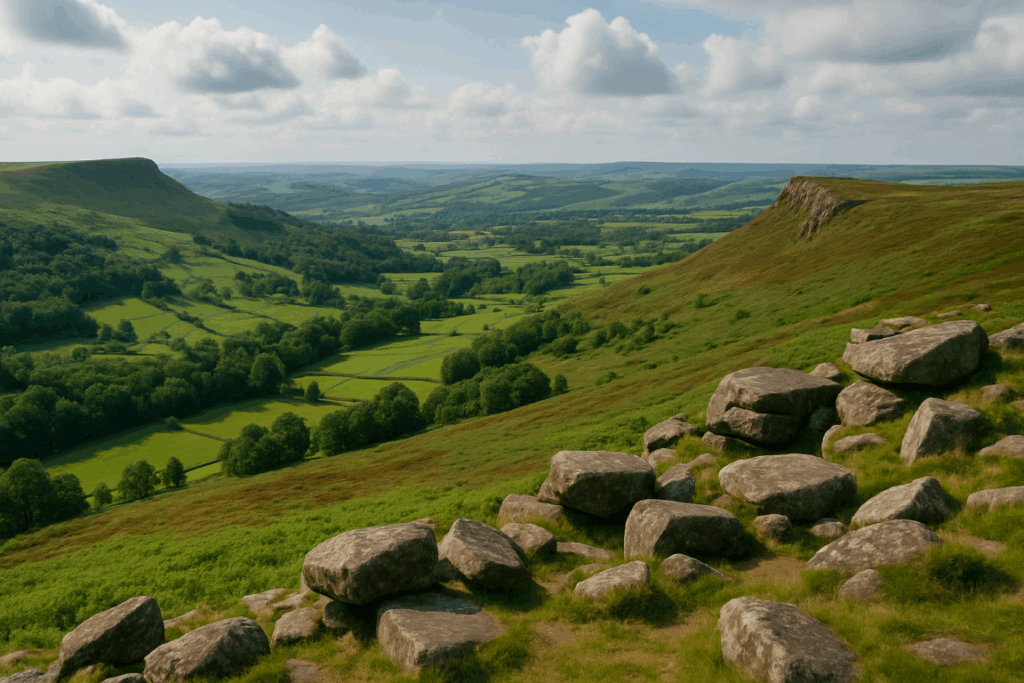
The most common mistake walkers make at a swollen stream is judging it by how deep it looks. Depth is only part of the problem. Speed and force matter far more, and a knee-deep torrent can knock an adult off their feet. Getting river crossing safety UK hiking right starts with accepting that a stream you stepped over this morning can be impassable by the afternoon.
How do you know if a stream crossing is safe?
A crossing is safe when the water is below your knees, slow enough that you can see the bed clearly, and has a calm, shallow run-out downstream. If any of those is missing, treat it as unsafe and look for another option.
Look at the colour and sound first. Brown, opaque water hides the bed and often means the river is still rising. A low rumble underwater is boulders being rolled along the bottom, which tells you the current is far stronger than the surface suggests. Floating debris, foam lines and fresh wet marks on the banks are all signs of a river on the way up.
Then think about what happens if you fall. A crossing above a waterfall, a gorge or a tangle of fallen trees is a bad idea at any height. A wide, braided section with gravel bars is usually better than one narrow, deep channel, because the water spreads out and slows.
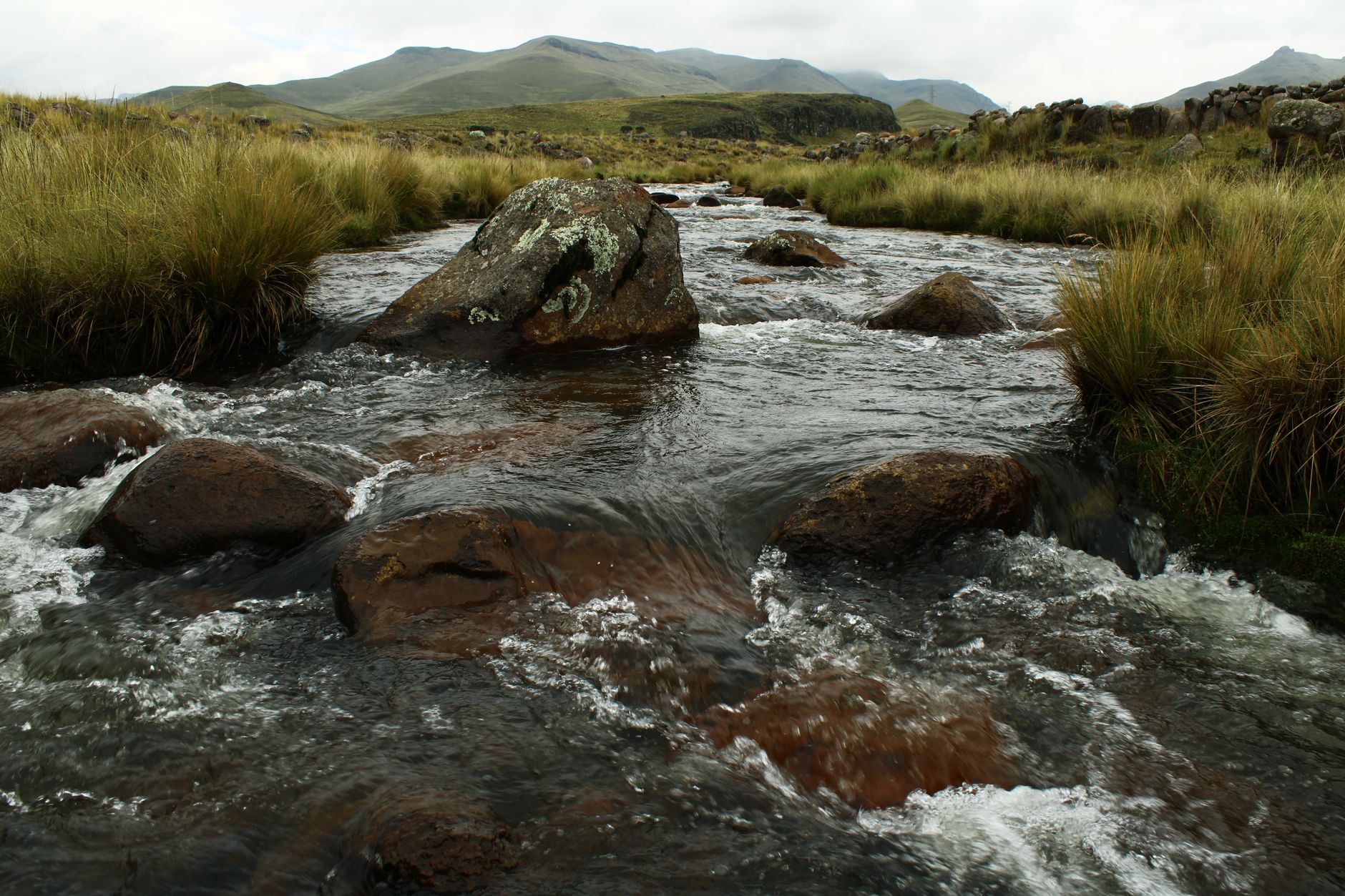
Why do Scottish and Welsh rivers rise so quickly?
Scottish and Welsh upland rivers rise quickly because they drain steep, rocky, often saturated ground with little soil to soak up rain. Water that falls on a Highland or Snowdonia hillside reaches the stream within minutes or hours rather than days.
Peat and thin mountain soils hold water like a full sponge after a wet week, so extra rain runs straight off. Western Britain also takes the first hit from Atlantic weather systems, and hills force that air upwards so it drops more rain. Add snowmelt in late winter and spring and a small burn can double in size while you are on the summit.
The catch for walkers is that it may not be raining where you are. Rain on the tops can send a surge down a glen under blue sky. A crossing that was easy on the way out may be impossible on the way back, so plan your return as well as your outward route. My own rule is to treat any crossing as one-way until proven otherwise.
For a Highland-specific look at fords, see our piece on judging when it is safe to ford in the Scottish Highlands.
What is the safest way to cross a river on foot?
The safest way is to cross at the widest, shallowest point, facing upstream, with your rucksack hip belt undone and your boots on. Take your time and move one foot at a time.
- Scout up and downstream for the best spot, not just the one where the path ends.
- Unclip your hip belt and chest strap so you can shed the pack if you fall. A floating, snagged rucksack can pin you underwater.
- Keep your boots or shoes on. Bare feet slip and cut easily. Dry socks can go in a bag for the far side.
- Use a trekking pole or stout stick as a third point of contact, planted upstream of you.
- Face slightly upstream, shuffle sideways and move only one point of contact at a time.
- Cross at an angle with the current, not against it, and do not stop mid-stream.
Crossing in a group, you can link arms or hold a pole between you, though a poorly done group crossing can pull everyone over together. If there is any doubt, do not do it.
When should you turn back instead of crossing?
You should turn back whenever the water is above your knees, the bed is hidden, the flow is fast, or you would not want to fall in. There is no summit worth the risk, and a retreat is the choice experienced walkers make most often.
Other options exist. You can walk upstream, where the river often splits into smaller channels. You can wait: many hill streams fall nearly as fast as they rise, and a few hours can turn an impassable torrent into a wade. You can also find a bridge, even if it adds miles. A wet night in a tent beside a roaring burn is not a failure. It is sensible.
What should you do if someone falls into a river?
If someone falls in, get them out from the bank rather than going in after them, and call 999 and ask for Police, then Mountain Rescue, if they are in trouble. Entering fast water to help is how a single incident becomes two.
A person swept off their feet should float on their back with feet pointing downstream, near the surface, and steer towards the bank. Do not try to stand up in fast water, because a trapped foot can pull you under.
From the bank, throw anything that floats or can be held, such as a rope, a dry bag or a trekking pole. Follow along the bank and look for a place downstream where they can be reached. Once out, the danger is not over. Cold water drains heat quickly and can bring on hypothermia, so get them into dry layers, a shelter and insulation, and keep them with you until help arrives.
Our guide to how UK mountain rescue teams work explains what to expect when you make that call.
How can you plan to avoid a dangerous crossing?
You avoid a dangerous crossing by checking the forecast and recent rainfall, looking at the map for rivers on your route, and choosing a plan B before you leave. Rainfall from the previous 24 to 48 hours matters as much as today’s weather.
On the map, mark every blue line your route crosses, and note where bridges are. A walk that depends on two unbridged crossings in the same glen is fragile in autumn and winter. The Mountain Weather Information Service and the Met Office mountain forecasts are good places to start, and the Mountain Training organisation offers courses covering river crossings if you want hands-on practice with an instructor.
Finally, leave a route card with someone and stick to it. If you change your plans because a river is too high, tell them.