
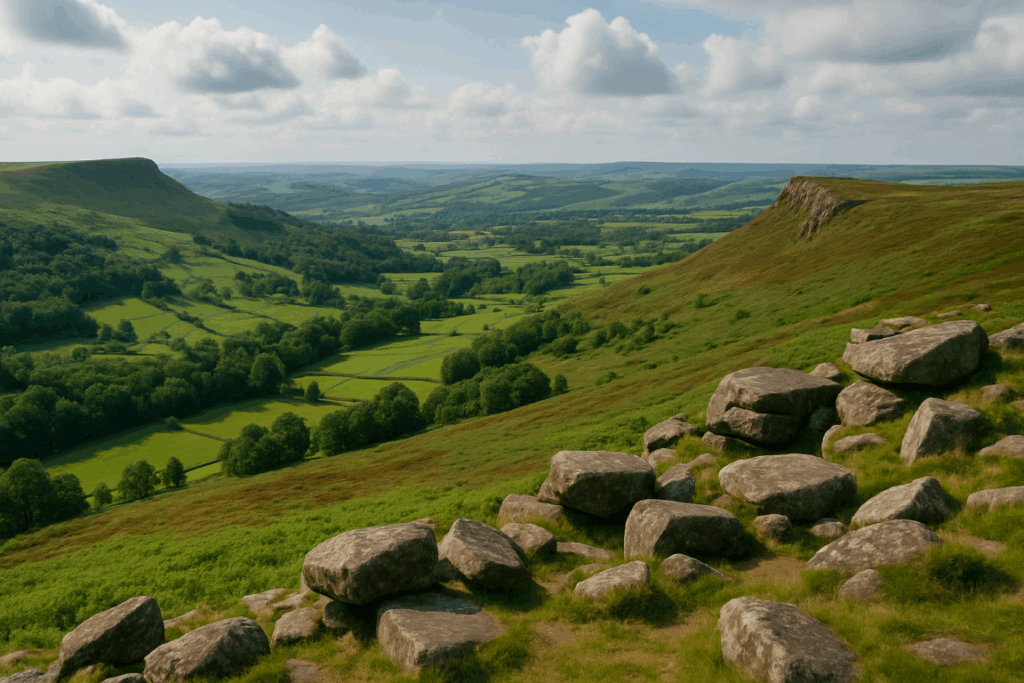

Wildlife will never replace a map and compass, but it will tell you things the map can’t. Upland wildlife navigation is about reading clues: which species lives at which height, on which vegetation, and what that suggests about the ground in front of you. A ptarmigan means you are high and on stony ground. A crossbill means trees, and probably a forest edge, nearby. Treat these as hints that back up your bearings, never as proof of where you are.
The list below runs roughly from low to high, with a few species that point to particular terrain. All are found in Scotland, the Pennines or Snowdonia, though not in all three.
1. Crossbills: conifers and the forest edge
Crossbills are stocky finches that feed on conifer seeds, and you will usually hear their sharp, chipping calls before you see them. In Scotland, the Scottish crossbill is tied to old pine forest, such as the Caledonian pinewoods around the Cairngorms. Common crossbills turn up in spruce and larch plantations in Snowdonia and the north of England.
The cue: crossbills mean cones, and cones mean trees. If you hear them in cloud, you are almost certainly low, near a plantation edge, and the ground ahead will probably have forestry tracks, fences and ditches. That is useful when you are trying to find the way off the hill in poor visibility.
2. Ring ouzels: the edge of the crags
The ring ouzel is a blackbird with a white bib, and it is the mountain version. It nests on steep, rocky slopes with heather and scattered crags, often in gullies and on the sides of upland valleys. You can find them in the Highlands, the northern Pennines and parts of Snowdonia, but only in spring and summer, as they winter in southern Europe and North Africa. In November you will not see one.
The cue: a ring ouzel in season suggests broken ground, a steep side valley or a rocky edge. It is a reminder that the contours bunching up on your map will be rough underfoot.
3. Red grouse: heather moorland
Red grouse are the bird of managed heather moor. If one explodes from beneath your boots calling go-back, go-back, you are on heather, which in the Pennines and eastern Highlands usually means broad, rolling moorland rather than crags. Grouse moors are often burnt in patches, so you may see a mosaic of young and old heather.
The cue: expect peat hags and wet ground between the heather. Keep to the path where you can. If you want a better feel for the working side of these hills, see our piece on hill farming and walking.
4. Golden plover and dunlin: high, wet plateaux
The golden plover is a handsome wader with a plaintive, whistling call, and it breeds on upland moor and blanket bog. Dunlin do the same on the wettest plateaux, notably the Pennines. Both are most often noticed in spring and summer. In autumn plovers form flocks and move to lower ground.
The cue: in the breeding season, these birds say flat, boggy, high ground with few landmarks. That is exactly the terrain where navigation is hardest, and where a bearing matters most.
5. Hen harriers: open moor with few trees
The hen harrier is a ground-nesting raptor of open heather moorland. The male is pale grey and unmistakable as he quarters low over the ground. It has been a difficult story for the species in England, where numbers have been low for years because of persecution on some moors, so a sighting there is rare. Scotland has more.
The cue: a harrier hunting low means wide open moor with few trees and little shelter. If the weather turns, there is nowhere to hide, so plan accordingly.
6. Red deer: the shifting snowline of the Highlands
Red deer spend summer high on the tops, and move down in winter to find food and shelter. Stags rut in autumn, and the roaring carries a long way across a corrie. In a quiet glen in October you can hear them well before you see them.
The cue: deer tracks often follow the easiest line across a slope, and the animals use sheltered corries in bad weather. A group on the skyline suggests open, grassy ground, while hinds lying in a hollow suggest shelter from the wind. Don’t follow them blindly, and keep well back during the rut.
7. Feral goats in Snowdonia
Snowdonia’s feral goats are a familiar sight on the Glyderau and the Carneddau, where they graze steep, rocky slopes. They are not a rarity, so they are a weak cue, but they do point to crags and scree, not bog or forest.
The cue: goats near the path suggest steep, rocky ground close by. Look at your map for tight contours.
8. Mountain hares: high ground with heather
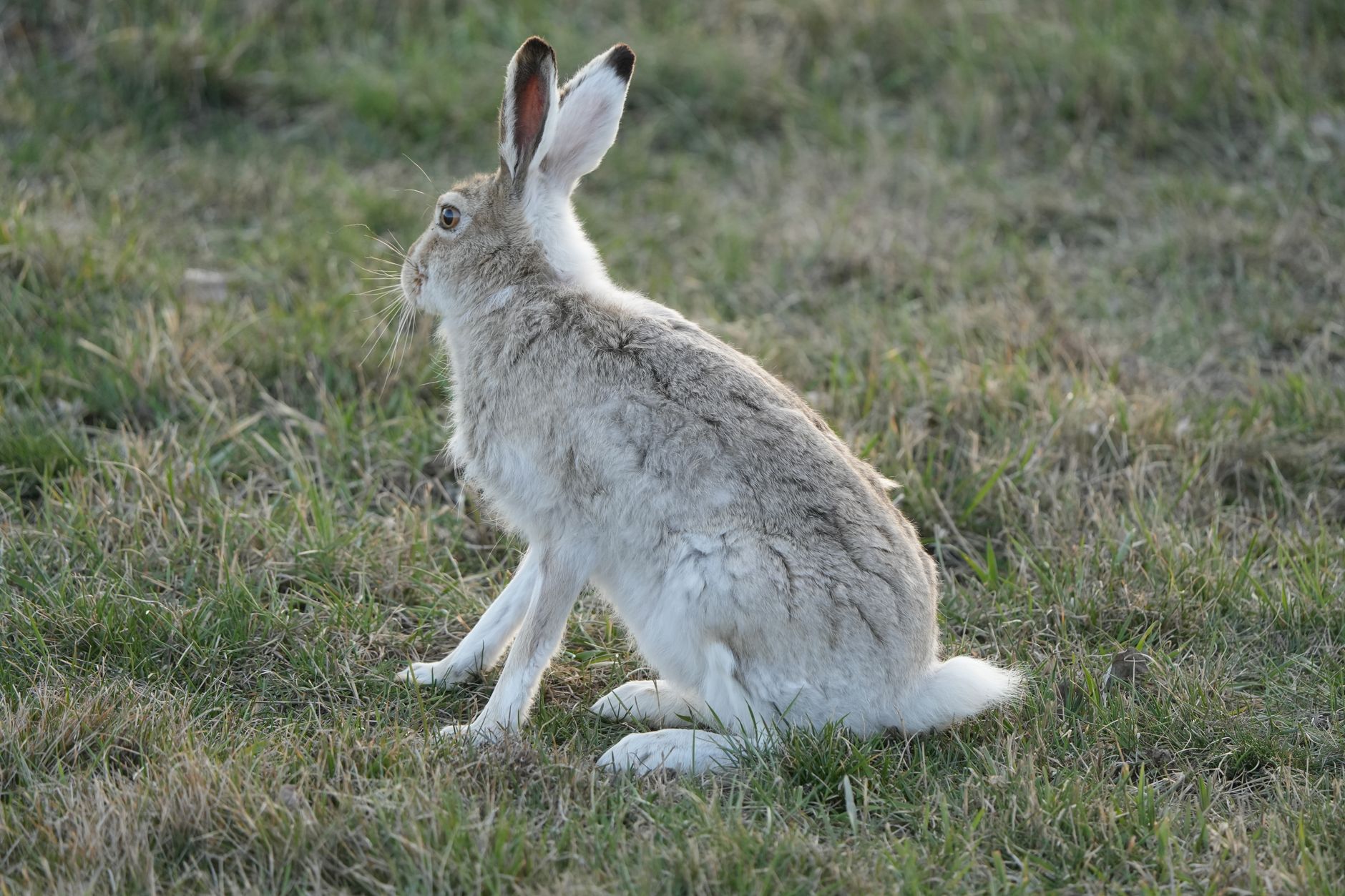
Mountain hares live in the Scottish Highlands and the Peak District, where a population was introduced in the nineteenth century. They like heather moor and high ground, and in winter they turn white, which makes them easy to spot against snow and surprisingly easy to miss on a pale scree.
The cue: a mountain hare means you are on heathery high ground, usually well above the tree line. If you see one with a white coat in November, check the forecast, as the animals moult in response to day length, not weather, so a white hare on bare hillside is not a sign of snow.
9. Ptarmigan: the highest, stoniest ground
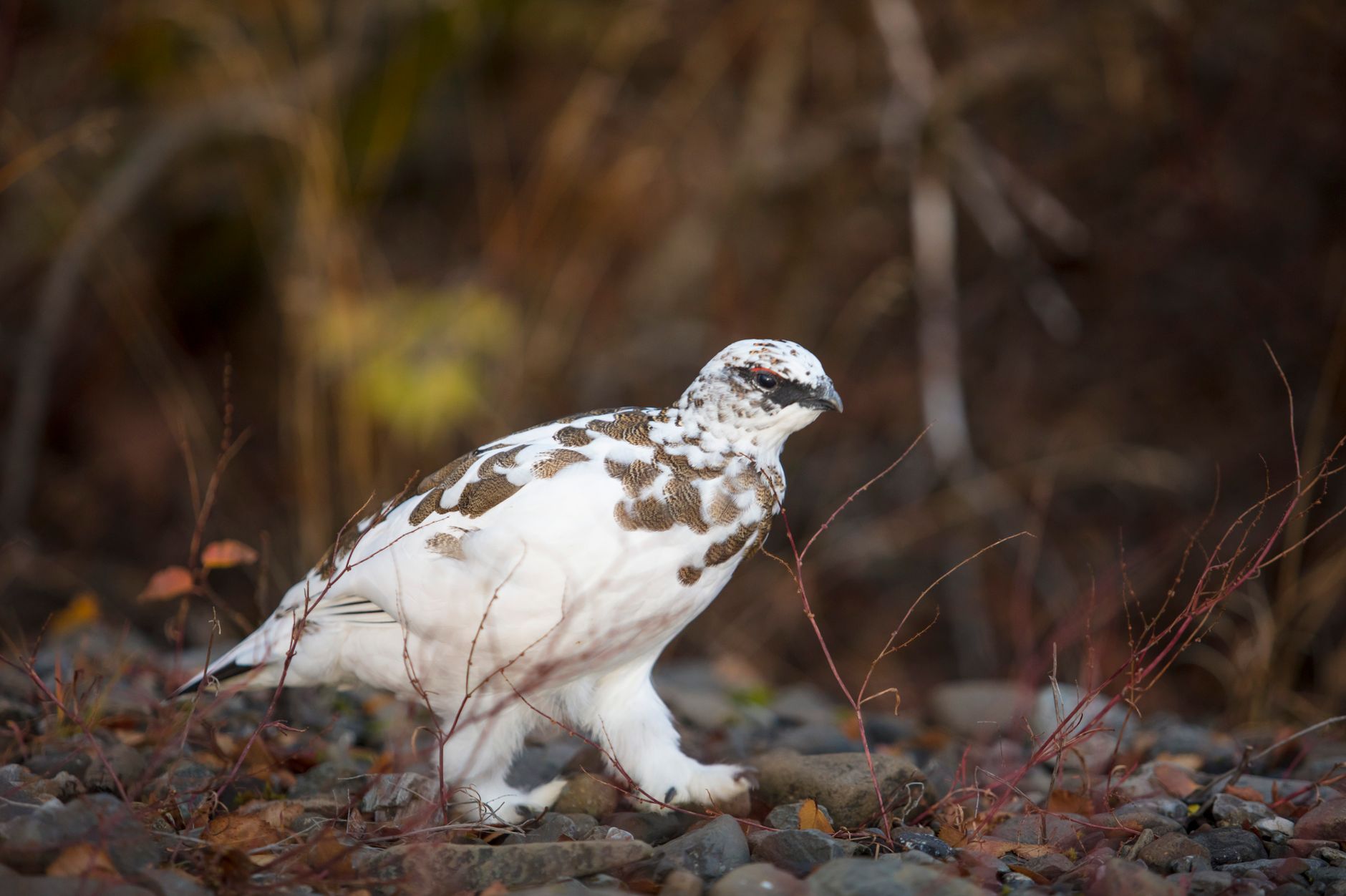
The ptarmigan is Britain’s highest-living bird, found only in the Scottish Highlands on bare, stony summits and plateaux. It is superbly camouflaged, grey in autumn and white in winter, and you often hear its croaking call before you spot it.
The cue: a ptarmigan means you are at altitude, typically above about 700 to 800 metres, on boulder fields and short alpine vegetation. If you are navigating a plateau in cloud, that tells you roughly where you are. Pair it with a bearing, and with a reading of how contours look on this kind of ground. Our guide to ACE ABC is not a navigation resource, so for skills use a recognised mountain skills course.
What can you actually trust wildlife to tell you?
Wildlife can tell you the broad type of ground, not your position. Birds and animals move, seasons change and populations shift. A ptarmigan can be miles from where you think. Use sightings to confirm what the map and compass already say, and treat any mismatch as a reason to stop and check. For anything about rights and conditions, the gov.uk guide to open access land is the place to start.
Next time you are out, try a simple habit: every time you spot an animal, note the height, the vegetation and the slope on your map. After a few walks you will have a feel for it that no list can give you.
Leave a Reply