

Getting your clothing right in the mountains is one of the most important skills you can develop as a hiker. The mountain layering system is the tried and tested approach that outdoor enthusiasts have relied on for decades, and for good reason. Rather than wearing one thick, heavy garment, you build up multiple thinner layers that work together to manage moisture, retain warmth, and protect you from the elements. In Britain, where the weather can shift from warm sunshine to driving rain and back again within the space of an afternoon, knowing how to layer properly is not optional. It could genuinely keep you safe.
What Is the Mountain Layering System?
The mountain layering system breaks clothing into three distinct roles: the base layer, the mid layer, and the shell layer. Each one has a specific job to do, and when they work together, they create a flexible, adaptable system that responds to changing conditions. You can add or remove layers depending on your exertion level, the temperature, and the weather rolling in overhead. That flexibility is what makes it so effective on British hills, where you might sweat hard on a steep ascent and then stand exposed and chilling on a ridge top within minutes of each other.
The Base Layer: Managing Moisture Next to Your Skin
Your base layer is the one in direct contact with your skin, and its primary job is moisture management. When you exert yourself on a climb, you sweat. If that moisture sits against your skin, your body temperature drops rapidly the moment you stop moving. A good base layer wicks sweat away from the skin and moves it outward to the next layer where it can evaporate.
Merino wool is widely considered the best base layer material for British mountain use. It is naturally odour-resistant, manages moisture well, and crucially retains warmth even when damp. This is a major advantage in wet UK conditions. Synthetic options such as polyester are lighter, dry faster, and are often cheaper, making them a solid choice for high-intensity activities where you will be sweating heavily. Avoid cotton entirely as a base layer. Once wet, cotton loses all insulating properties and becomes a genuine cold-weather hazard.
The Mid Layer: Trapping Heat When You Need It
The mid layer is your insulation. Its job is to trap warm air close to the body and retain your core temperature, particularly when you slow down or stop. This is the layer you will add when you reach a summit or take a break in the wind, and remove when you start working hard again.
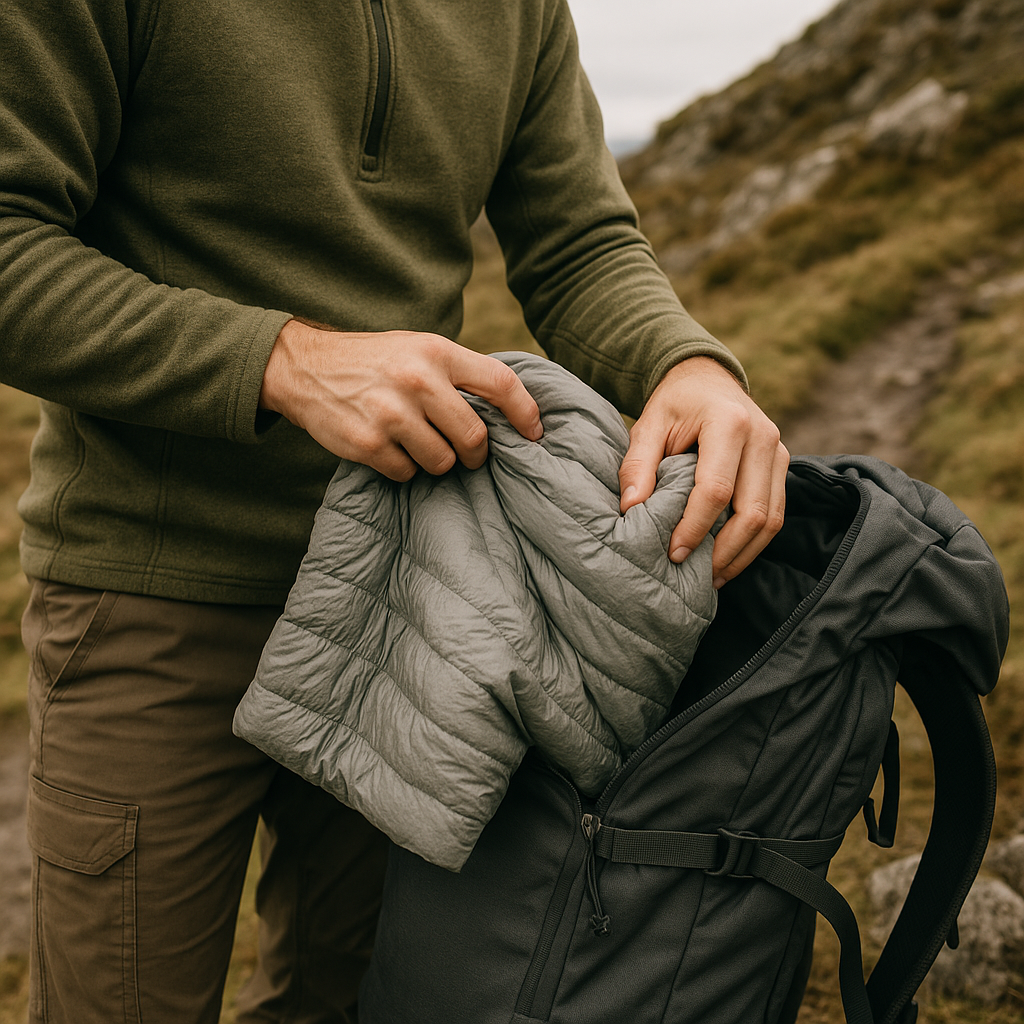
Fleece is the classic mid-layer choice for UK hiking. It is breathable, relatively lightweight, dries quickly, and offers a good warmth-to-weight ratio. Grid-fleece styles, with their textured inner surface, are especially good at managing moisture from the base layer below. For colder conditions or winter mountain days, a synthetic insulated jacket works extremely well. Unlike down, synthetic insulation retains most of its warmth when wet, which makes it far more practical in the damp British uplands. Down is lighter and compresses beautifully, but it collapses when saturated and loses almost all its insulating ability. Save down for drier alpine environments or use it as a packable extra layer for emergencies.
Choosing Mid Layer Weight
Mid layers come in light, medium, and heavyweight options. For most three-season UK hiking, a medium-weight fleece or a lightweight synthetic jacket covers the majority of situations well. In winter on exposed mountains such as those in the Scottish Highlands or Snowdonia, a heavier insulated piece is worth the extra pack weight. Some hikers carry both a light fleece and an insulated jacket for maximum flexibility.
The Shell Layer: Your Defence Against British Weather
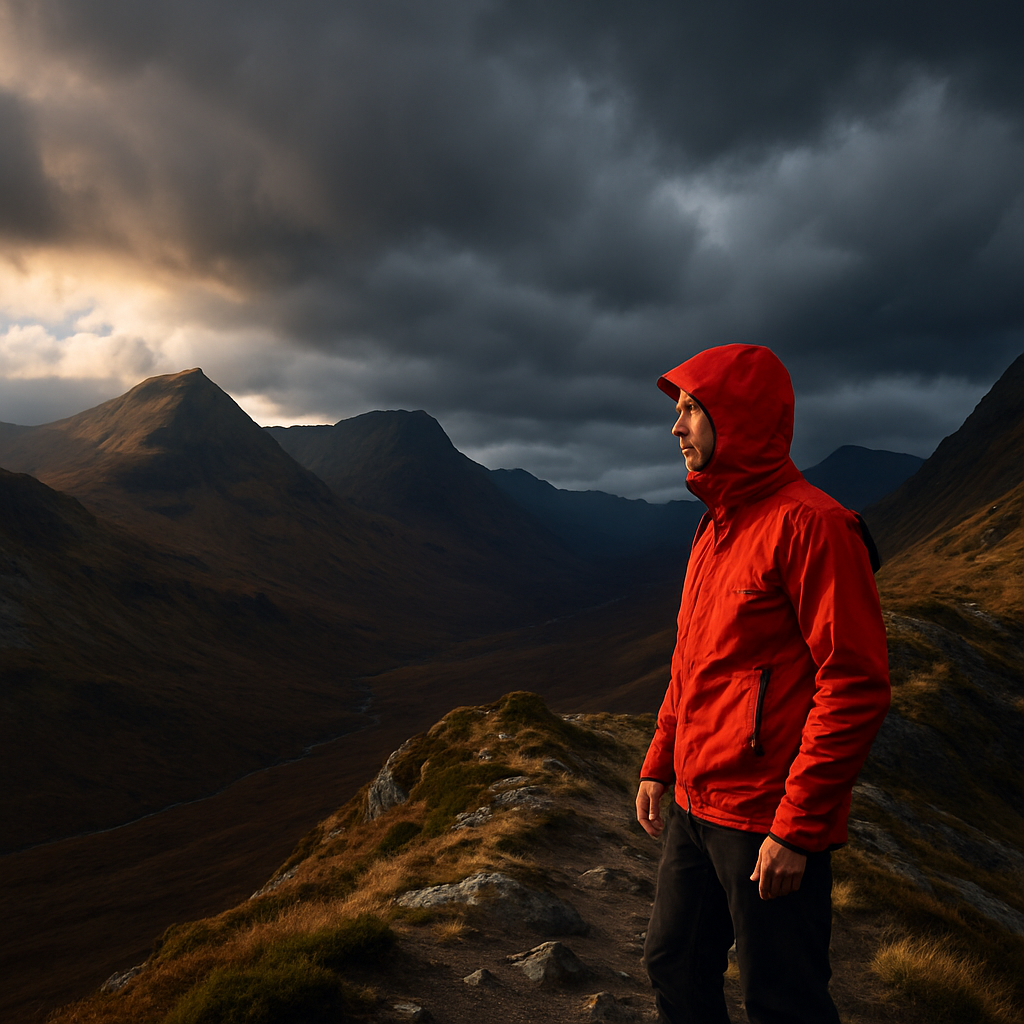
The shell layer is your outer armour. Its job is to block wind and repel rain while allowing moisture vapour to escape outward so you do not end up soaked from the inside. In a country where horizontal rain and gusting winds are common even in summer, your shell layer deserves serious investment.
Hardshell jackets use waterproof, breathable membranes to achieve this balance. They are the most robust option and hold up well in sustained heavy rain. A good hardshell will have taped seams, an adjustable hood that fits over a helmet if needed, and pit-zip vents for dumping heat on strenuous climbs. Softshells sacrifice some waterproofing for greater breathability and stretch, making them ideal for active days in light rain or wind. Many experienced hikers carry a softshell for day-to-day use and pack a hardshell for when conditions deteriorate seriously.
DWR (durable water repellent) treatments are applied to shell fabrics and cause water to bead and roll off the surface rather than saturating the material. These treatments wear off over time and should be refreshed periodically, especially if your jacket starts to wet out and cling to your mid layer.
Putting the Mountain Layering System Into Practice
Understanding the theory is one thing; applying it on a real mountain day is another. The key habit to build is staying ahead of the conditions rather than reacting to them. Put your shell on before the rain arrives, not once you are already soaked. Remove a layer before a hard climb, not once you are drenched in sweat. Stop somewhere sheltered to make adjustments rather than wrestling with zips on an exposed ridge in a howling wind.
British mountains are notorious for rapid weather changes. Ben Nevis, the Brecon Beacons, and the Lake District fells can all go from pleasant walking conditions to serious mountain weather in under an hour. A well-practised mountain layering system means you are always prepared for what is coming, not just what is happening right now. Pack your layers in an accessible spot in your rucksack or outer pockets so you can reach them quickly without unpacking everything else.
Once the mountain layering system becomes second nature, dressing for the hills stops feeling like a guessing game and starts feeling like a confident, practical routine. The right layers, chosen for the conditions and the activity, make every outing more comfortable, safer, and genuinely more enjoyable.
Frequently Asked Questions
What are the three layers in the mountain layering system?
The mountain layering system consists of a base layer that wicks moisture away from the skin, a mid layer that traps warm air and provides insulation, and a shell layer that protects against wind and rain. Each layer has a specific role, and together they create a flexible system you can adjust as conditions change.
Is merino wool or synthetic better for hiking base layers?
Both have their strengths. Merino wool is naturally odour-resistant and retains warmth when damp, making it excellent for multi-day trips or cooler conditions. Synthetic fabrics like polyester dry faster and are more affordable, making them popular for high-intensity hiking where you sweat heavily. Many hikers own both and choose depending on the trip.
Can I use a down jacket as a mid layer for UK hiking?
Down is very lightweight and compressible, but it loses most of its insulating ability when wet, which is a real risk in the damp British uplands. Synthetic insulation is generally a safer choice for mid layers in UK conditions as it retains warmth even when moisture is present. Down works better as a packable emergency layer or for drier alpine environments.
What is the difference between a hardshell and a softshell jacket?
A hardshell is fully waterproof with sealed seams and a breathable membrane, designed to handle sustained heavy rain and wind. A softshell prioritises breathability and stretch, offering good wind resistance and light rain protection but less performance in heavy downpours. Many hikers use a softshell for active days and pack a hardshell for serious weather.
How many layers do I need for winter hiking in the UK?
For winter hiking on British mountains, you typically need all three layers: a thermal base layer, a heavier mid layer such as a thick fleece or synthetic insulated jacket, and a robust waterproof hardshell. Some hikers also carry a lightweight down or synthetic puffy as an extra warmth layer for summits and rest stops in very cold conditions.
Leave a Reply