
William Naismith was a Glasgow climber who, back in 1892, sketched out a rough calculation for estimating walking time in the Scottish hills. The formula is simple: allow one hour for every five kilometres of distance, plus an extra hour for every 600 metres of ascent. Clean, logical, memorable. The problem is that Naismith was working out a rule of thumb, not a guarantee, and somewhere along the way a generation of walkers decided to treat it like a timetable. I’ve seen groups set off on January mornings in the Carneddau with a spreadsheet built on Naismith and no buffer at all. It rarely ends well.
The rule holds up reasonably well on good paths in dry conditions at a moderate pace. That covers maybe a third of what British hills actually throw at you. The rest of the time, the boggy, the rocky, the winter-white, the sodden-underfoot rest of the time, it starts to quietly unravel. Understanding exactly where and why it fails is one of the most useful things any UK hillwalker can do, because the consequences of a bad time estimate aren’t just mild inconvenience. Mountain rescue teams across the UK regularly attend incidents where walkers were caught out by darkness after underestimating the time a route would take. Getting the calculation closer to reality matters.
Why Naismith’s rule hiking UK terrain often falls apart
The core assumption baked into Naismith is that you are walking on a reasonably firm, continuous surface. It does not account for terrain quality at all. Walk five kilometres on the Ridgeway in summer and five kilometres across the Kinder Scout plateau after three days of rain, and you will not cover those distances in remotely comparable times. The bog wins. Repeatedly. Ground that requires you to pick every footfall, test each tussock, balance across a drainage channel, or skirt an unexpected pool adds time in a way that no simple distance-and-ascent formula can capture.
Rocky terrain does the same thing. On grade 1 scrambles or even on the rougher Lakeland paths around the Langdale Pikes, your pace drops sharply compared to a graded path. The calculation doesn’t know you’ve spent four minutes deciding whether to step left or right across a slabby section. Descent is another blind spot in the basic formula. Naismith’s original rule actually ignored descent time almost entirely, assuming it roughly balanced out. That’s clearly wrong on anything steep, loose, or icy. Various amendments have been added over the decades, the most common being Aitken’s correction, which subtracts time for gradual descents but adds time for steep ones. Most people don’t use it. Most people just use the original.
Winter conditions and what they do to your estimates
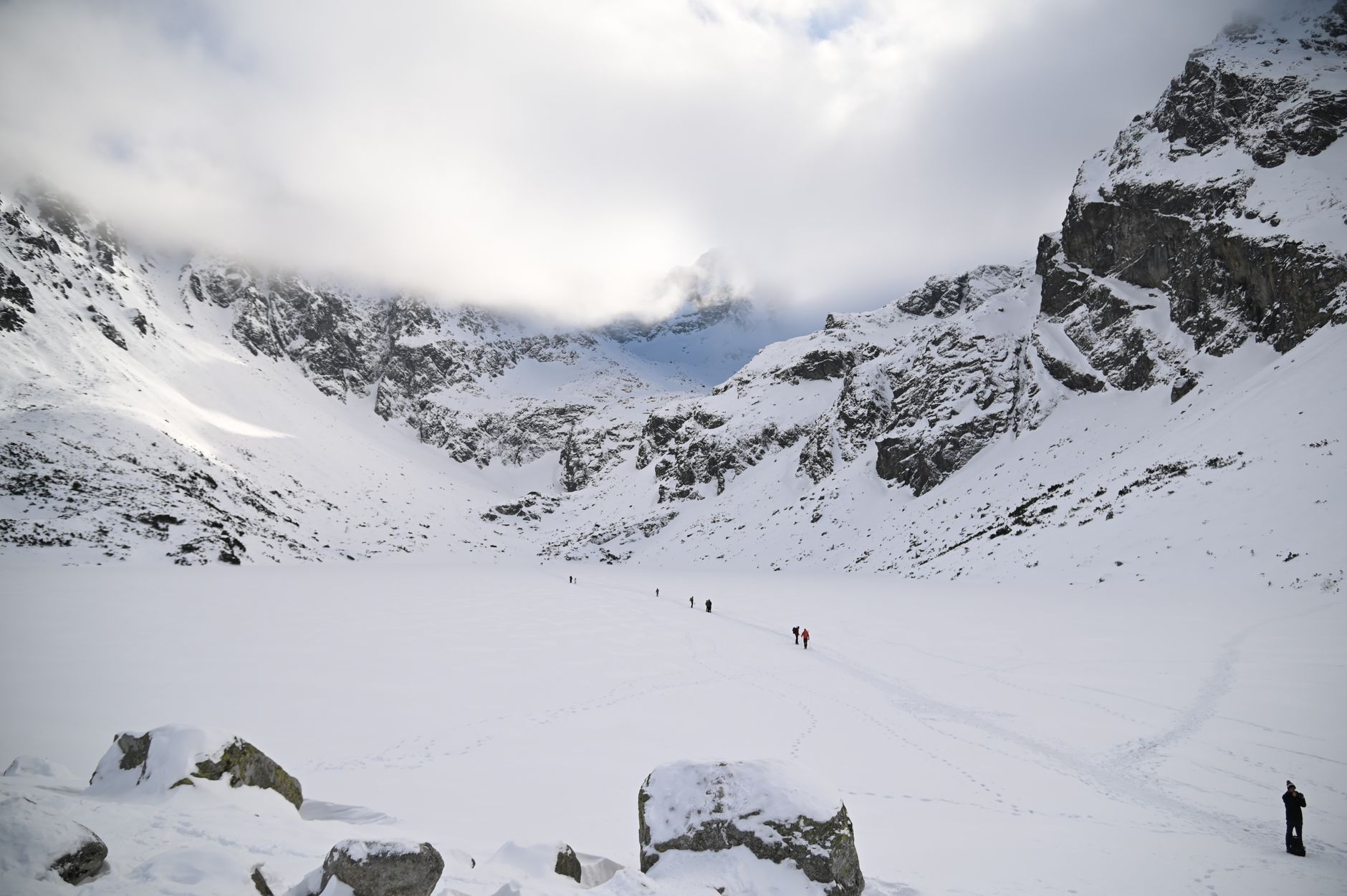
Take any route you know well and add snow, ice, or a combination of both, and your Naismith figure needs adjusting significantly. I walked the Mamores in March a few years back on a day that looked, from the glen, like it might have cleared. It hadn’t. Above 700 metres we were on firm névé with a thin crust of ice, and every step needed crampons and care. A route I’d done in summer in three and a half hours took just over six. No drama, no emergency, just the honest pace that winter demands.
The Met Office mountain forecasts for areas like Snowdonia and the Cairngorms regularly flag wind chill, icing levels, and visibility, all of which affect pace directly. Reading those forecasts properly before you build your time plan is just as important as the maths itself. If the forecast shows 40 mph gusts on the ridge, your five-kilometre-per-hour assumption is gone before you’ve even tied your boots.
Group size, fitness, and load all shift the baseline
Naismith’s Rule assumes a single fit walker. Groups do not move like single fit walkers. They bunch, they wait, they regroup at gates, they stop to sort kit, and they tend to pace to their slowest member on the way up and their most cautious member on the way down. A solo walker in good condition might genuinely hit the Naismith figure on a decent path day. A group of six with mixed experience will not. I’d add at least 20% to any group estimate before I started, and then watch how the first section actually goes before committing to the rest of the plan.
Pack weight matters too. Carrying a 15 kg overnight pack on the Cape Wrath Trail is a different physical proposition to a day pack on the Malverns. Your ascent rate drops, your knees feel it on the descent, and the formula’s one-size figure for climbing rate no longer applies. The aerobic demands of sustained upland walking with load are substantially higher than the basic Naismith calculation implies.
How to actually adjust Naismith for real UK conditions
The most practical approach is to use the original formula as a starting point only, then apply a multiplier based on conditions. I tend to use 1.2 for rough moorland paths, 1.3 to 1.4 for genuine bog or boulder terrain, and 1.5 or more for anything in winter with snow or ice underfoot. These aren’t scientific corrections, they’re honest approximations built from experience, which is essentially what Naismith himself was offering in the first place.
You can also calibrate against your own pace. Walk a section you know well, time it, compare it to Naismith’s figure, and work out your personal multiplier. Most recreational hillwalkers in the UK move at something closer to four kilometres per hour on good terrain rather than five, which already puts the base calculation out by 25% before terrain quality enters the picture. The Ramblers have long published walk grades and timing guidance that implicitly acknowledges this, using slower base rates for general recreational walkers rather than the Scottish mountaineering pace Naismith originally calibrated against.
Building buffer time into your plan is more reliable than trying to perfectly correct the formula. Set a turnaround time and stick to it regardless of where you are on the route. Allow an extra 30 minutes per four hours of planned walking for the unpredictable. Leave before you think you need to. The hills are not going anywhere, and starting back an hour before the summit was technically achievable is almost always the right decision.
The bigger planning picture Naismith fits into
Time estimation is only one part of route planning, and over-focusing on the formula can actually distract from everything else that matters. Navigation in poor visibility, knowing when conditions on the ridge are different from what you felt at the car park, understanding that terrain behaviour changes significantly with altitude, these are the things that shape whether a day in the hills goes well or badly. Naismith gives you a number to work from. It is not a substitute for judgement.
Treat it as a rough sketch, not a contract. Use it to gauge whether a route is broadly feasible in the daylight hours available. Then add your multipliers, set your turnaround time, check the forecast again the morning you leave, and get out onto the hill with honest expectations rather than a spreadsheet’s confidence. That’s where the formula stops being a trap and starts being a useful tool.
Frequently Asked Questions
What is Naismith's Rule and how is it calculated?
Naismith’s Rule is a formula for estimating walking time in hilly terrain. You allow one hour for every five kilometres of distance, then add one additional hour for every 600 metres of ascent. It was devised by Scottish mountaineer William Naismith in 1892 as a rough guide for planning mountain routes.
Is Naismith's Rule accurate for boggy or moorland terrain in the UK?
No, the basic formula struggles significantly on boggy, rocky, or rough moorland ground. Wet peat, tussock grass, and boulder fields all slow your pace well below the five kilometres per hour the rule assumes. Most experienced hillwalkers apply a multiplier of 1.2 to 1.5 depending on terrain quality.
How should I adjust Naismith's Rule for winter walking in Scotland or Wales?
Winter conditions can add 50% or more to your estimated time. Snow underfoot, ice requiring crampons, reduced visibility, and strong wind all cut your pace significantly. A route taking three and a half hours in summer can easily take six in firm snow. Always build in a generous buffer and set a firm turnaround time.