
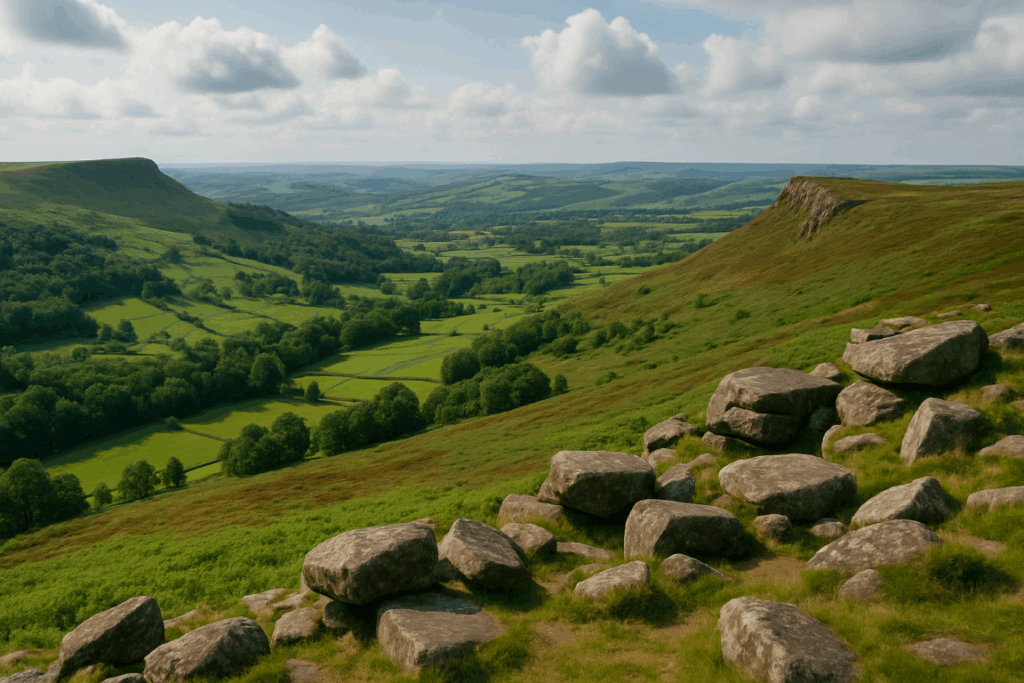
There are 16 National Trails in England and Wales, plus four in Scotland where they go by the name of Long Distance Routes. Collectively, they cover roughly 4,000 miles of waymarked paths through some of the most extraordinary landscapes this country has. I’ve walked sections of most of them over the years, and one thing that strikes me every time is how much invisible effort goes into keeping them passable. The signage doesn’t put itself up. The boardwalks across boggy ground don’t appear by magic. Someone repairs the stiles, clears the drainage channels, and replaces the acorn waymarkers after winter storms. That someone costs money, and the story of UK national trails funding maintenance is, quietly, one of the more important conversations happening in the outdoor world right now.
Where the money actually comes from
National Trails in England are managed through a partnership model. Natural England holds the central coordinating role, working alongside the relevant National Park authorities and local highway authorities along each route. Funding arrives from two main pots: central government grant through Natural England, and contributions from local authorities whose land the trail crosses. The South Downs Way, for instance, passes through the South Downs National Park Authority’s territory, which carries management responsibility alongside Natural England. The Pennine Way threads through several different county councils, which means its funding picture is more fragmented.
In Wales, Natural Resources Wales picks up the equivalent role, managing trails like Offa’s Dyke Path and the Pembrokeshire Coast Path as part of a broader countryside estate. Scotland operates differently again, with NatureScot (formerly Scottish Natural Heritage) funding the four Great Trails, though the network there is less formalised in statutory terms. The key point across all three nations is that no single body writes a single cheque. It’s a patchwork, and patchworks have gaps.
According to figures published by Natural England, the total annual budget allocated to National Trail management has not kept pace with inflation over the past decade. What that means in practice is that real-terms spending per mile has fallen, even as visitor numbers on popular routes have climbed sharply.
Which trails face the biggest pressure
The Pennine Way is arguably the trail in the most complicated position. It’s the oldest National Trail in England, designated in 1965, and it crosses some of the harshest upland terrain in the country. The sheer distance, 268 miles from Edale in Derbyshire to Kirk Yetholm just over the Scottish border, means maintenance costs are enormous. Sections crossing privately managed grouse moors have historically relied on goodwill agreements with landowners, and those relationships are not always straightforward.
The South West Coast Path, at 630 miles the longest National Trail in Britain, faces a different kind of pressure: coastal erosion. Sections of the path near Hartland Quay in Devon and along the Dorset coast regularly slip into the sea, requiring constant rerouting. The trail officer teams there often work reactively, patching problems after storms rather than preventing them, simply because the budget for proactive management isn’t there.
The Cleveland Way in North Yorkshire and the Ridgeway, one of the oldest roads in Britain, both sit in areas where local authority budgets have been squeezed hard over recent years. Less tourism revenue, thinner council budgets, fewer seasonal rangers. The Ridgeway in particular has sections in Oxfordshire where drainage maintenance has visibly slipped, turning chalky bridleway sections into ankle-deep churned mud for weeks after rain.
What poor maintenance actually looks like on the ground
I’ll be honest: when I first started walking long-distance routes seriously, I didn’t think much about path maintenance. I thought about weather, kit, and navigation. But once you’ve done a few hundred miles on different trails, you start to notice the difference between a well-resourced trail and one that’s running on fumes.
A poorly maintained section of National Trail tends to show up in specific ways. Waymarking becomes inconsistent, with missing or rotated acorn discs leaving walkers uncertain at field junctions. Stiles decay without replacement, sometimes leaving an unusable gap in a fence line. Drainage fails on boggy upland sections, meaning the path widens dramatically as walkers step around the worst of the standing water, which accelerates erosion further. On popular lowland sections, vegetation encroachment can make a path almost invisible in summer, especially where there’s no budget for a volunteer strimming day.
For anyone planning a multi-day or multi-week walk, these things matter practically. A missing footbridge means a detour. A flooded section with no drainage fix means wet boots by mid-morning. Repeated navigation uncertainty at junctions slows progress and, on wilder stretches, creates a genuine risk of going wrong. If you’re preparing for a big route, it’s worth reading recent trail condition reports from the relevant management bodies, many of which publish updates seasonally.
Understanding how to read a map and contour lines properly becomes even more important on a badly waymarked stretch, because you can’t rely on the signage to get you through. And if you’re on any of the wilder Highland sections, knowing how to judge conditions before a river crossing matters more when the path markers that might help you locate a ford have vanished.
Volunteers and the gap they’re being asked to fill
The honest truth is that the National Trail network in England and Wales has been kept functional in large part by unpaid volunteers. The National Trails organisation works with walking groups, conservation bodies, and local communities to organise maintenance days. Organisations like the British Trust for Conservation Volunteers and the Ramblers help coordinate effort on the ground. But volunteer labour, however valuable, cannot substitute for structural funding. Volunteers can clear a blocked drain or re-cut an overgrown section on a dry Saturday in September. They cannot replace a collapsed footbridge or redesign a drainage system on an eroding coastal path.
There’s also the question of fairness. The most popular trails, the Cotswold Way, the South Downs Way, the Thames Path, tend to attract more volunteer interest because they’re accessible and well-known. The quieter, more remote routes get less attention, both from walkers and from the volunteers who might otherwise help maintain them.
What walkers can actually do
Reporting problems is the most direct thing any walker can do. Every National Trail has a management body with a contact point for reporting damage, missing waymarks, or blocked paths. Natural England’s trail pages list these. Using them genuinely helps, because trail officers often can’t physically inspect every mile of a 250-mile route each season.
The wider policy question sits with how we, as a country, value access to the outdoors. The ongoing land access debate is partly about rights of way, but it’s also about who pays to make those rights of way usable. A legal right to walk a path means very little if the path is impassable.
If you use National Trails regularly, consider whether the organisations that advocate for them and maintain them are ones you support. The Ramblers, the Long Distance Walkers Association, and trail-specific friends groups all run membership and fundraising programmes. It’s not a perfect substitute for proper public funding, but it keeps pressure on and keeps volunteers in the field.
The trails are worth fighting for. I’ve crossed into Kirk Yetholm at the end of the Pennine Way. I’ve walked the cliff tops of the Pembrokeshire Coast Path in October, with nothing but Atlantic grey and the smell of salt. These paths are genuinely extraordinary. They deserve better than managed decline, and walkers are the people best placed to say so loudly.