
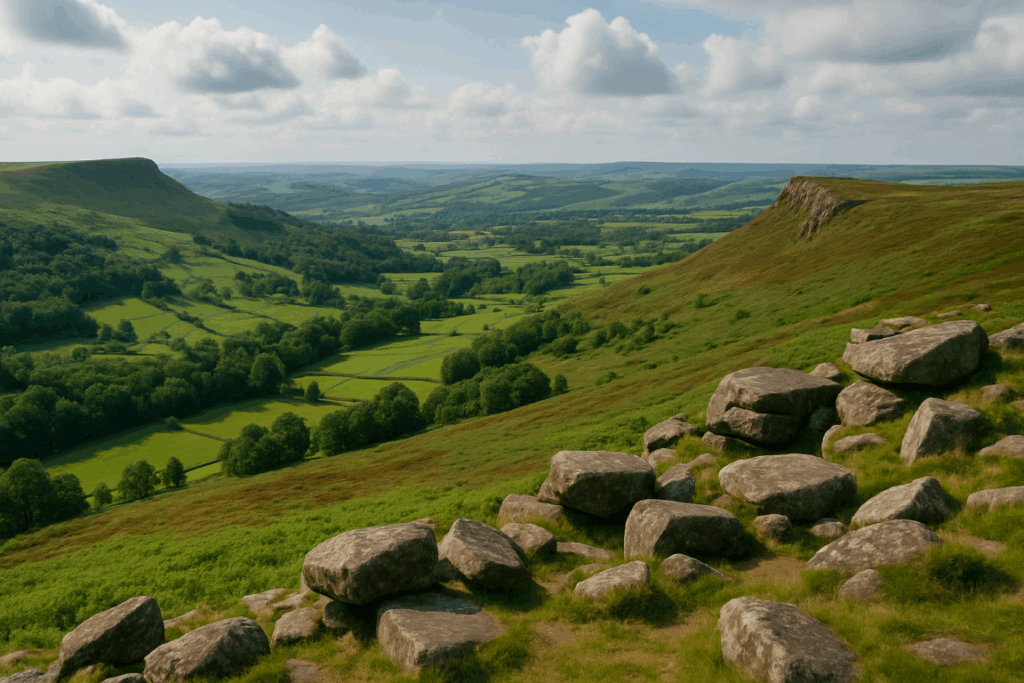
There is a specific kind of dread that arrives when you crest a rise in the Highlands and see that the burn you planned to ford has become something else entirely. What the map showed as a thin blue line is now a brown, churning mass, loud enough to drown out the wind. You are maybe six hours from the nearest road. You have to make a decision. River crossing safety in Scottish Highlands hiking is one of those skills that never gets quite enough attention in guidebooks, which tend to show the route and leave the conditions to you.
I have turned back at river crossings twice. Both times felt like failure in the moment. Now, with a bit more experience, both feel like the right call. Knowing when a crossing is manageable and when it is genuinely dangerous is not instinctive, it is a skill you build deliberately. This is what I have learned.
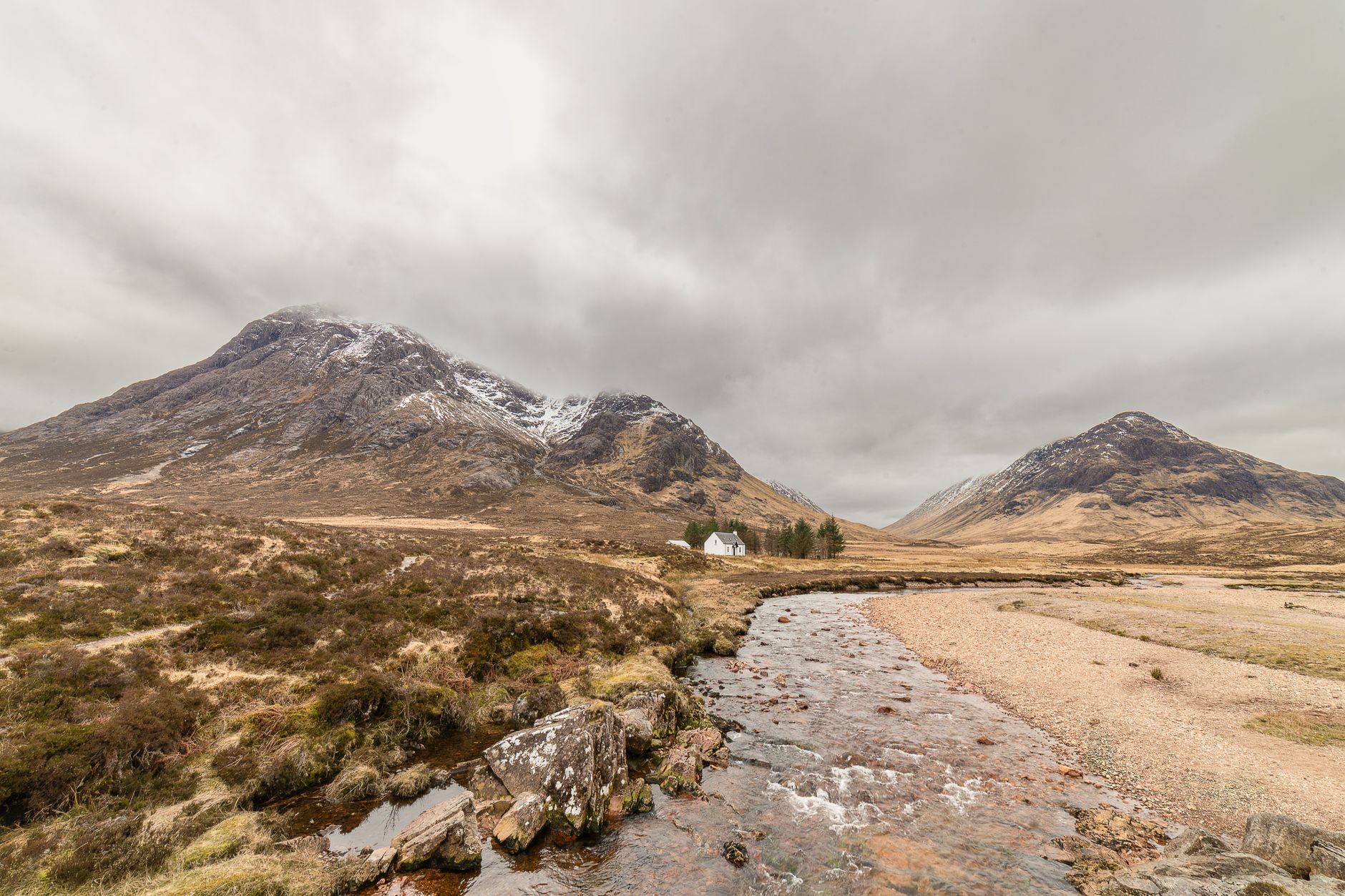
What a spate river actually is
A spate river rises fast. Very fast. In the Scottish Highlands, rainfall on high ground can triple a river’s volume in under an hour, even if the sky above you looks relatively clear. The water is coming from the plateau you cannot see, draining off hard quartzite and peat that absorbs almost nothing. The River Feshie, the Allt a’ Mharcaidh, the crossings on the Cape Wrath Trail, these are all notorious for this. You can leave a hostel in decent conditions and arrive at a crossing in something completely different.
Spate water has two additional problems beyond depth: turbidity and cold. Turbid water means you cannot see the riverbed. You lose the ability to judge depth, spot submerged boulders, or pick your line. Cold water, often around 4°C in a Highland spate, causes rapid loss of muscle function in the legs. Cold water incapacitation is real and quick. The RNLI’s river safety guidance makes clear that even strong swimmers are seriously compromised within minutes in cold, fast-moving water. Do not assume fitness makes you immune.
Reading the crossing before you wade in
Spend five full minutes watching the river before you do anything else. This is harder than it sounds because the instinct when you’re cold, tired, and behind schedule is to just get on with it. Resist that. You are looking for several things.
First, surface texture. Fast, deep water often looks deceptively smooth, a flat, dark surface moving quickly. Shallow water over gravel chatters and breaks white. That distinction matters. Second, watch for standing waves, which indicate depth and power. A true hydraulic, where water curls back on itself after a submerged obstacle, will hold you under if you enter it. Third, look at the far bank. If the water is cutting into an undercut bank, that is a sign of significant flow speed and depth, and it tells you the current will push you into that bank if you slip.
Look upstream too. Are there trees, fencing, or other debris in the water? Debris significantly increases the danger of a slip becoming fatal.
Choosing the right crossing point
The crossing point on the map is rarely the safest one in spate. Maps show where crossings exist, not where they are best in any given condition. Walk the bank. A wide, shallow braided section is almost always safer than a narrow, deeper channel, even if the narrow channel is where the path goes. Depth in a braided section is typically ankle-to-knee height; the flow is distributed.
Aim for a point with a safe exit on the far bank, a gravel beach or gentle slope, not a steep muddy cut. You want somewhere you can wade diagonally downstream, letting the current help rather than fight you. A crossing with a long pool below it is preferable to one that drops into more rapids, because if you do go in, you want recoverable water rather than a churning run.
The depth and flow test, a rough guide
There is no universal formula for this, but there are useful rules of thumb. Thigh depth in fast water is serious. Above the knee in strong current is where most hillwalkers should stop. Force is proportional to the square of velocity, which means doubling the flow speed quadruples the force on your legs. A river that looked crossable at knee depth in normal conditions is not simply “twice as hard” in spate, it can be exponentially more dangerous.
Before crossing, use a trekking pole or a cut branch to probe the bed and check stability. Wade facing slightly upstream and angled toward the far bank, moving sideways. Keep your rucksack hip belt and sternum strap unfastened, if you go in, you need to ditch it immediately. A waterlogged pack is an anchor. If you are crossing with others, cross one at a time while one person watches from the bank, or use a line abreast formation with hands on each other’s shoulders, never a chain of linked hands (a chain transmits falls directly).
For solo walkers, this is where river crossing safety in Scottish Highlands hiking gets genuinely stark. There is no rescue net for a solo mistake. Be more conservative. Always.
When to turn back
This is the part nobody enjoys thinking about. If the water is above mid-thigh and moving fast, turn back. If you cannot see the riverbed clearly, turn back. If you feel actual fear rather than just adrenaline, pay attention to that distinction, your body often knows before your brain catches up. If there is no safe exit on the far bank, turn back. If the weather is still deteriorating and the river is still rising, absolutely turn back.
On many Highland routes, a river in spate means waiting. Camp upstream, wait for the river to drop, and reassess in the morning. Most Highland rivers after a rain event will drop significantly within 12 to 18 hours if conditions improve. Carry the gear to do this. It connects directly to how you kit out for remote nights, having what you need to stop and wait is as much a safety tool as any crossing technique. I have written before about the checks worth making before sleeping under canvas in a remote location, and an unplanned overnight by a flooded river is exactly the scenario that checklist is for.
Navigation and route planning around crossings
Before you set out on any remote Highland route with unbridged crossings, check what alternative lines exist. On a 1:25,000 OS map, look for bridges upstream or downstream. In the Cairngorms and Knoydart especially, these can be significant detours, but they exist. Knowing them in advance means you are not making a panicked decision at the bank.
Check the Met Office mountain forecast for the 48 hours before your trip, not just the day itself. A route planned for a dry day that follows two days of heavy rain on the tops is a different proposition entirely. The Met Office mountain forecasts for Scotland include precipitation totals for high ground, which gives you a rough sense of drainage conditions. Also factor in snowmelt in spring, a clear April day can still have rivers running high from the tops.
Good map reading helps you anticipate these moments rather than arrive at them cold. If you want to sharpen that skill, the principles around reading contour lines in real mountain conditions translate directly to understanding where water will collect and drain, knowledge that feeds into crossing decisions before you are even at the bank.
Kit that actually helps at a river crossing
Trekking poles are the single most useful piece of equipment at a crossing. Two are better than one. They give you three points of contact and let you probe the bed. Neoprene socks inside sandals or crossing shoes are worth considering on long Highland routes with multiple fords, changing into wet boots destroys morale and risks blisters badly. Some walkers carry lightweight dry bags specifically to keep spare socks and base layers protected in the rucksack during crossings.
Know your rucksack’s hip belt release. Practice it at home. You should be able to release it and the sternum strap with one hand in a second. If you cannot do that, practice until you can.
The other underrated skill is staying warm immediately after a crossing in cold conditions. Wet legs in Highland wind cool fast. Have a dry layer ready and put it on before you press on. Maintaining body temperature is not a comfort issue after a cold ford; it is a safety issue that affects every decision you make for the next hour.
River crossings in the Scottish Highlands are a genuine hazard, not because they are inherently unmanageable, but because walkers routinely underestimate how quickly conditions change and how fast cold water compromises the body. Go slowly, read the river properly, know your turn-back threshold before you reach the bank, and carry the gear to wait it out. The route will still be there tomorrow.
Frequently Asked Questions
How do I know if a Highland river is safe to cross on foot?
Watch the river for several minutes before attempting it. Water above mid-thigh in fast current is a serious warning sign for most hillwalkers. If the riverbed is not visible, the flow is still rising, or there is no safe exit on the far bank, do not cross.
What should I do if I slip during a river crossing in Scotland?
Ditch your rucksack immediately, release the hip belt and sternum strap before you even enter the water so they come off fast. Roll onto your back, feet downstream, and use your feet to push off obstacles while working toward the bank. Do not try to stand up in fast current until the water is shallow.
How quickly do Highland rivers rise after heavy rain?
Very quickly. Spate rivers in the Scottish Highlands can double or triple in volume within 30 to 60 minutes of heavy rainfall on high ground, even if conditions look acceptable at valley level. Always check the mountain weather forecast for the preceding 48 hours, not just the day itself.