

Getting your clothing system right in the mountains is not optional. It is the difference between a cracking day out in the Cairngorms and a genuinely dangerous situation. The layering system for cold weather hiking has been refined over decades by mountaineers, search and rescue volunteers, and gear manufacturers, and for good reason: it works. Get it wrong, though, and you can go from sweating heavily on a climb to dangerously chilled the moment you stop moving.
This guide breaks the whole thing down properly. Not just which layers to wear, but why each one matters, what fabrics actually perform under cold and wet British mountain conditions, and the common mistakes that put hikers at serious risk every winter. Whether you are planning your first winter route on Helvellyn or tackling a remote ridge in Snowdonia, this is worth reading before you lace up.
Why the Three-Layer System Exists
Your body generates heat when you move. It also generates sweat, even in freezing temperatures. The core problem in cold weather hiking is managing that moisture whilst retaining warmth. A single thick jacket cannot do both jobs well. The layering system solves this by assigning a specific task to each layer: moisture management, insulation, and weather protection. Think of it as a team rather than a single player.
Each layer needs to work alongside the others. A fantastic mid layer sitting on top of a soaking wet base layer is almost useless. An outer shell that cannot breathe will trap sweat and leave you just as wet as if you had worn nothing at all. The system only performs when all three components are chosen and used properly.
Base Layer: Managing Moisture from the Skin Out
The base layer sits directly against your skin. Its only job is to move sweat away from your body before it chills you. This is called moisture wicking, and the fabric you choose here matters enormously.
Merino wool is the gold standard for most UK walkers. It wicks well, regulates temperature naturally, resists odour on multi-day routes, and importantly, it retains some insulating properties even when damp. Brands like Icebreaker and Smartwool produce excellent merino options. The downside is cost and slower drying time compared to synthetics.
Synthetic fabrics (polyester or polypropylene blends) wick faster than merino and dry quicker. They are the better choice if you sweat heavily or are moving at pace over long distances. Brands like Patagonia’s Capilene range or Helly Hansen’s Lifa baselayers perform well. The trade-off is that synthetics hold odour more readily over multiple days.
What you must never wear as a base layer is cotton. Cotton absorbs moisture and holds it against your skin. In cold, wet mountain conditions, this dramatically accelerates heat loss. The old saying among mountain guides is blunt: cotton kills.
Mid Layer: Your Primary Source of Warmth
The mid layer is your insulation. It traps warm air close to your body and is what keeps core temperature stable when you stop moving or the temperature drops sharply. This is the layer you will add and remove most frequently on a day in the hills.
Fleece is the most popular mid layer choice for UK mountain conditions. It breathes well, dries quickly, and retains reasonable warmth even when wet. A 200-weight or 300-weight fleece works well for most winter conditions in Scotland, Wales, or the English Lake District. Polartec fleece products are widely trusted in the UK hiking community.
Down insulation offers exceptional warmth-to-weight ratio but has a critical weakness: it loses almost all insulating value when wet. In the reliably damp conditions of a British winter, down mid layers need careful consideration. If you use one, keep it strictly for stops and static periods, and ensure your outer layer provides solid waterproofing.
Synthetic insulated jackets (PrimaLoft or similar) bridge the gap nicely. They insulate better than fleece when wet and are more packable, though they are slightly heavier than down when dry. For Cairngorm plateau walks or exposed Munro ridges in February, a synthetic insulated jacket as a mid layer is a strong choice.
Outer Layer: Your Barrier Against the Elements
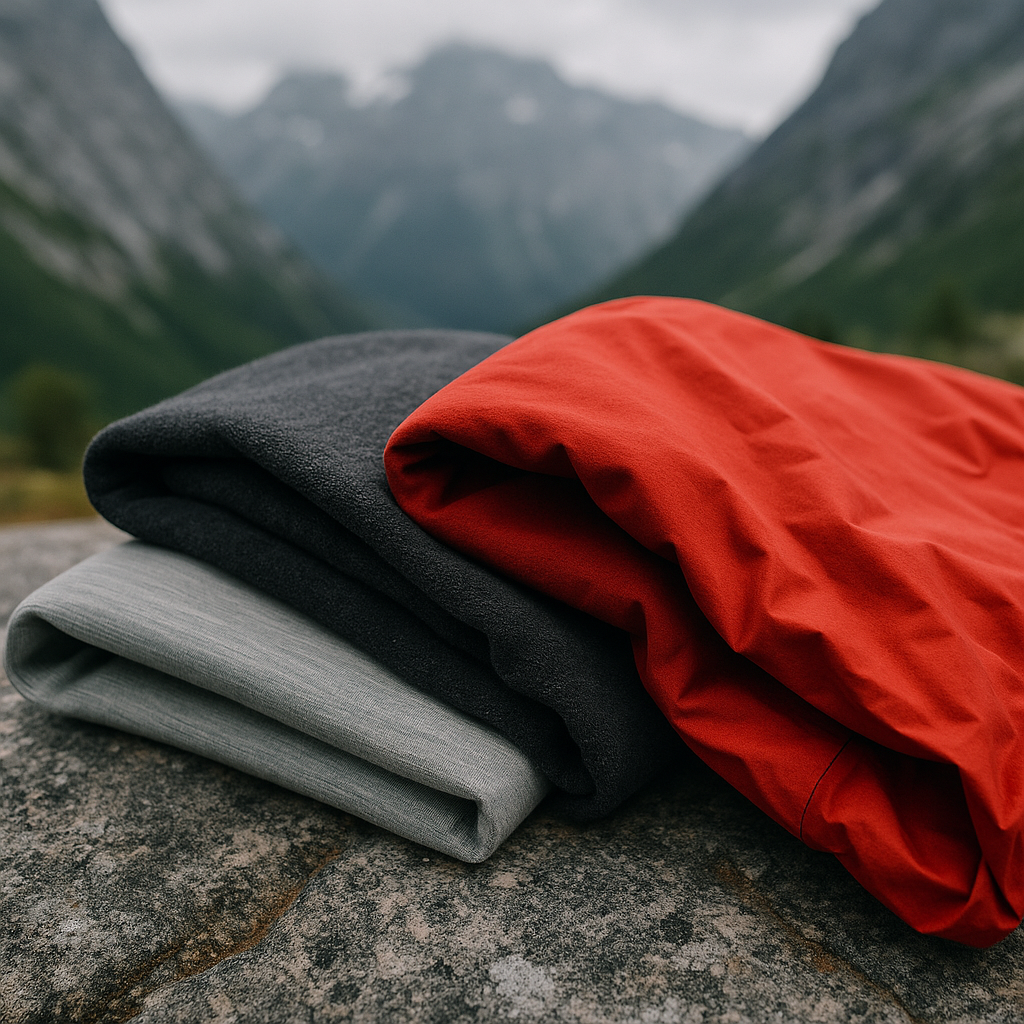
The outer layer, often called a shell, is your defence against wind, rain, sleet, and snow. In the UK, you need this to actually work. British mountain weather changes fast and the wet is relentless.
A good waterproof jacket should use a breathable waterproof membrane. GORE-TEX remains the best-known option, though eVent, Pertex Shield, and own-brand membranes from Mountain Equipment or RAB are all credible. Look for a hydrostatic head rating of at least 20,000mm for serious mountain use; anything below 10,000mm is a compromise in heavy, sustained rain.
Breathability matters just as much as waterproofing. A jacket that keeps rain out but traps sweat inside will soak you from the inside out. Check for a moisture vapour transmission rate (MVTR) specification. In practice, no shell breathes enough during heavy exertion, which is why the base and mid layers need to manage moisture from below.
Waterproof trousers are often overlooked but just as important. Wet legs lose heat rapidly. A lightweight pair of hardshell trousers stuffed into the top of your pack costs little in weight but can be genuinely critical if conditions turn.
Adjusting Your Layers on the Move
The biggest practical skill in the layering system for cold weather hiking is knowing when to adjust. Most hikers make the mistake of waiting until they are either soaking wet with sweat or uncomfortably cold before they act. By then, the damage is already done.
A useful rule of thumb: start slightly cool. If you feel comfortable the moment you set off, you will be overheating within ten minutes of climbing. Strip a layer before the first steep ascent, not halfway up it. Stop, shed the mid layer or unzip the shell, then keep moving. Ventilation through zip systems (pit zips, chest zips) helps manage temperature without a full stop.
On summits or ridges, especially in wind, add layers before you feel cold. Your core temperature drops quickly at rest in exposed conditions, and shivering is a late warning sign, not an early one. Keep your mid layer accessible at the top of your pack, not buried at the bottom.
Layering Mistakes That Lead to Hypothermia Risk
Hypothermia in the UK hills is not a distant possibility. The Mountain Rescue England and Wales teams respond to incidents involving exposure and cold every single winter. Many involve hikers who made preventable clothing choices.
The most common mistakes worth knowing:
- Wearing cotton as a base layer. Already covered, but worth repeating. It is still the single most common issue seen on winter callouts.
- Ignoring spare layers. Even on short routes, conditions can change or an injury can mean standing still for a long time. Always carry an extra insulating layer.
- Neglecting extremities. Hands, head, and neck lose heat disproportionately. A warm torso counts for little if your fingers are numb. Carry gloves and a hat even when it seems mild at the trailhead.
- Over-layering and sweating through everything. Arriving at a high camp soaking wet from overheating is just as dangerous as being underdressed. Regulate early and often.
- Cheap shells with no real breathability. An entry-level waterproof from a supermarket might keep light rain off at the car park. On a full day in the Welsh hills in January, it will fail you.
Putting It All Together for British Mountains
The perfect layering system for cold weather hiking is not a fixed outfit. It is a flexible kit that you actively manage throughout the day. A good starting point for a cold UK winter day in the hills: merino base layer, 200-weight fleece or synthetic insulated jacket as the mid, and a GORE-TEX or eVent hardshell over the top. Waterproof trousers in the pack. Warm hat and gloves in an outer pocket, not at the bottom of the rucksack.
Spend a bit more on quality base and shell layers if you have to prioritise. These are the two that do the most critical work. The mid layer can be upgraded over time. But going cheap on the outer shell or neglecting the base layer is where most people come unstuck in the British hills.
Get the system right and you can enjoy a winter route in conditions that would have your fellow walkers retreating to the car park. That is what this whole approach is about: staying comfortable, staying safe, and staying out there longer.
Frequently Asked Questions
What is the layering system for cold weather hiking?
The layering system uses three distinct layers: a base layer to wick sweat from the skin, a mid layer for insulation, and an outer shell to block wind and rain. Each layer has a specific job and they work together to keep you warm and dry. Adjusting layers throughout the day is key to making the system effective.
What is the best base layer fabric for winter hiking in the UK?
Merino wool is widely considered the best all-round base layer for UK conditions. It wicks moisture, retains some warmth when damp, and resists odour on multi-day trips. Synthetic polyester base layers dry faster and suit high-output activities better, but both are far superior to cotton in cold, wet mountain conditions.
Can I use a down jacket as a mid layer for cold weather hiking?
Down jackets offer excellent warmth-to-weight ratio but lose almost all insulating value when wet. In the reliably damp British mountains, a synthetic insulated jacket or a 200-300 weight fleece is often a more practical mid layer choice. If you do use down, keep your outer shell well sealed and only wear down when you are stopped and sheltered.
How do I know when to add or remove a layer while hiking?
The general rule is to start slightly cool at the trailhead and remove a layer before steep climbs rather than during them. Add layers before exposed summits or ridge sections, not after you already feel cold. Waiting until you are sweating heavily or shivering means the body has already started to suffer, so proactive adjustment is always better.
How much should I spend on a good waterproof shell for winter hiking?
A reliable hardshell jacket with a proper breathable waterproof membrane typically costs between £150 and £400 from brands like RAB, Mountain Equipment, or Montane. Look for a hydrostatic head rating of at least 20,000mm and a genuine breathability rating if you plan serious mountain use. Cheaper options under £80 rarely perform adequately in sustained heavy rain and wind.
Leave a Reply