
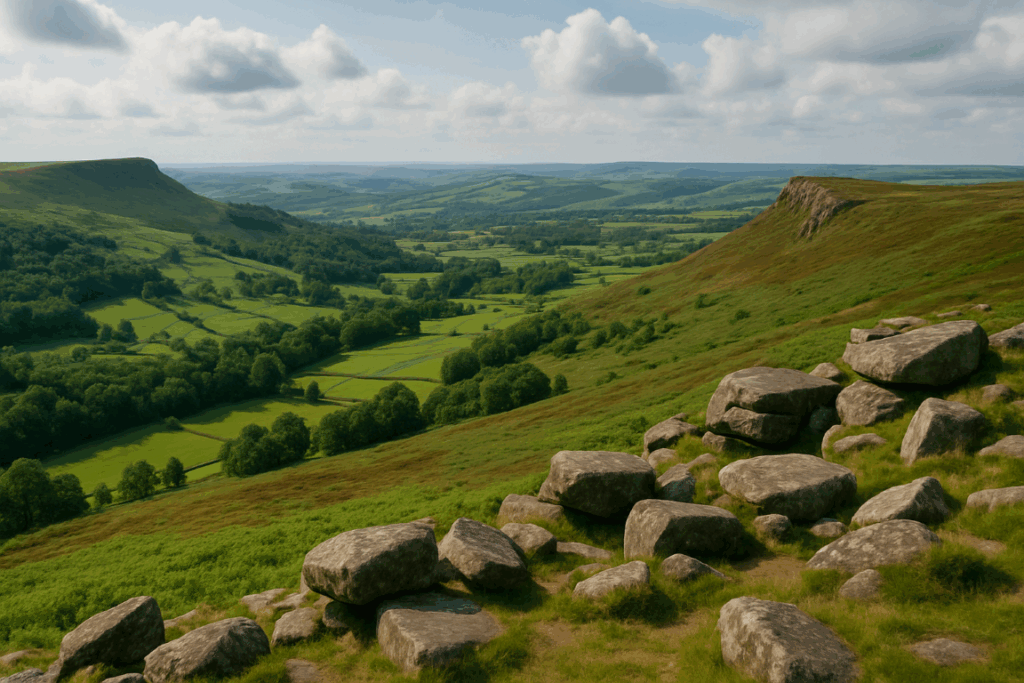

There’s a moment most walkers know well. You’re two-thirds of the way down a long descent, the valley is opening up beautifully below you, and then a knee starts complaining. Not a shout, just a quiet, insistent ache that tells you something has gone wrong. By the time you reach the car park, it’s a limp. Trip over. I’ve been there more than once, and I’ve watched friends wave me off from a summit because a blister had turned the inside of their boot into a small torture chamber. These things cut trips short with a predictability that’s almost impressive.
Common hiking injuries UK walkers face are rarely dramatic. No sudden falls off ridges, no lightning strikes. Most of the time, it’s the slow grind of poor preparation meeting tough ground. What follows is a practical look at the injuries that actually end walks in this country, and what you can do about them before they have the chance.
Knee pain on descents: the one that catches everyone
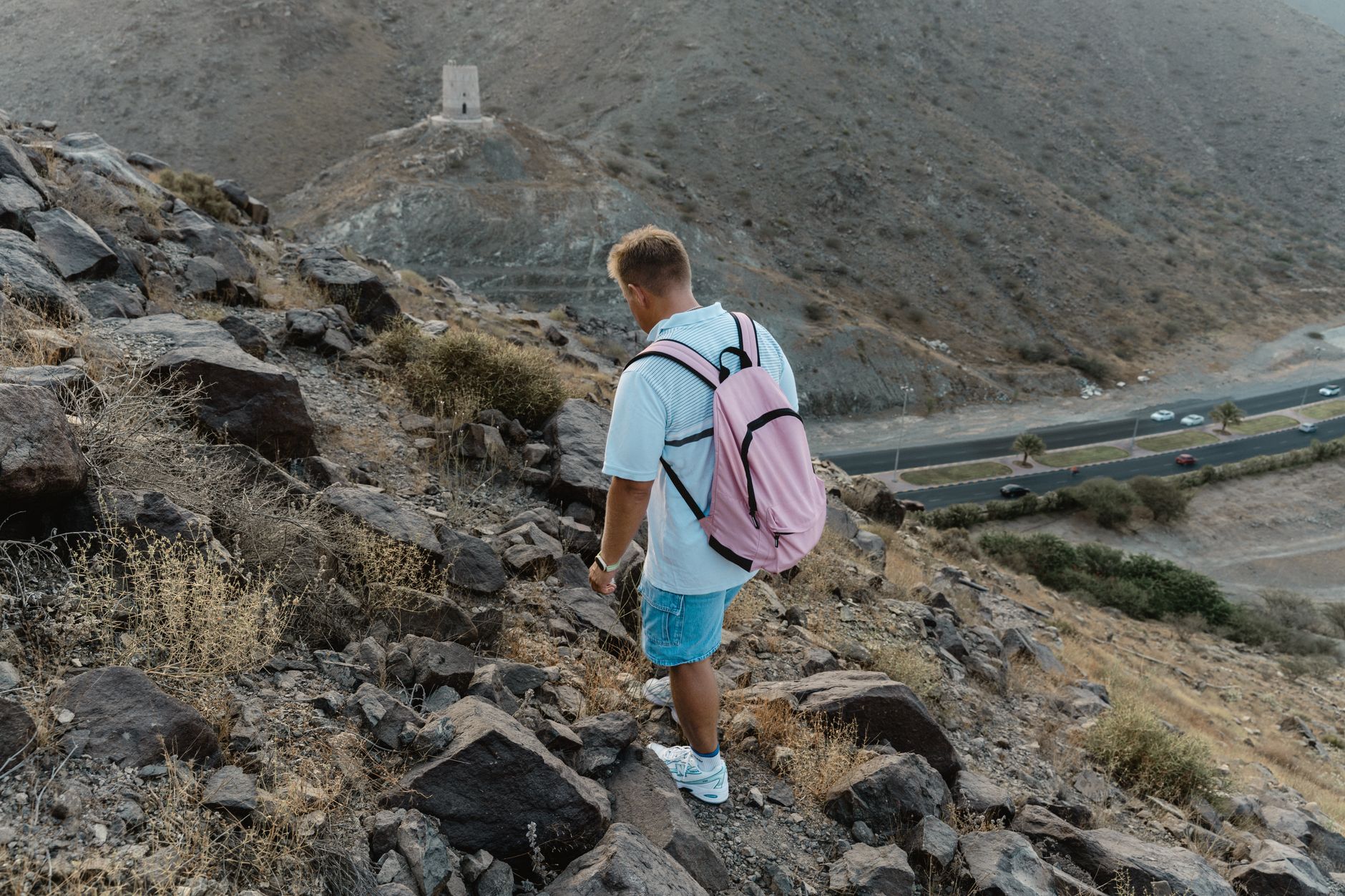
Knee pain on downhill sections is probably the single most common reason walkers don’t finish a route in the UK. The technical term is patellofemoral pain, though most people just call it “hiker’s knee” and leave it at that. What’s happening is that your kneecap is under enormous compression every time your foot hits ground below you, and if the muscles around your knee are underprepared or fatigued, that stress lands in the wrong place.
UK terrain makes this worse. The Lake District, the Cairngorms, Snowdonia, these aren’t rolling countryside. Descents can be steep, loose, and extended. In wet conditions (which is most of the time), every step requires a small stabilisation effort that accumulates into significant muscular load over several hours. The Cairngorms in spring, for instance, can have you negotiating icy, compacted névé on a descent that would be hard enough in dry summer conditions.
Prevention starts months before the walk, not on the morning. Building quad and glute strength through simple exercises like step-downs and single-leg squats makes a measurable difference. Trekking poles are not just for older walkers, they transfer roughly 15-20% of downhill loading away from the knees on each stride, which over a 1,000-metre descent adds up to a significant reduction. And if you know your knees are a weak point, shortening your stride on descents helps enormously. Tiny steps, slow pace, poles engaged. It feels inefficient; your knees will thank you.
Blisters: small, ruinous, almost entirely preventable
I have lost count of the number of people I’ve seen hobbling across the Yorkshire Dales with trainers on day two because their boots caused blisters on day one. The boot break-in story is as old as hillwalking itself, and it’s one I’ve told myself too, usually while applying a compeed pad to a heel that looks like a poorly poached egg.
Blisters form from friction and heat. The foot moves slightly inside the boot with every step; the skin catches; a shear layer forms and fills with fluid. On a long day on, say, the Pennine Way’s boggier northern sections, damp conditions accelerate this because wet skin is softer and tears more easily. The fix is layering: a thin moisture-wicking liner sock under a good merino or wool hiking sock. This creates a friction surface between socks rather than between sock and skin. Decent fit matters too, boots should hold your heel firmly so it doesn’t lift.
If you feel a hot spot forming, stop immediately. Put a blister plaster or moleskin on it before the skin breaks. Once the blister is open, your day gets significantly more complicated and your infection risk goes up. The NHS guidance on blisters is worth reading if you’ve been unlucky enough to rupture one on a remote route.
Twisted ankles on rocky ground
Rocky, technical ground is where ankle sprains happen. The mechanism is simple, your foot lands awkwardly on a stone, the ankle rolls outward, the lateral ligaments are overstretched. In a mild sprain, you walk it off. In a moderate one, you limp back to the nearest road and call for help. On a remote ridge, either scenario is unpleasant.
UK mountain terrain is uneven in ways that catch walkers off guard. Gritstone edges, shattered quartzite ridges, Welsh slate paths, the variety of underfoot conditions here is genuinely challenging. Rocky scrambles in particular demand full attention to foot placement, and tiredness is the main risk factor: most ankle sprains happen in the second half of a day when concentration drops and legs are heavy. This is also why how UK mountain rescue teams respond to callouts matters, a twisted ankle in the wrong place becomes a serious incident quickly. You can read more about how those rescues unfold in our piece on how UK mountain rescue teams actually work.
Mid-cut or high-cut boots offer real ankle support on this kind of terrain. Proprioception exercises, balancing on one leg, walking on uneven surfaces, improve the ankle’s reactive stability over time. And knowing when to use your hands on a rough descent rather than trying to walk upright is a skill worth developing early.
Hip flexor strain and the silent miles
Hip flexors rarely get the attention knees and blisters do, but they’re responsible for a quiet misery that sets in around mile ten on a long, flat or gently rolling day. The hip flexor muscles lift your leg forward with every stride. Over many kilometres, especially if you’re carrying a heavy pack or pushing pace, they fatigue and tighten. On multi-day trips, they can become genuinely painful.
This is particularly relevant to hikers doing long sections of trails like the South Downs Way or the Pembrokeshire Coast Path, where the terrain doesn’t look demanding but the cumulative mileage is relentless. I’d seen this before I understood it, a fit, experienced friend who struggled to walk normally on day three of a coast-to-coast trip because he’d ignored tightening hip flexors on days one and two.
Stretching hip flexors before and after walks is unglamorous but effective. The low lunge stretch held for 30-45 seconds on each side does the job. Managing pack weight matters too; every extra kilogram increases the forward lean that tightens the flexors. And taking short rest breaks where you actively stretch rather than just sitting still makes a real difference over a multi-day route.
Seasonal factors that change the injury picture
UK conditions shift the risk profile by season in ways that aren’t always obvious. Winter and early spring bring frozen or semi-frozen ground that can feel deceptively solid until it gives way. Icy peat hags on high moorland, thin ice over puddles on path edges, compacted snow on north-facing descents, these all increase fall risk significantly. Microspikes are one of the most underused pieces of kit in British hillwalking, and I’d strongly recommend them for anyone venturing onto the high tops between November and April.
Summer brings its own problems. Dry, baked earth becomes hard and unforgiving, amplifying impact on knees and heels. Long days encourage walkers to push further than their bodies are ready for. Autumn is, in my experience, the season where twisted ankles peak, wet leaves on stone paths are genuinely slippery, and the light is going earlier than most people expect.
Understanding the ground underfoot changes how you walk, and that’s the core of injury prevention. Anyone heading onto boggy ground should know how to read the terrain, I’d point you to our detailed look at walking UK peat bogs, which covers exactly this kind of ground assessment. And if you’re heading onto a multi-day route where fatigue compounds every risk mentioned here, our guide to bivvying in England and Wales has useful advice on managing rest and recovery in the field.
What to carry in case something goes wrong anyway
Prevention is the point of this piece, but honesty demands acknowledging that injuries happen to prepared people too. A basic first aid kit for UK hillwalking should include blister plasters, a compression bandage for ankle support, ibuprofen gel and tablets, and a foil emergency blanket. A trekking pole doubles as a splint in an emergency. Your map and compass are not optional, if an injury slows you to a crawl, you need to know exactly where you are and what the shortest route to safety looks like.
Listen to your body early. The hot spot before the blister, the ache before the knee gives up, the tightness before the hip flexor locks. These signals are reliable. The walk will be there next weekend. The injury that follows ignoring them might keep you off the hill for months.
Leave a Reply