
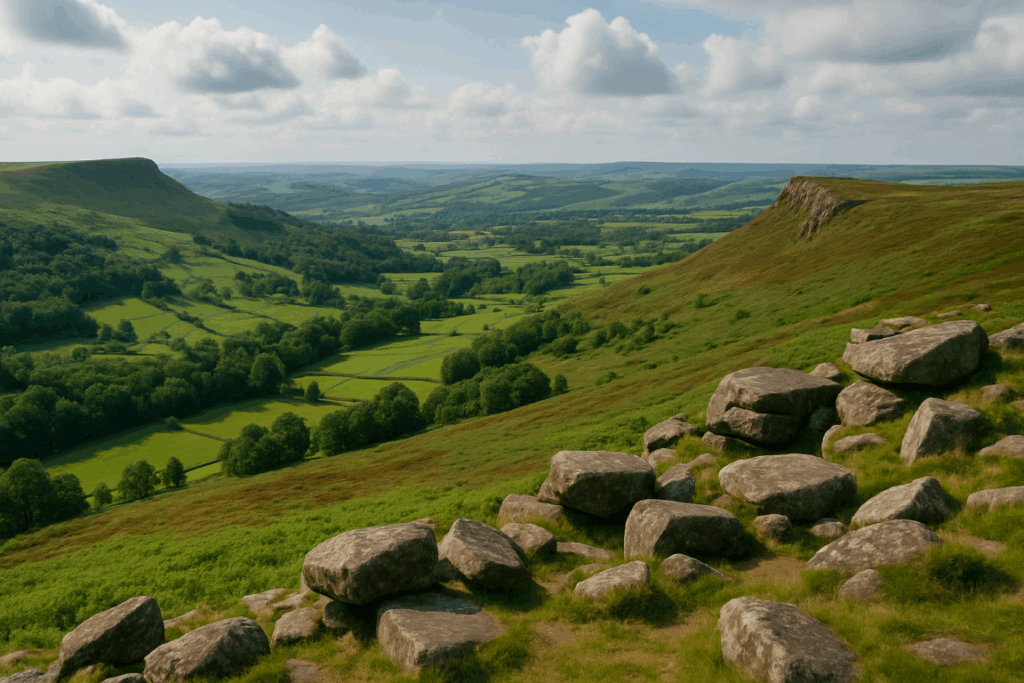

There is a particular kind of suffering that comes with the third hour of a relentless upland day. Your legs are still moving. Your pace has not collapsed. But somewhere between the second col and the final ridge, your body starts having a quiet argument with your ambition. I have felt it on the long pull up to the Aonach Eagach, and I have felt it crossing the Carneddau in North Wales when the wind turns and the light goes flat. The hills do not care how keen you are. They care about your engine.
That engine is your aerobic system, and most hill walkers either ignore it entirely or train it in completely the wrong way. The good news is that building the kind of base fitness that makes a big upland day feel manageable rather than murderous is not complicated. It just takes patience, consistency, and an understanding of why slow and steady genuinely wins here.

What the uplands actually demand from your body
A long day in the fells is not like a 5k run or a spin class. It is four, six, sometimes eight or nine hours of continuous moderate-intensity effort. You are climbing, descending, crossing boggy ground, carrying a pack, and doing it all in conditions that shift without warning. The dominant energy system throughout all of this is aerobic, meaning your body burns fat and carbohydrates in the presence of oxygen, steadily, hour after hour.
The problem is that most people who want to get fitter tend to go hard. They run fast, they attack hills, they leave sessions gasping. That kind of training has its place, but for fell walking fitness it is a secondary concern. What matters far more is the depth of your aerobic base: how efficiently your cardiovascular system can deliver oxygen to working muscles over a long duration at a moderate pace. If that system is weak, you will blow up on the second hour and spend the rest of the day grinding.
Why low-intensity training works for hill walking
The principle behind aerobic base training is that you spend the majority of your sessions at an intensity low enough to hold a conversation, but high enough that you are genuinely moving and elevating your heart rate. For most people this lands somewhere around 60 to 75 percent of maximum heart rate. At this effort level, the body adapts in ways that are directly relevant to a long upland day: it becomes better at burning fat as fuel, it grows more mitochondria in the muscle cells (mitochondria are the structures that generate aerobic energy), and the heart itself becomes more efficient at pumping blood with each beat.
Over weeks and months, these adaptations compound. A 10-mile route that once left you wrecked becomes manageable. A 5,000-foot day in the Cairngorms stops feeling heroic and starts feeling like a good day out. This is not magic. It is physiology catching up with your ambition.
If you want to understand the underlying science in more detail, the principles behind zone 2 training UK endurance go deep on the physiological mechanisms, and it is worth reading alongside your hill training plan.

How to build aerobic base fitness for fell walking
The most direct way to build aerobic base fitness for fell walking is to walk more. Specifically, walk long and walk often at a pace that keeps your breathing steady. Not every session needs to be on the hill; a brisk walk along a canal towpath or across a local park still counts as aerobic work if you maintain the effort for 60 to 90 minutes. Three to four sessions like this per week, kept consistently across several months, will shift your aerobic ceiling considerably.
That said, specificity matters. Trail walking, even on gentle ground, is biomechanically different from road walking. The irregular surface, the lateral ankle movement, the constant small adjustments in stride: these train stabilising muscles that tarmac simply does not reach. I try to get at least one trail session a week even during the winter months when the big days are off the table. A muddy woodland path for 90 minutes does more for your hill fitness than an equivalent time on a treadmill, and it is considerably more enjoyable.
Weighted packs change the equation further. Once your aerobic base starts to develop, adding a rucksack to your long sessions builds the postural endurance your back and shoulders will need on a proper mountain day. Start light, around 5 to 6 kilograms, and build over weeks rather than months. Going too heavy too soon is a reliable way to end up with the kind of problems described in detail in our article on common hiking injuries and how to prevent them, so take it gradually.
The role of hills in your training week
You do not need to live near dramatic terrain to train effectively. I know walkers in Sheffield, Bristol and Norwich who have built impressive hill fitness through creative use of what they have around them. Stairwells, car park ramps, canal towpath inclines: none of it replaces a proper fell, but all of it builds leg strength and cardiovascular capacity that transfers when you arrive somewhere genuinely steep.
When you do have access to real hills, use them intentionally. A short steep climb repeated several times in a session is a valid training tool, but keep the effort measured. The temptation is to charge uphill and feel virtuous about it. Resist. Long, moderate-paced ascents at a controlled heart rate do more for aerobic base fitness fell walking than a series of all-out blasts followed by recovery walks. The BBC Sport coverage of endurance athletics has touched on this counterintuitive principle: going easier for longer is often more effective than going hard for short bursts, particularly for athletes building base fitness.
If you are planning routes in genuinely demanding terrain, it also helps to sharpen your navigation skills alongside your fitness. The ability to move confidently and efficiently across a ridge, without stopping repeatedly to check your position, reduces cumulative energy expenditure significantly. Our piece on navigating in fog on British hills covers some of the practical skills that let you keep moving rather than standing around burning energy and getting cold.
What a realistic training week looks like
For a working adult with two or three free sessions a week, a realistic aerobic base block for fell walking might look like this. One longer walk of two hours or more, ideally on mixed terrain with some incline, kept at a comfortable conversational pace. One or two shorter sessions of 45 to 60 minutes, either walking fast or cycling if the knees are grumbling. One strength session focused on single-leg exercises, hip work, and core: all of which directly support the demands of uneven mountain terrain.
Consistency over six to twelve weeks of this structure will produce a noticeable shift. The first real test is usually a longer day out, maybe eight miles with 600 metres of ascent on a proper hill. If you finish that feeling pleasantly tired rather than depleted, your aerobic base fitness for fell walking is moving in the right direction.
The uplands reward the prepared. Not the fittest, not the fastest, but those who have genuinely built the capacity to keep going. Get that foundation right, and the hills become the pleasure they are meant to be rather than an endurance event you have to survive.
Leave a Reply