
Category: Events

  • How UK Mountain Rescue Teams Actually Work, and What Walkers Can Do to Help Them

    How UK Mountain Rescue Teams Actually Work, and What Walkers Can Do to Help Them

    There is a moment on any serious hill day when the weather turns faster than you expected, someone in your group twists an ankle on a boulder field, and the path back looks nothing like the map suggested. Most of the time, people get themselves out. But every year, thousands of walkers across England, Scotland and Wales do not. That is when UK mountain rescue teams step in, and almost nobody who dials 999 from a ridgeline has any real idea what happens next, or who is actually coming to find them.
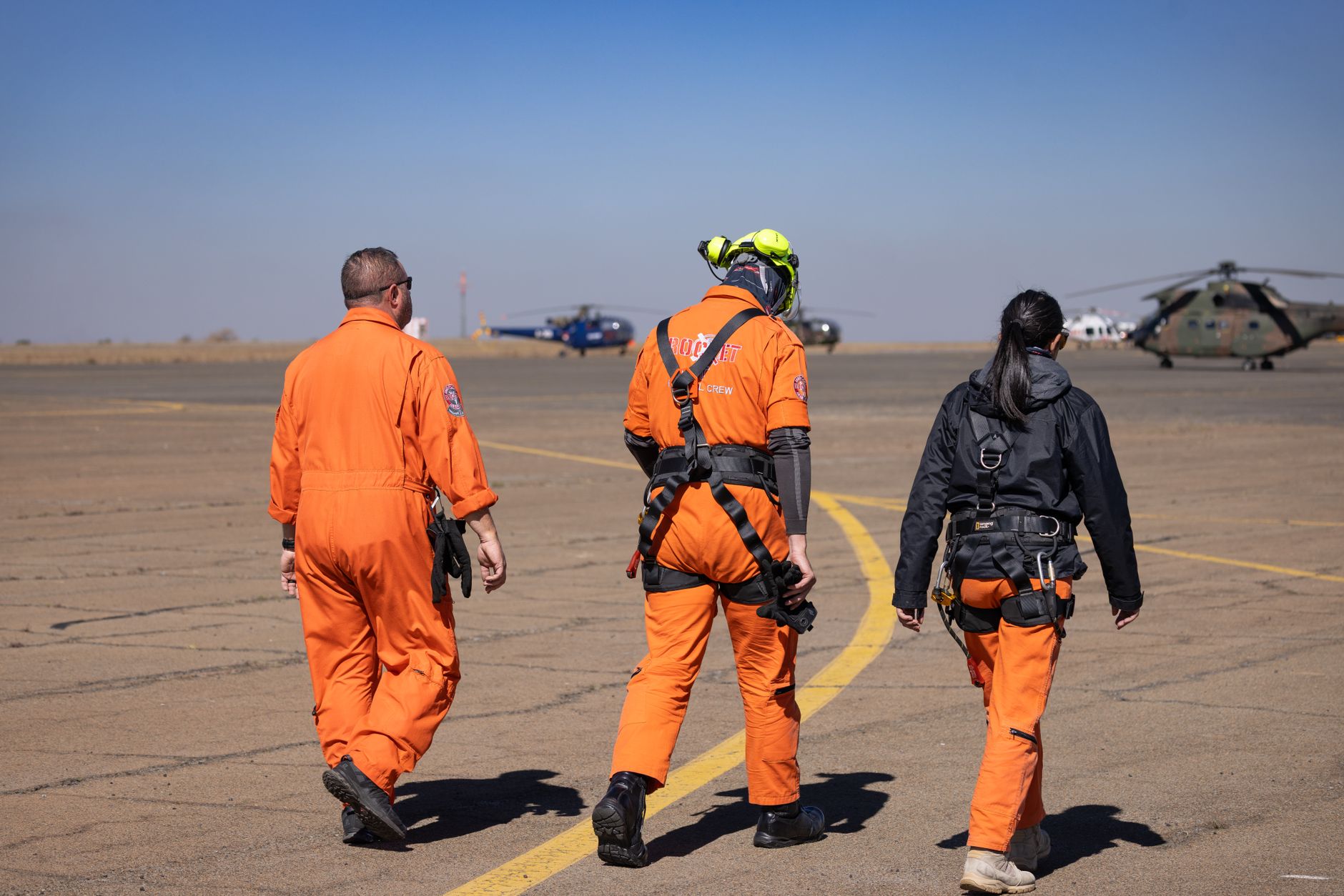
    UK mountain rescue team volunteers carrying equipment across a rocky hillside
    Photo by Magda Ehlers on Pexels

    Who actually makes up a mountain rescue team?

    The short answer is: your neighbours. UK mountain rescue teams are staffed almost entirely by unpaid volunteers. According to Mountain Rescue England and Wales, there are around 5,000 volunteers across more than 50 teams in England and Wales alone, with Scotland and Northern Ireland covered by their own equivalents. These people, shepherds, teachers, paramedics, joiners, retired professionals, train regularly, fund their own equipment, and drop whatever they are doing the moment their pagers fire. Some teams respond to 300 call-outs a year. The busiest, like Wasdale in the Lake District or Lochaber in the Highlands, can be out on the hill several times in a single weekend.

    I have spoken to volunteers from a couple of teams over the years, and the thing that always strikes me is how little fuss they make about it. One bloke I met at a bothy near Braemar had been on his local team for fourteen years. He had missed two Christmases, countless birthdays, and one wedding anniversary. He shrugged and said the hills get into you. That is the spirit these teams run on.

    What triggers a call-out?

    The trigger is almost always a 999 call routed through the police. You ring 999, ask for police, and say you need mountain rescue. The control room then alerts the relevant team, who mobilise within minutes. What gets them out ranges from the genuinely life-threatening, cardiac arrests, severe falls, avalanche burial, to situations that, with a bit more preparation, need never have happened at all.

    In 2023, analysis from several UK teams showed that a significant proportion of call-outs involved walkers who were lost, exhausted, or caught out by darkness, problems that better planning would have prevented. Ankle injuries remain the single most common reason for a rescue. That is worth sitting with for a moment. Most call-outs are not cliff falls or blizzards. They are twisted ankles on paths that people underestimated, often late in the afternoon when energy is low and light is fading.
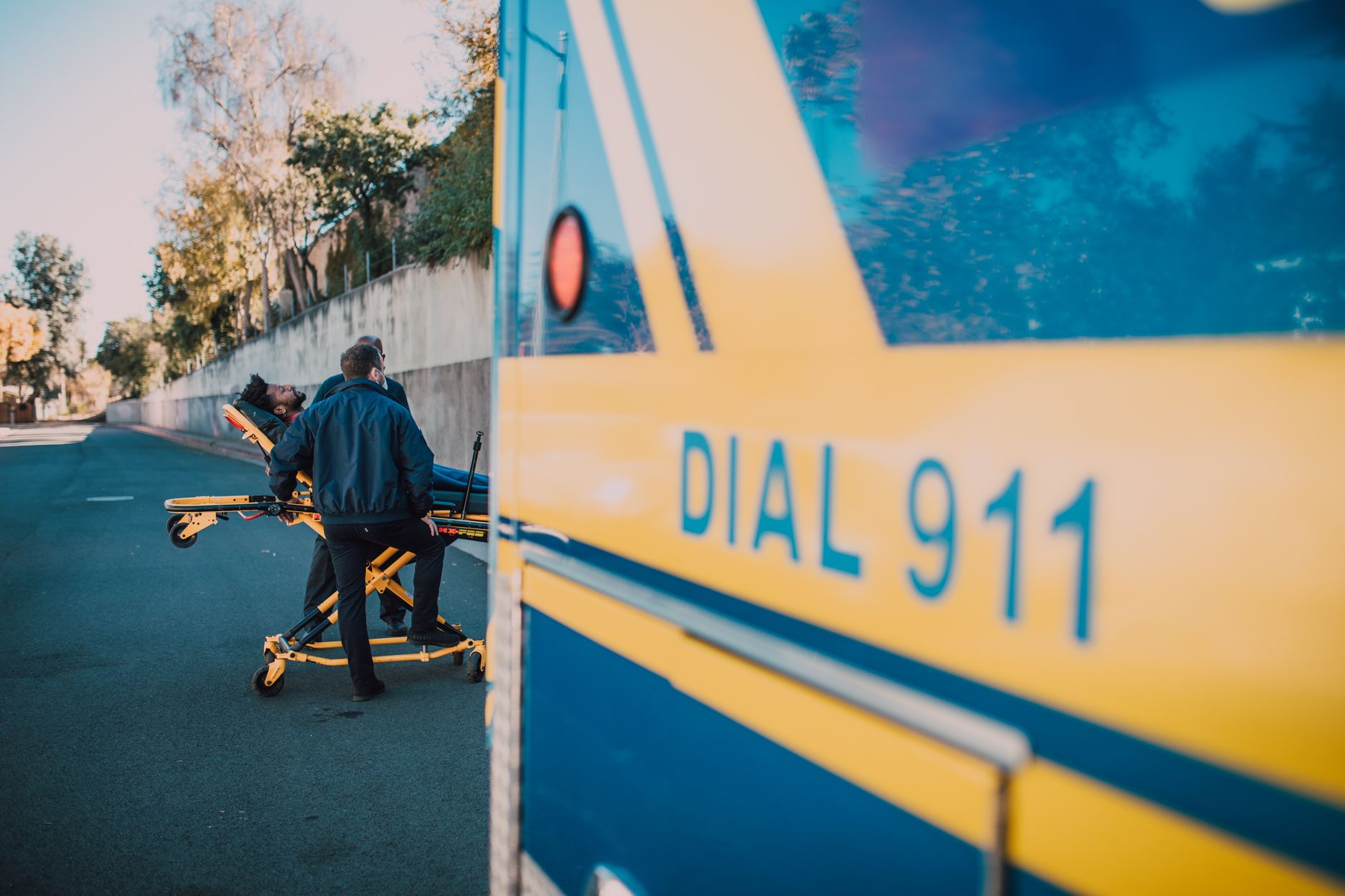
    Mountain rescue team members carrying a stretcher across rough terrain during a UK mountain rescue call-out
    Photo by RDNE Stock project on Pexels

    Common misconceptions about mountain rescue

    The biggest one I hear is that calling mountain rescue costs money. It does not. The service is free at the point of need in the UK, and teams receive no government funding for their running costs. They rely entirely on donations and fundraising. Some people are so worried about wasting the team’s time that they wait too long to call, which is a far more serious mistake than calling early. If there is any genuine doubt about your safety or ability to get off the hill under your own steam before dark, call early. The team would far rather turn back from a straightforward job than retrieve a casualty who deteriorated over three hours of hesitation.

    Another misconception is that helicopters do most of the work. In reality, helicopter availability depends on the military or coastguard’s schedule, the weather, and daylight. Teams are ground-based by default and walk to casualties across some extremely difficult terrain, often in the dark, carrying stretchers and medical kit. The walk-in alone can take hours. If you are planning a serious mountain day, say, something along the lines of the routes covered in our guide to walking the Cairngorms before the snow fully clears, understanding this changes how you think about risk.

    Practical steps walkers can take to reduce unnecessary rescues

    None of this is about avoiding mountains. It is about going out smarter. A few habits make a genuine difference.

    Leave a route plan with someone. Tell a trusted person your planned route, your expected return time, and what to do if you have not made contact by a set hour. This is free, takes two minutes, and gives rescuers an enormous head start if something does go wrong.

    Know how to give your location. A grid reference from an OS map or a what3words address dramatically reduces the time it takes to find you. Practice reading grid references before you need them under stress. Our piece on what trig points are and how they help with navigation is a decent starting point if map-reading is not yet second nature.

    Start early and set a turnaround time. More than half of rescues happen in the final few hours of daylight. Set a hard turnaround time before you leave the car park and stick to it, regardless of how close the summit feels.

    Carry the basics, always. A head torch, waterproofs, a group shelter, a first aid kit, food and water. These are not optional extras for “serious” trips. They are what keeps a minor situation from becoming a major one.

    Know your limits on the day. A trail that is straightforward in July can be genuinely dangerous in March. I have turned back from routes I know well because the conditions were wrong. There is no shame in it. The hill will still be there. For those thinking about more technical terrain, our overview of scrambling grades in the UK is worth reading before committing to anything that involves using your hands.

    How to support your local mountain rescue team financially

    As I said, these teams run on donations. They buy their own stretchers, their own radios, their own vehicles. Training costs money. Fuel costs money. And because they are charities, they are ineligible for most emergency service grants. The simplest things you can do: find your regional team online and make a one-off or regular donation. Many teams have kit sponsorship programmes. Some have relationships with local businesses that host collection tins, and a number of outdoor retailers donate a percentage of sales to their nearest team.

    If you travel to mountains regularly and use other services to get around, ACE ABC is one example of a local transport provider that operates in areas near popular trailheads, it is worth asking whether they have any fundraising partnerships with local rescue teams, as some do.

    You can also give time. Most teams welcome new volunteers, though the commitment is real: expect regular evening training, weekend call-outs, and a long probationary period before you go operational. Search your team’s website for recruitment details.

    A final thought

    Mountain rescue volunteers do not want recognition. They want people to come home safely. The best thing any of us can do is prepare properly, make good decisions on the hill, and if we need help, ask for it without embarrassment. And then, when we are back down and warm and eating something good, find the team’s donation page and put something in. They will be out again by the weekend.

    Frequently Asked Questions

    Does calling mountain rescue cost money in the UK?

    No, mountain rescue in the UK is free at the point of need. Teams are charities staffed by volunteers and receive no government funding for running costs, so they rely entirely on public donations. You should never hesitate to call because you are worried about cost.

    How do I contact mountain rescue in an emergency?

    Call 999, ask for police, and state that you need mountain rescue. Give your location as precisely as possible, a six-figure OS grid reference or a what3words address is ideal. If you have no mobile signal, SMS can sometimes get through when a voice call cannot.

    How long does it take mountain rescue to reach you?

    It depends entirely on the terrain, conditions, and your location. Teams can mobilise within minutes of a call, but the walk-in to a remote casualty can take several hours. This is why calling early, before your situation deteriorates, is always the right decision.

    What are UK mountain rescue teams allowed to treat at the scene?

    Many volunteers are trained as casualty care practitioners and can provide advanced first aid, including pain relief, wound management and splinting. Some teams have paramedics or doctors among their volunteers. They work within protocols and will hand over to NHS services once the casualty is evacuated.

    How can I support my local mountain rescue team?

    The most direct way is a cash donation via your regional team’s website. You can find the relevant team for your area through Mountain Rescue England and Wales or Search and Rescue Scotland. Some teams also welcome volunteers, check their websites for recruitment information.
  • The Best Autumn Walks in the Cairngorms for Colour, Quiet, and Deer Rut Season

    The Best Autumn Walks in the Cairngorms for Colour, Quiet, and Deer Rut Season

    September and October are, in my opinion, the finest months to be walking in the Cairngorms. The summer crowds have thinned out, the midges are mostly done, and the birch woodland turns into something genuinely spectacular. Amber, copper, gold, the occasional flash of russet where a rowan is heavy with berries. If you’ve only ever visited in summer or winter, autumn walks in the Cairngorms will feel like discovering the place all over again.

    There’s also the rut. From mid-September through to late October, red deer stags are in full voice across the glens, and if you’ve never heard a stag roar from a ridge above the treeline at first light, it’s one of those sounds that stays with you for a long time.

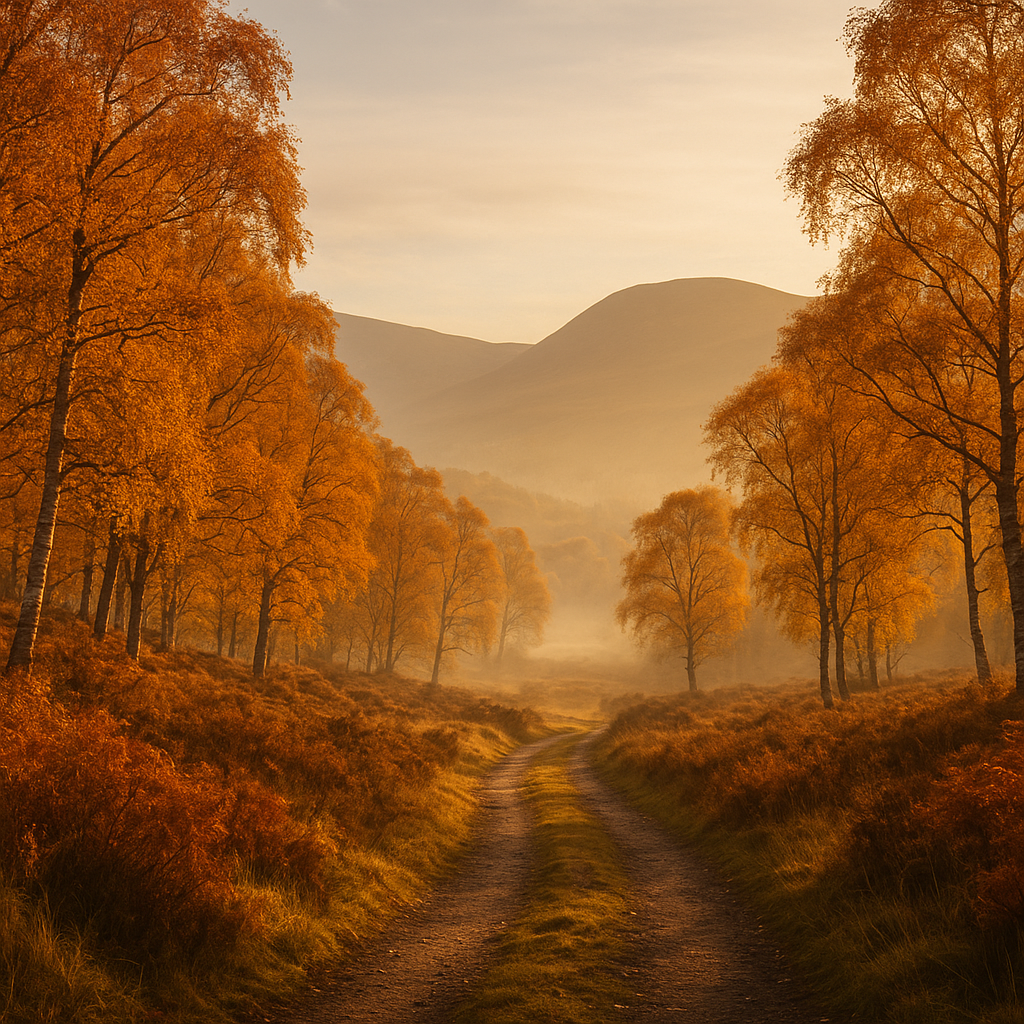
    Golden birch woodland path in the Cairngorms during autumn walks in October morning light

    Why September and October Are the Sweet Spot

    The Cairngorms in September still hold some warmth in the middle of the day, but the light is completely different from summer. It sits lower, rakes across the heather at a golden angle in the mornings and evenings, and makes every photograph look like someone’s applied a filter they haven’t. The bracken is going brown and the birches are starting their turn by mid-September, peak colour usually landing somewhere in the first two weeks of October depending on the year.

    Daylight does shorten noticeably. By the end of October you’ve got roughly nine hours between sunrise and sunset, so planning your start time matters. I’d always aim to be walking by 8am at the latest on any serious route. Headtorches in the pack from September onwards is just sensible, not paranoid.

    Temperatures can drop fast once the sun drops below the ridgeline, and the Cairngorm plateau in particular can see conditions that feel genuinely wintry even in September. Layers remain essential, and don’t underestimate how quickly weather moves across the high ground. The Met Office mountain forecast for the Cairngorms is worth checking every morning before you head out.

    The Best Birch Woodland Routes for Autumn Colour

    The birch woodland around Rothiemurchus and Glen Feshie is where you want to be for colour. These aren’t tame park walks. They’re proper ancient woodland with uneven ground, tree roots everywhere, boggy sections, and the feeling that not many people have come this way recently even when they have.

    Rothiemurchus Forest Circuit

    Starting from the visitor centre at Inverdruie near Aviemore, a loop through Rothiemurchus forest taking in Loch an Eilein gives you some of the most photogenic birch and Scots pine in the national park. The loch itself, with its ruined island castle, looks extraordinary reflected in still October water beneath orange canopy. It’s around 8 miles for a full loop with minimal elevation gain, which makes it a good choice if you want to move slowly and actually take photographs rather than just tick off summits.

    Glen Feshie to Achlean

    Glen Feshie is wilder, quieter, and in October it’s extraordinary. Walking south along the river from the Feshiebridge car park, the birch woodland thins as the glen opens out, but the views back north with colour on the lower slopes are something else entirely. Rewilding efforts in Glen Feshie led by Wildland Limited have dramatically reduced deer grazing pressure, and the natural regeneration of birch and Scots pine here is visible and remarkable. You can see young trees growing where there were none fifteen years ago.

    Abernethy Forest and Loch Garten

    On the eastern side of the national park, Abernethy Forest is an RSPB reserve with easy trails through ancient Scots pine and birch. The pine here are massive, gnarled, genuinely old. It’s less dramatic than the high glen walks but deeply atmospheric in autumn mist, and the birdwatching is exceptional. Crested tit, crossbill, capercaillie if you’re very quiet and very lucky.

    Watching the Red Deer Rut Safely

    The red deer rut in the Cairngorms runs roughly from mid-September through to late October, peaking around early to mid-October. Stags roar, clash, and herd their hinds across the open hillsides and glens. It’s spectacular, and it’s one of those wildlife experiences that genuinely doesn’t need you to travel abroad to find.

    Safe distance is crucial. The general rule is a minimum of 50 metres, but honestly 100 metres or more is better, particularly with stags actively in rut. During this period, stags are stressed, exhausted, and can be unpredictable. This is not the moment to try and get a closer shot for your phone. Binoculars and patience get you far more than closing the gap.

    Some practical points: move slowly on the hillside when deer are visible. Crouching behind natural features rather than standing on the skyline keeps you less intrusive to the animals. Early morning is the most active period. The glens around Glen Clunie, the Cairnwell, and the open hillsides above Braemar consistently offer good rut viewing from the road or from a discreet distance on the hill. Dogs must be kept on leads during this period around deer.

    NatureScot, the Scottish nature agency, has clear guidance on watching deer during the rut without causing disturbance, and it’s worth reading before your visit if you’re new to this kind of wildlife watching.

    Navigating Shorter Days on Autumn Walks in the Cairngorms

    Losing the light is the most common way autumn walks in the Cairngorms catch people out. You leave in daylight, spend longer on the hill than planned, and suddenly the descent is happening in the dark on terrain you only half-remember from the ascent.

    A few habits that help: always calculate your turnaround time before you set out rather than on the hill. For October, assume you need to be descending by 3:30pm at the latest on any route with rough terrain. Tell someone your plan. The Cairngorm Mountain Rescue Team covers a huge area and they’re volunteers; the best thing you can do for them is not need them.

    A map and compass as backup to your phone GPS is not optional on the plateau or in the high glens. Autumn mist and low cloud can reduce visibility substantially, and there are sections of the Cairngorm plateau where the plateau edge is invisible until you’re very close to it.

    Getting There and Where to Base Yourself

    Aviemore is the obvious base, with good links by Scotrail from Inverness and further afield. Braemar gives you access to the eastern and southern glens and is worth considering if you want quieter, less-visited ground. Kingussie and Newtonmore are good options for Glen Feshie and the southern approaches to the massif.

    Accommodation in October is easier to find than in peak summer, though weekends during the rut are busier than you might expect, wildlife watching has grown considerably as an activity in Scotland over the past decade. Book ahead if you’re planning a Friday to Sunday trip.

    Autumn in the Cairngorms rewards patience and early starts. Go when the light is low, move quietly through the birch, listen for the stags, and give yourself enough time to get off the hill before dark. It’s the best version of this landscape, and it’s right there.

    Frequently Asked Questions

    When is the best time for autumn walks in the Cairngorms?

    Mid-September through to late October offers the best combination of autumn colour and red deer rut activity. October is typically peak colour for the birch woodland, while the rut is most intense in early to mid-October. Weekdays are noticeably quieter than weekends.

    How close can you get to red deer during the rut in the Cairngorms?

    A minimum of 50 metres is the general guideline, though 100 metres or more is safer and less disruptive to the animals. Stags during the rut can be unpredictable, so binoculars are far more useful than trying to close the gap for a photograph.

    Are the Cairngorm birch woodland walks suitable for beginners?

    Routes like the Loch an Eilein circuit in Rothiemurchus are accessible to most walkers with reasonable fitness and decent footwear. Glen Feshie and more open terrain require more experience, particularly once you move beyond the lower woodland onto open hillside.

  • Silverdale Off Road Pay and Play Venue

    I am always on the hunt for new off road/pay and play venues to add to this site – and I asked some friends if they knew of any that I had not already added. One of the guys mentioned Silverdale which is part of the Explore Off Road centre, so I did some digging and found their website and event info.

    “As well as our Off-Road site we also have a pay and play site located in Silverdale, Keele. For just £25 you can tackle the extreme terrain alone for a full day. The site contains woodlands, steep hills, water, and lots of mud; it’s not recommended for shiny new vehicles and is definitely not for the faint hearted! (Road taxed vehicles only.)”

    On Google maps, it seems like the site is HUGE;

    I may have the map of Silverdale wrong – but there are tracks all over the area i’ve circled!
    The exact address of the site is;

    Haying Wood
    off Pepper Street
    Silverdale
    Stoke-on-Trent
    ST5 6QQ

    And prices for pay and play days are £25 per vehicle. Sounds like a bargain – can’t wait to visit!

    Their events have been added to the Off Road Events Calendar (there are not many) and I will contact the site to find out if they have planned out P&P days for december and next year, and will ensure they are added to the calendar too.

    Have you ever been? Would love to see your images and videos!

  • Awesome new Off Road Events Calendar

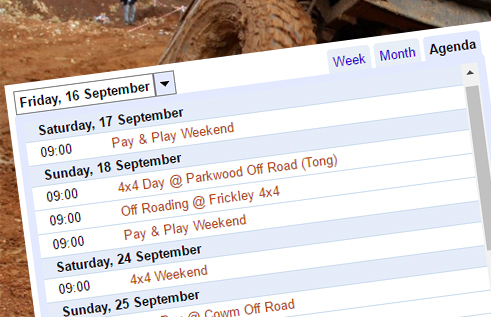
    OK, so ive been mulling over how I was going to do my Off Road Events Calendar – there are loads of website add ons to make this site into a calendar – but I couldn’t help but think it would be a static, stand-alone site and unless you checked it, you wouldn’t know about any of the events I was listing.

    SO, as I live the rest of my life by what Google Calendar says (use it at work, and personally) I figured having a public calendar that lists all the events was the right thing to do. It can be synced with mobile phones and also your calendar within Gmail and i’m sure it can be synced with iPhones too but I have no idea how to do that.

    If you are a venue owner and would like you events listing on the calendar then please get in touch. Additionally, if I do list your events and there are issues please also contact me.

    Hope you enjoy, peeps!

  • Frickley 4×4 Off Road Events – September to December 2016

    Wow that last month flew by! I didnt get time to visit any pay-and-play days last month but the #warhorse is back on it and raring to go. Perhaps i’ll pop to Frickley again on one of the dates below! If you go, please send some snags for our catalogue!

    18th September 2016
    2nd October 2016
    16th October 2016
    30th October 2016
    13th November 2016
    27th November 2016
    11th December 2016 (last one for 2016)

    To book yourself on one of the days or for more information about Frickley, please visit their website.

    http://www.frickley4x4.co.uk/html/contact-us.php

  • Off Road Events – Frickley Offroad Centre – August 2016

    There is only one more event at Frickley this month, so if this is your favourite spot and you want to go while the sun is out then be sure to get yourself along.

    21st August 2016

    For more dates and info visit their Diary.

    I enjoyed my last visit to Frickley – its a decent site although we went just before they reshaped some of the landscape so it should be an interesting experience next time 🙂

  • Kirton Off Road Centre Promo Vid

    Love this video – heheh 🙂

  • Off Road Events in August 2016 @ KORC

    One of the reasons I set this website up, was because I was sick and tired of hunting down info ariton for off road events. For example the Kirton Off Road Club website says no up and coming events, yet (one of) their official Facebook groups states they have events;

    • 13th August… CENTRE CLOSED (PRIVATE EVENT)
    • 14th August –  Extra Pay n Play Day for all.
    • 20th & 21st August – Extra Pay n Play weekend for all
    • 26th, 27th, 28th and 29th August – 4×4 Bank Holiday Weekend

    For more information, visit the KORC Facebook group as that seems to be the most active info outlet they have.

    Im going to try and get to one this month so that I can take a drone and get some epic footage – plus I get to play in the mud in the old #warhorse too!

    https://www.facebook.com/groups/kirtonoffroadcentre

  • YouTube Channel Review: OFF-ROAD TÜRKİYE

    OK, so these guys make some super cool videos. I initially found them as they own a few AMAZING Land Rover Discoverys, and I stumbled upon them when searching out videos for inspiration for the warhorse.

    To be honest, a lot of their videos are slow going, they get stuck a lot but then they do drive through some seriously chewed up bits of dirt!

    I would love to travel to Turkey one day )if that’s where much of this is filmed) as it looks like a lot of fun! 

    I Reached out the the channel, as I would like to interview them and ask them a few questions about their channel but no reply yet. They’re probably still digging themselves out the mud!

    If you would like to see their full range of videos and perhaps subscribe to their channel, you can do that by going here.

  • Frickley Off Road – Pay & Play 7th August 2016

    Frickley 4×4 Offroad Centre was established in April 2005 as part of a diversification project. The site on a reclaimed slag heap and covers approximately 75 acres which consists of woodland, various depths of water, rock crawl, uphill rock climb section, earth mover tyre section and covers all degrees of severity to accommodate the extreme modified vehicle and driver as well as regular road legal vehicles and drivers.

    They are hosting one of their Pay & Play days on the 7th of August 2016.

    Site opening times 10am to 4pm.
    Pay & play entrance is £25 per vehicle.
    All makes of legal and non road legal welcome (sorry, no motorbike or quadbikes are allowed on this site)

    No advanced tickets are available, so turn up early to guarantee entry.

    Contact details here: http://www.frickley4x4.co.uk/html/contact-us.php